One Mother’s Story: 60 Minutes Reports on a Mother’s Grief After October 7
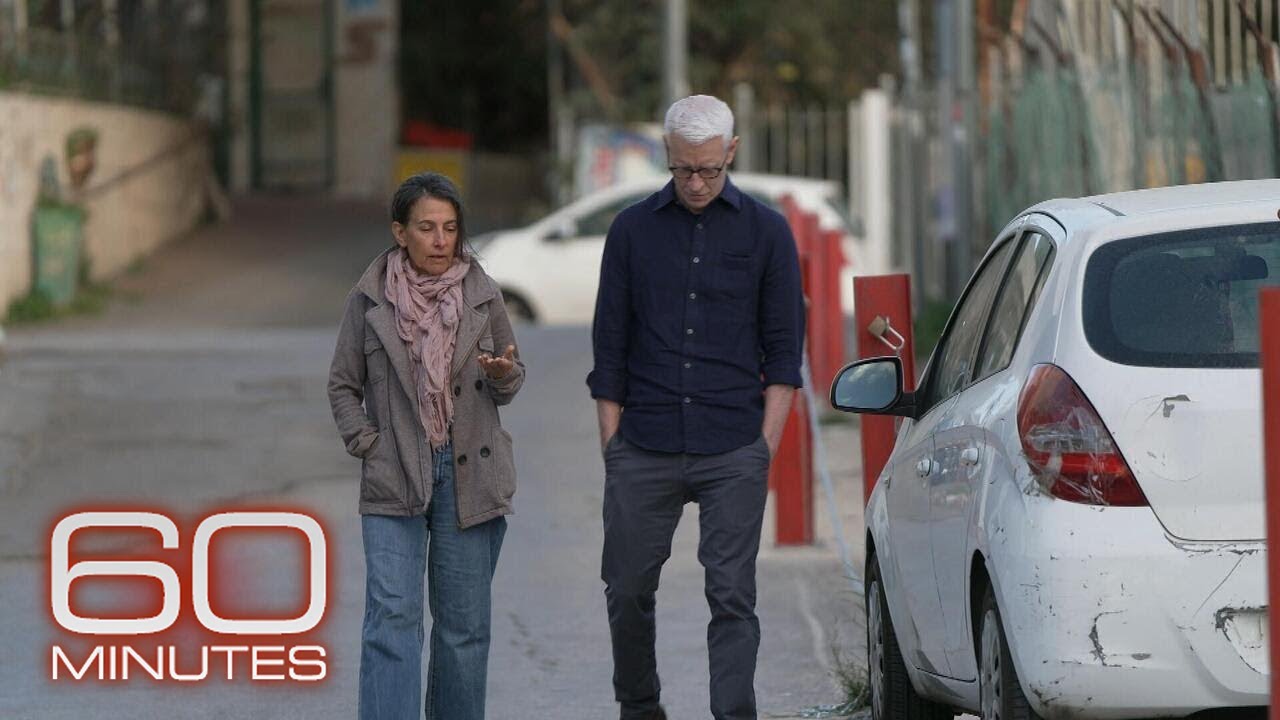
The second segment of the April 19, 2026 edition of 60 Minutes turns to a deeply personal story shaped by one of the most consequential events in recent Middle East history. Correspondent Anderson Cooper interviews Rachel Goldberg-Polin, whose son Hersh was taken hostage during the Hamas-led attacks on Israel on October 7, 2023. That assault, which resulted in widespread casualties and the capture of civilians and soldiers, set off a prolonged and complex hostage crisis that drew global attention.
Hersh Goldberg-Polin became one of the many names at the center of that crisis. For months, his family lived with uncertainty, relying on limited updates and international advocacy efforts aimed at securing the release of those held in Gaza. The segment begins by placing his story within that broader context, where families across different countries were left waiting for news, often with little clarity about the fate of their loved ones.
- 60 Minutes Reports on “One Mother’s Story” & “Wild Concerto” on April 19 2026
- Iran’s HEU: 60 Minutes Investigates a High-Stakes Nuclear Dilemma
- Wild Concerto: 60 Minutes Explores Where Wildlife Meets Music
Life in Captivity and the Human Toll
Hostage situations are defined not only by political stakes but by the human experiences that unfold behind closed doors. The report explores what is known about the conditions faced by captives in Gaza, drawing on accounts from those who survived. These testimonies often describe confinement in underground tunnels, restricted movement, and a constant sense of danger, with limited access to basic necessities.
Hersh remained in captivity for 328 days before his death, a period marked by uncertainty and global advocacy campaigns calling for the safe return of hostages. The emotional toll on families during such prolonged captivity is immense. They are forced to navigate hope and fear simultaneously, often becoming public advocates while privately enduring grief and anxiety. The segment reflects this tension, showing how time itself becomes a defining element of the ordeal.
Rachel Goldberg-Polin’s Story of Grief and Resilience
At the heart of the segment is Rachel Goldberg-Polin’s account of her son and the life that was taken from him. In conversation with Anderson Cooper, she speaks about Hersh as a person, beyond the headlines, offering insight into his character, his values, and the bond they shared. Her reflections provide a portrait of a young man whose identity cannot be reduced to the circumstances of his death.
The interview also captures the complexity of grief in such cases. There is no clear resolution, only an ongoing process of trying to make sense of loss under extraordinary circumstances. Goldberg-Polin discusses the challenge of continuing forward while carrying the weight of what has happened. Her words reflect both the depth of her sorrow and a determination to ensure that her son’s story is remembered with dignity.
A Survivor’s Account: Or Levy’s Perspective
The segment broadens its perspective through the testimony of Or Levy, a former hostage who was held alongside Hersh and later released. Levy’s account provides rare insight into the dynamics among captives and the ways individuals supported one another under extreme conditions. He credits Hersh with helping to save his life, a detail that adds a powerful dimension to the narrative.
Such firsthand accounts are critical in understanding the realities of captivity. They move beyond abstraction and offer concrete examples of human behaviour in crisis. Levy’s reflections highlight moments of courage and solidarity, even in an environment defined by fear. His testimony reinforces the idea that, even in the most constrained circumstances, individuals can have a lasting impact on one another.
The Ongoing Impact of the Hostage Crisis
The story of Hersh Goldberg-Polin continues to resonate as part of the wider aftermath of the October 7 attacks. The hostage crisis has had lasting political and humanitarian implications, influencing negotiations, military decisions, and international relations. For families like the Goldberg-Polins, however, the impact is deeply personal and enduring.
By focusing on one family’s experience, the 60 Minutes segment brings attention to the broader human cost of conflict. It underscores how large-scale events are ultimately composed of individual lives and losses. Through Rachel Goldberg-Polin’s voice and the testimony of those who knew Hersh, the report offers a measured and factual account of grief, memory, and the search for meaning after tragedy.
More 60 Minutes April 19 2026
- 60 Minutes Reports on “One Mother’s Story” & “Wild Concerto” on April 19 2026
- Iran’s HEU: 60 Minutes Investigates a High-Stakes Nuclear Dilemma
- One Mother’s Story: 60 Minutes Reports on a Mother’s Grief After October 7
- Wild Concerto: 60 Minutes Explores Where Wildlife Meets Music
More Feature Articles
- “Death of a Showgirl”: 20/20 Reports on Deborah Flores Narvaez Homicide April 17 2026
- “Deadly Swagger”: Dateline Reports on Dan Serafini Murder Case April 17 2026
- “The Killer on Camera 4”: Dateline Reports On Jon Hickey Homicide April 18 2026
- “Jade Colvin Is Missing”: 48 Hours Reports April 18 2026
- 60 Minutes Reports on “One Mother’s Story” & “Wild Concerto” on April 19 2026