Turning the Ship Around: 60 Minutes Reports on America’s Struggle to Rebuild Shipbuilding on June 7, 2026
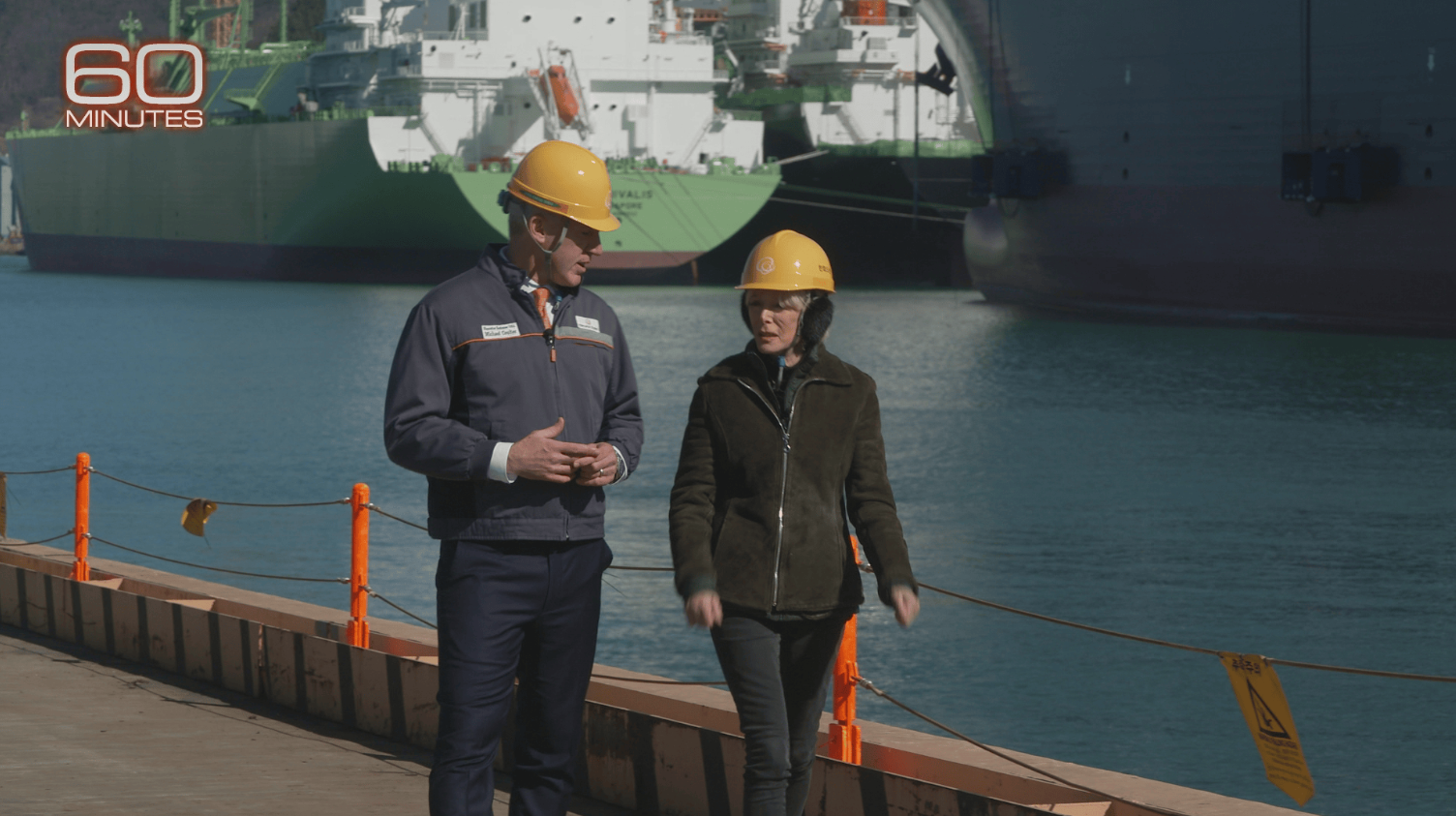
For much of the 20th century, American shipyards were symbols of industrial strength, producing commercial vessels, naval ships, and thousands of jobs in coastal communities. Today, however, the United States finds itself dramatically outpaced by global competitors, particularly China and South Korea. A new 60 Minutes report examines whether the nation can reverse decades of decline and rebuild one of its most strategically important industries.
In the segment “Turning the Ship Around,” correspondent Lesley Stahl travels from South Korea to Philadelphia to investigate efforts to revive American shipbuilding. The report focuses on Hanwha, one of South Korea’s largest industrial companies, which is investing heavily in a U.S. shipyard with hopes of bringing new life to an industry many believed was beyond saving.
- 60 Minutes Reports on “Under Siege”, “Turning the Ship Around” & “The Dog Aging Project” on June 7 2026
- Under Siege: 60 Minutes Investigates Why Federal Judges Fear for Their Safety on June 7, 2026
- The Dog Aging Project: 60 Minutes Reports on How Dogs Could Unlock the Secrets of Aging on June 7, 2026
How America Lost Its Shipbuilding Dominance
During World War II and the decades that followed, the United States maintained one of the world’s most productive shipbuilding sectors. American shipyards built commercial cargo vessels, tankers, passenger ships, and military fleets that supported both economic growth and national defense.
Over time, however, a combination of factors contributed to the industry’s decline. Foreign competitors benefited from lower labor costs, government subsidies, modernized facilities, and long-term industrial planning. Meanwhile, many American shipyards struggled with rising costs, inconsistent investment, and changing economic priorities.
The result has been a dramatic reduction in commercial ship production. According to the 60 Minutes report, the United States now builds only about three large commercial cargo ships annually, while China produces roughly 1,000. The contrast highlights the scale of the challenge facing American policymakers and industry leaders.
Why Shipbuilding Has Become a National Security Concern
The decline of American shipbuilding is no longer viewed solely as an economic issue. Increasingly, government officials see it as a matter of national security.
Commercial shipyards and maritime supply chains play a critical role during times of conflict, allowing nations to transport goods, military equipment, fuel, and essential resources. Experts have warned that America’s limited shipbuilding capacity could create vulnerabilities if global trade routes are disrupted or military demands increase.
The Trump administration has identified the issue as a strategic priority, arguing that rebuilding domestic shipbuilding capabilities is essential for maintaining economic resilience and military readiness. Supporters of revitalization efforts believe the country must reduce its dependence on foreign shipbuilders while strengthening its own industrial base.
The report explores how policymakers are grappling with these concerns and searching for practical ways to restore lost capacity without taking decades to rebuild from scratch.
South Korea’s Shipbuilding Success Story
To understand what a modern shipbuilding powerhouse looks like, Lesley Stahl visits South Korea, home to some of the world’s most advanced shipyards. Companies such as Hanwha have become global leaders by combining technological innovation, large-scale production, and highly skilled workforces.
South Korea’s shipyards are capable of producing a wide range of vessels, from container ships and oil tankers to sophisticated naval ships. Their success has helped make the country one of the dominant players in the global maritime industry.
The report examines how South Korea developed its shipbuilding expertise through decades of investment, government support, and long-term planning. These lessons may offer valuable insights as the United States seeks to rebuild its own capabilities.
By showcasing operations in Korea, 60 Minutes provides viewers with a clearer understanding of the scale and sophistication required to compete in today’s global maritime marketplace.
The Philadelphia Shipyard Experiment
At the center of the story is Hanwha’s acquisition of the Philadelphia shipyard, a facility that many hope can become a model for American shipbuilding’s revival.
The shipyard has a long history but has faced challenges common throughout the industry, including fluctuating demand and financial uncertainty. Hanwha’s investment represents one of the most significant foreign-backed efforts to strengthen U.S. commercial shipbuilding in recent years.
The company hopes to bring advanced manufacturing techniques, engineering expertise, and new business opportunities to the Philadelphia operation. Supporters believe the project could create jobs, strengthen supply chains, and demonstrate how international partnerships can benefit American industry.
However, significant obstacles remain. Workforce development, infrastructure upgrades, and competition from established global shipbuilders will all play major roles in determining whether the effort succeeds.
What a Revival Could Mean for American Workers
Beyond national security and industrial policy, the story is also about people and communities. Shipbuilding has historically provided well-paying jobs for welders, engineers, electricians, designers, and countless other skilled workers.
A successful revival could generate new employment opportunities in regions that have experienced industrial decline. It could also encourage younger workers to pursue careers in manufacturing and maritime trades that have become less common in recent decades.
Industry leaders argue that rebuilding shipbuilding capacity would have ripple effects throughout the economy, benefiting suppliers, transportation companies, technology firms, and local businesses. Critics, however, question whether the United States can realistically compete with countries that have spent decades expanding their maritime industries.
The 60 Minutes report explores both the optimism and skepticism surrounding these efforts, offering a balanced look at the opportunities and challenges ahead.
A Look at America’s Industrial Future
As global competition intensifies and geopolitical tensions reshape economic priorities, the future of American shipbuilding has become an increasingly important topic of national discussion. The industry’s decline reflects broader questions about manufacturing, trade, workforce development, and economic independence.
Through on-the-ground reporting in both South Korea and Philadelphia, “Turning the Ship Around” examines whether one ambitious investment can help reverse decades of decline. While the road ahead remains uncertain, the report highlights a growing belief among policymakers and industry leaders that rebuilding America’s maritime capabilities is no longer optional but essential.
The segment offers viewers an insightful look at one of the country’s most ambitious industrial challenges and the efforts underway to ensure that American shipbuilding once again plays a meaningful role in the global economy.
More 60 Minutes June 7 2026
- 60 Minutes Reports on “Under Siege”, “Turning the Ship Around” & “The Dog Aging Project” on June 7 2026
- Under Siege: 60 Minutes Investigates Why Federal Judges Fear for Their Safety on June 7, 2026
- Turning the Ship Around: 60 Minutes Reports on America’s Struggle to Rebuild Shipbuilding on June 7, 2026
- The Dog Aging Project: 60 Minutes Reports on How Dogs Could Unlock the Secrets of Aging on June 7, 2026
More Feature Articles
- “A Killing in Midtown”: Dateline NBC Examines the Brian Thompson Murder and the Luigi Mangione Case June 5 2026
- 20/20 Pre-Empted for NBA Finals on June 5 2026
- “Secrets on the Emerald Coast”: Dateline NBC Reports on Marie Carlson Homicide June 6 2026
- “The Plot to Eliminate Alyssa Burkett”: 48 Hours Reports June 6 2026
- 60 Minutes Reports on “Under Siege”, “Turning the Ship Around” & “The Dog Aging Project” on June 7 2026