Growing Up Behind Walls: 60 Minutes Reports From a Children’s Home in Gang-Controlled Port-au-Prince on August 9 2026
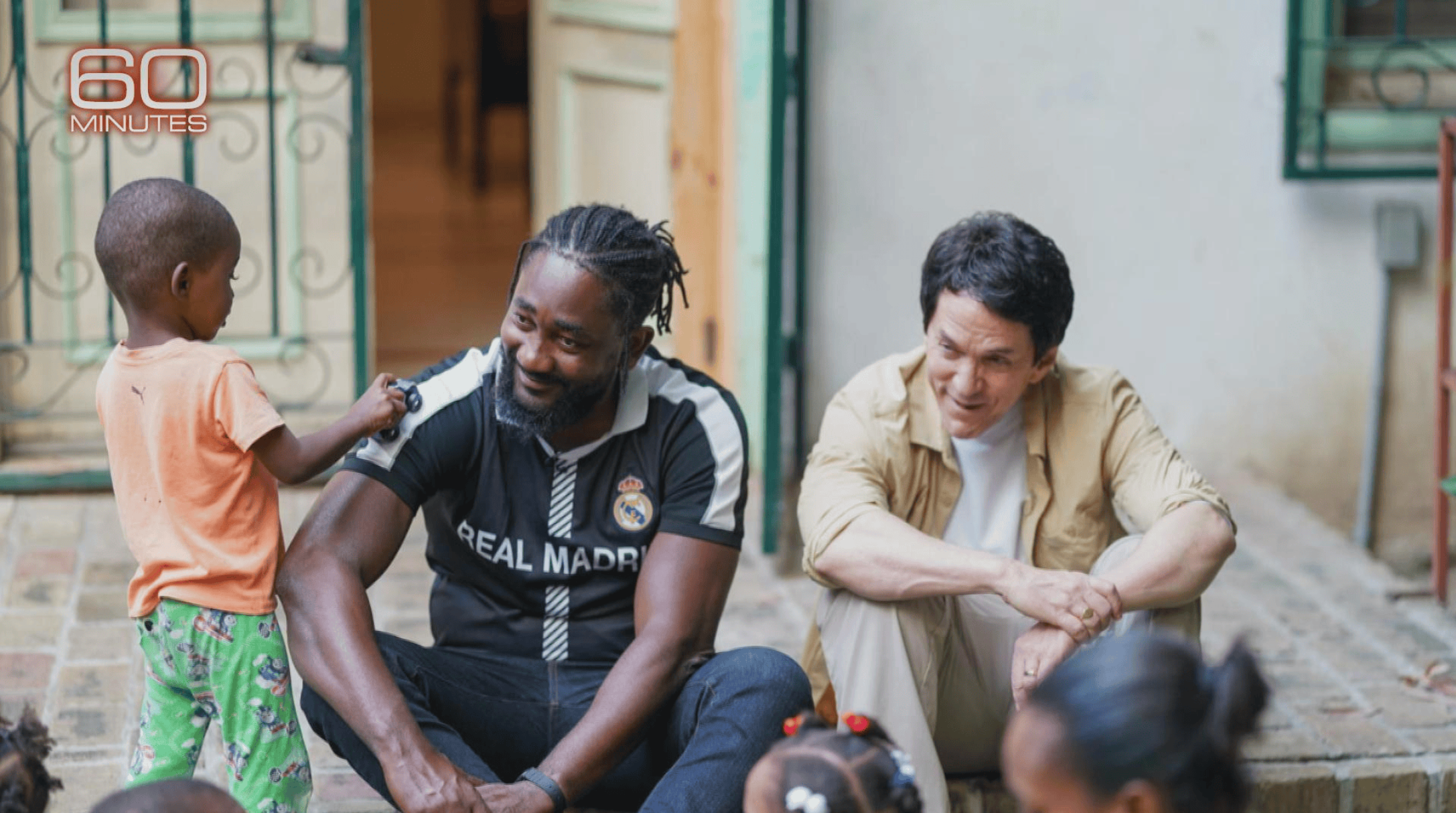
The August 9, 2026, edition of 60 Minutes returns to Haiti for an updated encore presentation of “Growing Up Behind Walls,” a report that contrasts the worsening security crisis in Port-au-Prince with the protected world created for dozens of children at Have Faith Haiti.
Correspondent Anderson Cooper visits the residential school and children’s home run by bestselling author Mitch Albom and his wife, Janine, where children who have experienced abandonment, poverty, disability and other difficult circumstances are given housing, education and long-term support. The institution has become increasingly isolated as armed groups have expanded their influence across the Haitian capital.
The story was originally broadcast in March 2026 and is being presented again as an updated postseason segment. Produced by Denise Schrier Cetta, the report focuses not only on Haiti’s violence but also on what happens to children who are given stability and an opportunity to imagine a future beyond it.
- 60 Minutes Reports on “Generally Recognized as Safe”, “Growing Up Behind Walls” & “Hoosier Hysteria” on August 9 2026
- Generally Recognized as Safe: 60 Minutes Investigates the GRAS System Behind America’s Food Supply on August 9 2026
- Hoosier Hysteria: 60 Minutes Reports on Indiana Football’s Historic Rise to the Top on August 9 2026
Inside a Protected World in Port-au-Prince
From the outside, Have Faith Haiti looks more like a fortified compound than a traditional children’s home. When 60 Minutes visited, the property was surrounded by roughly 30-foot concrete walls, barbed wire, guard towers and multiple locked gates. Albom told Cooper that the organization had gone from employing two security guards before the gang crisis to having 24.
The security measures reflect the extraordinary circumstances outside. Getting to the orphanage had itself become difficult. CBS reported that Albom was traveling through Cap-Haïtien in northern Haiti before reaching Port-au-Prince by helicopter, followed by transportation in a convoy of bulletproof vehicles guarded by armed personnel.
Inside the walls, however, the atmosphere is intentionally different. When CBS filmed the report, 56 children and more than 50 teachers and staff members were living or working on the seven-acre property. The children ranged from babies cared for by nannies to teenagers preparing for college. Most had not left the compound for more than four years.
That separation is central to the title “Growing Up Behind Walls.” The barriers protect the children, but they also demonstrate the extent to which Haiti’s security crisis has changed ordinary childhood.
The Crisis Beyond the Gates Has Continued
The danger Cooper documents was not temporary. Haiti remained in a severe security and humanitarian crisis through 2026.
A United Nations report published during 2026 described continuing gang violence, killings, sexual violence, extortion and child trafficking. Armed groups remained entrenched in parts of Port-au-Prince while security forces carried out intensified anti-gang operations. The UN documented thousands of homicide victims and described Haiti’s homicide rate as among the highest in the Americas and the world.
The consequences extend far beyond those directly caught in shootings. According to UNICEF, around 1.4 million people were internally displaced by the beginning of 2026, approximately half of them children. An estimated 2.6 million Haitian children needed humanitarian assistance, while nearly 5.7 million people were experiencing or expected to experience high levels of acute food insecurity.
Violence also continued to force families from their homes inside Port-au-Prince. Between June 1 and June 4, 2026 alone, armed clashes in several neighborhoods displaced approximately 5,054 people, according to the International Organization for Migration.
Those figures provide important context for the children Cooper meets. The walls surrounding Have Faith Haiti separate them from a crisis that continues only a short distance away.
Haiti’s Problems Did Not Begin With the Current Gang Crisis
The country’s current instability developed over years rather than from a single event.
Haiti was already struggling with deep poverty and weak public institutions when a catastrophic earthquake struck near Port-au-Prince on January 12, 2010. The disaster devastated the capital, killed an estimated hundreds of thousands of people and left more than a million homeless.
Recovery proved extremely difficult. Haiti subsequently endured additional natural disasters, political instability, economic problems and increasing insecurity.
The assassination of President Jovenel Moïse in July 2021 deepened the political crisis. Armed groups increasingly expanded their territorial control while Haiti struggled to maintain functioning institutions and effective policing.
The result has been a country where basic services such as education, healthcare and transportation can be interrupted by violence. For organizations such as Have Faith Haiti, simply maintaining a predictable daily routine has become an achievement in itself.
Mitch Albom’s Connection to Haiti Began After the 2010 Earthquake
Mitch Albom is best known internationally as the author of books including Tuesdays with Morrie, but his involvement in Haiti began as a response to the 2010 earthquake.
Albom traveled there after the disaster and encountered a Christian orphanage that had survived the earthquake but lacked basic resources. He later recalled children sleeping in difficult conditions and a facility without adequate toilets, showers or kitchen infrastructure.
After returning to the United States, Albom organized volunteers from Detroit to improve the property. The project became much larger than an initial rebuilding effort.
CBS reported in 2019 that volunteers helped build proper toilets, showers, a kitchen and a dining area. Over time, Albom became deeply involved in running the institution and continued making regular visits to Haiti.
By the time Cooper arrived for 60 Minutes, what had begun as disaster relief had evolved into a long-term commitment to raising and educating children.
Albom Eventually Took Responsibility for the Orphanage
Albom told 60 Minutes that the elderly pastor who was running the orphanage eventually explained that he lacked the money to continue operating it.
Albom unexpectedly offered to take over.
The organization eventually became Have Faith Haiti, with Albom and his wife Janine playing central roles in its operation and financing. The organization is also supported by private and public donors. (CBS News)
The institution later moved to a larger property. In 2022, Have Faith Haiti described relocating its children to a new facility that offered additional space and improved security. At the time, 53 children were moving from the old orphanage into their new home.
That move became particularly consequential as violence worsened. A larger and more secure compound allowed the organization to create something resembling a self-contained community.
Not Every Child at Have Faith Haiti Is an Orphan
One of the most important points made in the 60 Minutes report is that the term “orphanage” does not fully describe the circumstances of every child living there.
Some have lost parents. Others have living relatives who were unable to care for them because of extreme poverty, illness or other circumstances.
Albom told Cooper that the organization receives far more requests for admission than it can accommodate. He described situations involving parents unable to feed their babies, children whose parents had died and even infants reportedly found severely malnourished.
Have Faith Haiti therefore uses criteria when considering admissions, including whether a child has only one parent, lacks a stable home or faces serious health or welfare problems.
The process highlights one of the harshest realities of Haiti’s poverty. A child’s separation from a parent is not necessarily the result of a lack of love. In some cases, family members turn to residential care because they believe it is the only realistic way for the child to receive food, schooling and medical attention.
Yonel Ismael Understands What the Children Have Experienced
One of the most important people in “Growing Up Behind Walls” is Yonel Ismael, the Haitian director of Have Faith Haiti.
His connection to the institution is deeply personal. Yonel was brought to the predecessor of the orphanage when he was five years old because his family could not afford to support him.
Have Faith Haiti has previously described how Yonel came from a family of 10 children in the coastal town of Mirogoâne. An aunt learned of an orphanage in Port-au-Prince that would accept him. He eventually attended school while living there and later became the organization’s Haitian director.
Yonel told Cooper that arriving at the orphanage as a child felt like abandonment. Only later did he come to understand why his family had made that decision.
That experience now shapes the way he interacts with children who arrive under similar circumstances. He told Cooper that many of them initially call him “father,” reflecting the need for a stable adult relationship after losing or becoming separated from their families.
Protecting the Children Now Requires Emergency Drills
Yonel’s responsibilities have changed dramatically as violence has spread.
Have Faith Haiti no longer prepares only for ordinary emergencies. The organization conducts drills designed for the possibility that armed attackers could enter the compound.
During the 60 Minutes report, Cooper watches one of those exercises. Children collect emergency bags and move into a fortified concrete bunker equipped with steel doors.
The shelter contains its own generator, surveillance cameras and approximately a month’s supply of food and water.
The drill reveals the uncomfortable contradiction at the center of the report. Have Faith Haiti is trying to create a normal childhood, yet its definition of normality includes preparing children for a possible armed attack.
At one point in the exercise, staff discover that a sleeping baby has not immediately been moved into the shelter. Yonel treats the mistake seriously. In an actual attack, the organization could not afford to leave anyone behind.
Haiti’s Children Are Increasingly Caught in the Violence
The dangers facing children elsewhere in Haiti have continued to intensify.
UNICEF reported in February 2026 that the estimated number of children recruited and used by armed groups had increased by approximately 200 percent during 2025. The organization warned that displacement, poverty and continuing violence had made children increasingly vulnerable to exploitation by armed groups.
A later joint statement from UNICEF and the United Nations Integrated Office in Haiti reported that the UN verified 2,088 grave violations against 1,661 children during 2025. Those included the recruitment or use of 892 children as well as killings, injuries, sexual violence, abductions, attacks on schools and hospitals and restrictions on humanitarian assistance.
That makes the contrast presented by 60 Minutes especially striking. Some children at Have Faith Haiti are spending their days in classrooms preparing for university while children elsewhere in the country are being displaced, recruited by gangs or losing access to school entirely.
The difference is not necessarily ability. It is opportunity and environment.
Education Is at the Center of Have Faith Haiti’s Approach
The organization places heavy emphasis on education.
At the time of CBS’ visit, children studied for approximately eight hours each day, receiving instruction in both English and French. Classes were intentionally small, and students who struggled academically could receive individualized lesson plans.
This educational structure is particularly notable given conditions elsewhere in Haiti.
UNICEF reported that more than 1,600 schools were closed during the 2024-2025 academic year, affecting over 240,000 students and 7,500 teachers. Continuing armed clashes, attacks on school facilities and threats against teachers have repeatedly disrupted education.
Have Faith Haiti therefore provides something that has become increasingly difficult to guarantee in the country: uninterrupted schooling.
The organization also severely restricts personal technology. Albom told Cooper that the children do not have personal cell phones or computers and do not routinely watch television. Instead, much of their time is structured around school, chores, religious activities, sports and interaction with one another.
From an Orphanage in Haiti to American Universities
One of the most remarkable parts of the story concerns what happens after students graduate.
According to CBS, 16 students had graduated from Have Faith Haiti’s high school program during the previous eight years, and all had obtained scholarships to colleges or universities in the United States.
Their education abroad is not meant to represent a permanent departure from Haiti.
Albom said students agree before leaving that they will return after completing their studies and provide two years of service at the organization without pay. The broader goal is to create a generation of educated Haitians who can contribute to rebuilding their country.
Cooper meets several of those students, including Widley, Bianka, J.J. and J.U., while they are staying at Albom’s Michigan home during a college break.
Their ambitions stretch well beyond the orphanage.
Bianka discusses bringing improved education back to Haiti. Widley expresses an interest in someday becoming an ambassador, while J.U. talks about becoming a senator.
Their plans are especially significant given Haiti’s political instability. Rather than viewing education abroad as an escape, they describe it as preparation for eventually contributing to Haiti.
Gina’s Story Captures the Central Message of the Report
Among the young people interviewed by Cooper is Gina, who was brought to the orphanage by her father when she was five years old.
She remembers feeling abandoned and frightened when she first arrived.
But her perspective later changed. By the time Cooper interviewed her, she hoped to become a lawyer. Her development illustrates the long-term consequences of receiving stability, education and support during childhood.
Near the end of the report, Cooper asks whether children inside the compound have more potential than children surviving on the streets outside.
Gina’s answer captures the larger point of “Growing Up Behind Walls.” She argues that they do not. The circumstances could easily have been reversed, with the children now living at Have Faith Haiti instead trying to survive outside its gates.
The difference, in her view, is having an opportunity.
The Children Are Growing Up as Brothers and Sisters
Have Faith Haiti also functions as a large family.
Many of the children have lived together for most of their lives. They attend school together, share meals, play, worship and participate in daily responsibilities alongside one another.
Yonel told 60 Minutes that the children often see one another as brothers and sisters because they have learned to depend on each other.
That community can be especially important for children who arrived after experiencing abandonment or family separation.
Yet the emotional reality remains complicated. Living safely at Have Faith Haiti may mean growing up without regular access to biological parents or relatives. The organization attempts to offer stability, but it cannot erase the experiences that brought each child there.
Cooper’s interviews allow several older students to describe those feelings themselves rather than presenting the institution only through Albom’s perspective.
The Story of Chika Changed Albom’s Life
Another important part of Albom’s relationship with Haiti is the story of Chika Jeune, a child who came to live at the orphanage after losing her mother.
Chika was later diagnosed with a brain tumor. Albom and his wife brought her to the United States while seeking medical treatment, and she lived with them during that period.
She died in 2017.
Albom later wrote about her in the memoir Finding Chika, describing the experience of becoming a parental figure to her and the impact she had on his life.
Her memory remains part of Have Faith Haiti. Albom has written that the children traditionally conclude evening devotions by remembering her.
Chika’s story helped transform Albom’s involvement from charitable work into something much more personal. His connection with Haiti increasingly became centered on the relationships he and Janine developed with the children they were helping raise.
The Walls Represent Both Safety and Loss
The title “Growing Up Behind Walls” carries more than one meaning.
The walls protect children from armed violence, kidnapping and other dangers. Without those defenses, maintaining the institution in present-day Port-au-Prince might be impossible.
But those same walls restrict their lives.
Most of the children featured in the report had not freely moved beyond the compound for years. Ordinary experiences such as traveling through their city, visiting public spaces or simply walking through a neighborhood can present unacceptable security risks.
Janine Albom tells Cooper that the organization’s goal is to give the children a childhood that has been taken away from so many others.
That statement points to one of Haiti’s less measurable losses. Beyond deaths, injuries and displacement, prolonged violence has changed what childhood means for an entire generation.
Have Faith Haiti Cannot Solve Haiti’s Crisis
The report does not suggest that one institution can resolve the country’s enormous problems.
Even Albom describes the organization’s work in modest terms. Dozens of children may receive extraordinary opportunities inside the compound, but millions of Haitian children remain exposed to poverty, displacement, disrupted education and violence.
That contrast can be uncomfortable.
Yet it is also what gives the story significance. Have Faith Haiti offers a small example of what can happen when children receive stable housing, nutrition, education, healthcare and sustained adult support.
The success of its graduates raises a broader question about the enormous amount of potential being lost elsewhere because children never receive those same opportunities.
Why “Growing Up Behind Walls” Matters in 2026
The updated 60 Minutes presentation arrives while Haiti’s humanitarian emergency remains severe.
Despite security operations and international efforts to assist Haitian authorities, armed groups continued to threaten communities during 2026. The United Nations reported continuing killings, sexual violence, forced displacement and exploitation of children, while humanitarian organizations warned that millions remained in need of assistance.
Against that background, Have Faith Haiti represents both hope and a troubling reality.
Inside the walls, children study languages, prepare for university and talk about becoming lawyers, diplomats and political leaders. Outside, other children may be unable to attend school at all.
That contrast is ultimately what makes Anderson Cooper’s report more than a profile of Mitch Albom’s charity. “Growing Up Behind Walls” is a story about what childhood can become when opportunity survives in the middle of instability, and about how many children in Haiti still need that same chance.
The updated encore presentation of 60 Minutes airs Sunday, August 9, 2026, from 7:00 to 8:00 PM ET/PT on CBS and Paramount+. “Growing Up Behind Walls” is reported by Anderson Cooper and produced by Denise Schrier Cetta.
More 60 Minutes on August 9 2026
- 60 Minutes Reports on “Generally Recognized as Safe”, “Growing Up Behind Walls” & “Hoosier Hysteria” on August 9 2026
- Generally Recognized as Safe: 60 Minutes Investigates the GRAS System Behind America’s Food Supply on August 9 2026
- Growing Up Behind Walls: 60 Minutes Reports From a Children’s Home in Gang-Controlled Port-au-Prince on August 9 2026′
- Hoosier Hysteria: 60 Minutes Reports on Indiana Football’s Historic Rise to the Top on August 9 2026
Feature Articles
- “Broken Vows”: 20/20 Revisits the Pamela Smart Murder Case August 7 2026
- “Suspicion in Silver City”: Dateline NBC Revisits the Homicide of Cassy Farrington August 8 2026
- “The Secret in Black Rock Canyon”: Dateline NBC Reports on Cassie Jo Stoddart Homicide August 8 2026
- “My Uncle Joe’s Murder”: 48 Hours Investigates the Joe Shymanski Homicide on August 8 2026
- “Facing a Monster”: 48 Hours Revisits Shawn Doyle’s Violence and the Murder of Lori Leonard on August 8 2026
- 60 Minutes Reports on “Generally Recognized as Safe”, “Growing Up Behind Walls” & “Hoosier Hysteria” on August 9 2026