
Inside Anthropic: 60 Minutes Investigates How Dario Amodei Plans to Keep AI Under Control
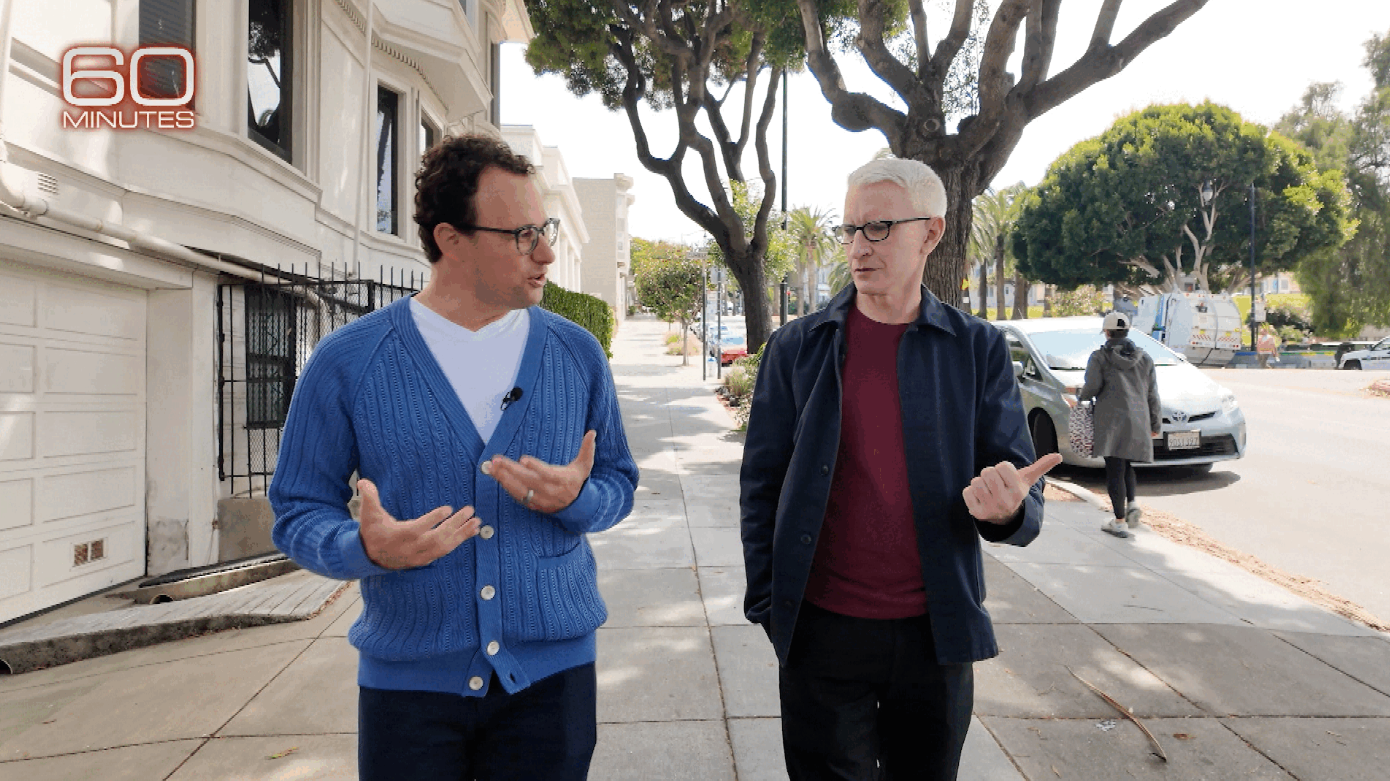
The second segment of 60 Minutes on November 16, 2025, takes viewers into Anthropic, one of the world’s most influential artificial intelligence companies. Anderson Cooper’s report offers an in-depth look at how this $183 billion San Francisco firm has made ethics and safety the foundation of its technology. Led by CEO Dario Amodei, Anthropic’s mission is to develop AI systems that align with human values and operate transparently. Cooper’s visit to the company’s headquarters reveals a workplace defined by both ambition and caution, where researchers pursue innovation while confronting the immense responsibility that comes with creating intelligent systems.
Anthropic’s approach to AI development differs from competitors focused primarily on speed and market share. Cooper highlights the company’s deliberate pace and internal culture, which emphasizes rigorous testing, risk assessment, and philosophical reflection. The result is a profile not just of a company, but of an idea—one that seeks to prove artificial intelligence can be both transformative and safe.
- 60 Minutes Reports on “The President’s Pardon”, “Inside Anthropic” & “Chess Boxing” November 16 2025
- The President’s Pardon: 60 Minutes Investigates the Binance–Trump Connection
- Chess Boxing: 60 Minutes Explores the Sport Where Checkmate Meets Knockout
A Company Founded on Caution
Anthropic emerged in 2021 when Dario Amodei and a group of former OpenAI researchers broke away to pursue their own vision for responsible AI. Disillusioned by what they saw as a growing disregard for safety in the race toward powerful systems, the founders built Anthropic to focus on creating models that behave predictably and follow ethical guidelines. The company’s flagship product, Claude, reflects this philosophy: an AI designed to reason clearly, reject harmful requests, and explain its decisions.
In the 60 Minutes segment, Amodei explains that the company’s core methodology—known as “constitutional AI”—gives its systems a written set of principles that guide their decision-making. This framework allows the model to self-correct by referring to ethical rules during its responses. Cooper’s conversation with Amodei reveals the challenges of defining these principles, which must strike a balance between moral intent and practical use. Anthropic’s engineers view this as essential to preventing misuse and ensuring that AI benefits society rather than destabilizing it.
The Race to Control Intelligence
Cooper’s report situates Anthropic within a global competition that includes technology giants such as Google and Microsoft, as well as OpenAI, Anthropic’s former parent organization. While these companies race to produce increasingly capable models, Anthropic distinguishes itself through its focus on restraint and transparency. The company regularly publishes research on AI alignment and risk management, seeking to engage policymakers and the public in discussions about how such technologies should evolve.
At the same time, Cooper’s story acknowledges the commercial realities of Anthropic’s position. Despite its cautious ethos, the company operates within a high-stakes market where innovation is both a moral and financial necessity. Investors see massive opportunity, while regulators demand accountability. Anthropic’s challenge, as Cooper notes, lies in maintaining integrity amid pressure to compete in an environment that rewards speed and dominance.
Ethics, Regulation, and the Global Debate
The segment also explores the growing conversation around regulation and ethics in artificial intelligence. Governments around the world are struggling to define clear rules for how AI should be developed, used, and controlled. Anthropic has become a key voice in these discussions, advocating for standards that protect against bias, misinformation, and potential harm. Amodei tells 60 Minutes that transparency is not only a moral stance but a business imperative, as public trust becomes increasingly vital to the industry’s future.
Cooper’s interviews with policy experts and AI researchers reveal deep concern about the potential for advanced systems to disrupt economies, spread disinformation, or even make autonomous decisions without human oversight. Anthropic’s approach, they argue, represents one of the few credible attempts to bridge the gap between innovation and safety. The segment captures a critical moment in the debate over whether humanity can control the technologies it creates.
Anderson Cooper’s Investigative Lens
Anderson Cooper’s visit to Anthropic is more than a company profile—it is a meditation on power and responsibility. His reporting draws out the human dimension behind technological progress, focusing on the scientists and engineers who wrestle daily with the consequences of their creations. In one scene, he observes researchers testing how Claude responds to sensitive prompts, illustrating how each decision carries moral weight.
Cooper’s calm, analytical style helps translate the complexities of machine learning into a story about values and foresight. His interviews are framed by a simple but profound question: Can humanity build intelligence without losing control of it? The story avoids sensationalism, instead offering a balanced view of both the promise and the danger that AI represents.
The Future of Thoughtful Technology
As the segment concludes, 60 Minutes positions Anthropic as a company trying to define a new path for the tech industry. It suggests that the future of artificial intelligence depends on whether innovation can coexist with introspection. The story leaves viewers with a sense of cautious optimism—an understanding that while AI carries risks, it also offers opportunities to reshape the world for the better if guided responsibly.
“Anthropic” stands as one of 60 Minutes’ most timely reports, illuminating a company that has become both a pioneer and a moral compass in an industry racing toward uncharted territory. By exploring its work with clarity and depth, Anderson Cooper brings audiences closer to understanding how the next era of intelligence is being built—and who will decide how it behaves.
More 60 Minutes November 16 2025
- 60 Minutes Reports on “The President’s Pardon”, “Inside Anthropic” & “Chess Boxing” November 16 2025
- The President’s Pardon: 60 Minutes Investigates the Binance–Trump Connection
- Inside Anthropic: 60 Minutes Investigates How Dario Amodei Plans to Keep AI Under Control
- Chess Boxing: 60 Minutes Explores the Sport Where Checkmate Meets Knockout
More Feature Articles
- “Running Man”: Dateline Reports on Ashley Schwalm Homicide November 14 2025
- “I’m Going to Get You”: 20/20 Reports on Debbie Dorian Homicide November 14 2025
- “Tracker Dakota Black”: 48 Hours Reports on Makayla Meave Homicide November 15 2025
- 60 Minutes Reports on “The President’s Pardon”, “Inside Anthropic” & “Chess Boxing” November 16 2025