
CRISPR Kids: 60 Minutes Follows the Teens Taking on Lyme Disease
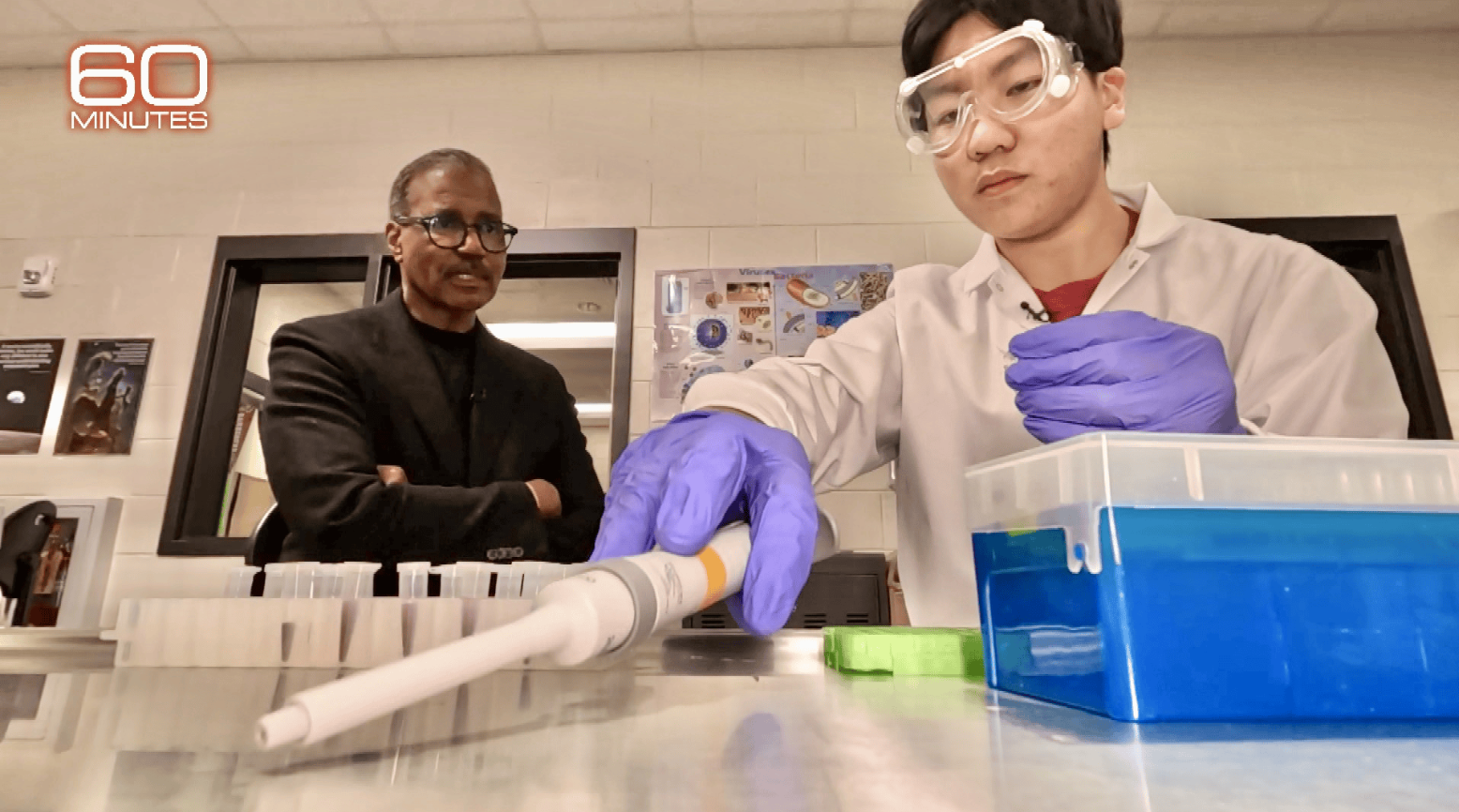
In the second segment of 60 Minutes this Sunday, correspondent Bill Whitaker travels to Georgia to meet a remarkable group of teenagers using gene-editing technology to tackle one of America’s fastest-growing health threats: Lyme disease. These students, dubbed the “CRISPR Kids,” attend Lambert High School, where they’ve harnessed the power of CRISPR to create a novel method for detecting and potentially treating Lyme disease—an innovation that has already captured the attention of international scientists.
Using skills more commonly seen in university labs, these students developed a way to use CRISPR, a revolutionary gene-editing tool, to flag the presence of Lyme pathogens quickly and accurately. Their work has earned them a coveted spot at iGEM, the world’s top synthetic biology competition, often referred to as the Olympics of biotech, held annually in Paris.
- 60 Minutes Reports on “Polymarket”, “CRISPR Kids” & “Lamine Yamal” November 30 2025
- Polymarket: 60 Minutes Investigates the Billionaire Betting on the Future
- Lamine Yamal: 60 Minutes Profiles the Young Star Tipped to Be the Next Messi
Lyme Disease: A Growing Threat
Lyme disease affects nearly 500,000 Americans each year, often going undiagnosed or misdiagnosed due to its vague symptoms and unreliable testing. Early detection is crucial, yet current diagnostic tools can take weeks and may miss the infection altogether. What makes the CRISPR Kids’ project stand out is not just their use of cutting-edge science, but the practicality of their approach.
The students created a test that can be administered more quickly and affordably than traditional lab diagnostics. It’s a potential game-changer, particularly in rural or underserved areas where Lyme disease is on the rise. Their work represents a fusion of innovation, accessibility, and urgency in a field that has long struggled for attention and funding.
The Rise of China’s Biotech Powerhouse
As Lambert High’s team heads to Paris, they’re entering an increasingly competitive international arena. One of the storylines that emerges in the 60 Minutes report is the growing influence of China in biotechnology. Over the past decade, China has poured billions into genetic research, synthetic biology, and CRISPR-based medicine. Chinese student teams have dominated recent iGEM competitions, often backed by university-level resources and government support.
The juxtaposition of a scrappy American high school team going up against China’s biotech juggernaut underscores the global nature of modern science and raises questions about the U.S.’s ability to keep pace. Whitaker’s report explores how students, not seasoned researchers, are now on the front lines of that race.
CRISPR and the Future of Science Education
CRISPR, discovered just over a decade ago, has transformed biology, enabling scientists to precisely cut and edit DNA. It’s been used to treat genetic diseases, engineer crops, and even edit human embryos. But its appearance in a high school science classroom marks a new era in education.
What’s happening at Lambert High isn’t just a one-off project – it’s part of a broader movement to democratize access to high-level science. The 60 Minutes piece highlights how passionate teachers, open-source data, and affordable lab kits are empowering a new generation of young scientists to make real contributions long before college.
America’s Next Generation of Innovators
The CRISPR Kids aren’t just competing for a medal, they’re demonstrating that American innovation is alive and well in unexpected places. These students embody the kind of curiosity, teamwork, and bold thinking that have long defined scientific progress. And as Bill Whitaker notes, their story is about more than science. It’s about what’s possible when students are given the tools and trust to solve problems that matter.
With the rise of global competition and urgent health crises at home, the work of these teenagers may offer both a practical solution to Lyme disease and a hopeful blueprint for how the U.S. can nurture its next generation of scientists. 60 Minutes offers a timely, inspiring, and at times emotional look at the young minds who may be shaping the future of medicine.
More 60 Minutes November 30 2025
- 60 Minutes Reports on “Polymarket”, “CRISPR Kids” & “Lamine Yamal” November 30 2025
- Polymarket: 60 Minutes Investigates the Billionaire Betting on the Future
- CRISPR Kids: 60 Minutes Follows the Teens Taking on Lyme Disease
- Lamine Yamal: 60 Minutes Profiles the Young Star Tipped to Be the Next Messi
More Feature Articles
- Dateline NBC Pre-Empted for Collete Football: Indiana vs Purdue on November 28 2025
- 20/20 Pre-Empted on November 28 2025 for College Football: Texas A&M vs. Texas
- “The Setup Murder of Kristil Krug”: 48 Hours Reports November 29 2025
- 60 Minutes Reports on “Polymarket”, “CRISPR Kids” & “Lamine Yamal” November 30 2025






Im a lymey Lyme ,borrilia,anaplasma,babesia & biofilm issues like what I saw looking forward to tests I’ve removed about 40 ticks from my scalp over 7 years but trying to get better in a rehab they are more interested in profit than health I’m trying to find quality testing but funds are tight goal is to heal and help others any helpful ideas are welcome sincerely Clint🐵
[email protected] 814-482-0030 contact