“Inside CECOT”: 60 Minutes Exposes a Secretive Deportation and a Brutal Jail
The January 18, 2026, episode of 60 Minutes turns its focus outward, examining a controversial deportation program that sent hundreds of Venezuelans from the United States to El Salvador. Reported by Sharyn Alfonsi, the segment exposes how men accused of terrorism were transferred to a country many had never lived in, then imprisoned in CECOT, a facility widely regarded as one of the most brutal detention centers in the Western Hemisphere. This feature article expands on the broadcast by providing additional context, background, and insight into the policy decisions and human consequences behind the story.
A Deportation Without a Destination
In early 2025, the U.S. government quietly deported hundreds of Venezuelan nationals, not back to Venezuela, but to El Salvador. Officials claimed the men posed serious security threats and described them as members of criminal or terrorist networks. What made the move extraordinary was that most of those deported had no legal, familial, or residential ties to El Salvador.
Legal scholars quickly questioned the authority behind such transfers. Deportation law traditionally requires that individuals be returned to their country of origin or citizenship, or to a nation that formally agrees to receive them. In this case, the arrangements between Washington and San Salvador were never fully disclosed, creating uncertainty about the legal foundation of the program and raising alarms among immigration attorneys and human rights groups.
CECOT: A Prison Built to Break Its Inmates
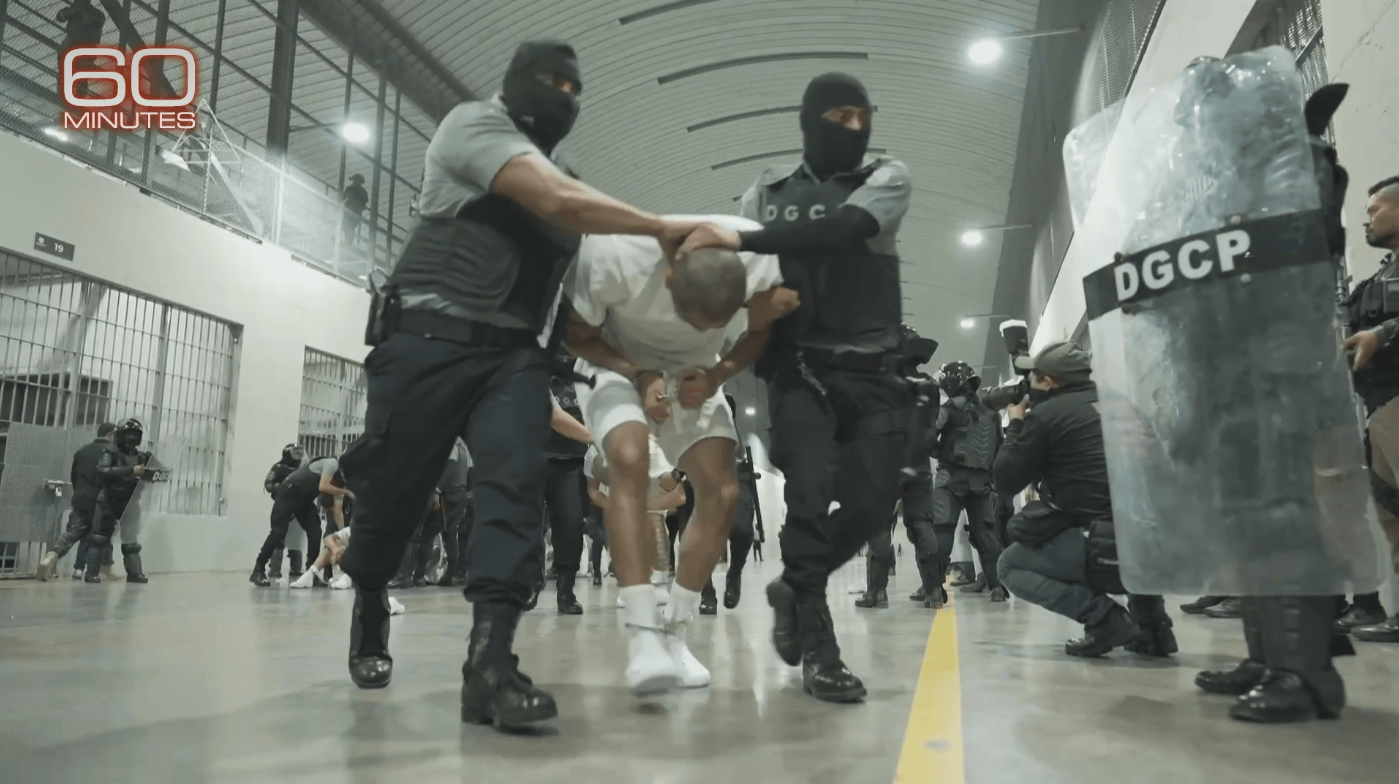
The Centro de Confinamiento del Terrorismo, known as CECOT, is El Salvador’s flagship mega-prison, constructed under President Nayib Bukele as part of his sweeping crackdown on gangs. Designed to hold tens of thousands of inmates, the prison is defined by extreme security, near-total isolation, and conditions that international observers have described as inhumane.
Former detainees interviewed by 60 Minutes describe constant surveillance, overcrowded cells, sleep deprivation, and physical abuse. Some report being denied medical care, while others recount long periods without contact with family or legal counsel. For the Venezuelans sent there, the shock was immediate. Many arrived without understanding why they were in El Salvador at all, let alone why they were being treated as hardened criminals.
The Missing Names and the Silence That Followed
Ten months after the deportations began, the U.S. government has still not released a complete list of those sent to CECOT. Families searching for loved ones have been left to rely on scattered reports, leaked information, and testimony from those who were eventually released. Advocacy groups argue that this lack of transparency violates basic principles of due process.
The absence of official records has also complicated legal challenges. Attorneys representing deportees have struggled to file cases without confirmed identities or locations, while courts have faced difficulty asserting jurisdiction over individuals held in a foreign prison. The silence surrounding the program has become one of its most troubling aspects, turning bureaucratic opacity into a central feature of the controversy.
Survivors Speak: Life After Release
Some of the Venezuelans imprisoned in CECOT have since been released, and their accounts form the emotional core of the 60 Minutes report. They describe entering the prison confused and terrified, unsure if they would ever leave. Several say they were never formally charged with crimes in either the United States or El Salvador.
After their release, many remain stranded. Without clear immigration status, stable housing, or access to legal support, their lives are defined by uncertainty. Psychological trauma is common, with former detainees describing lingering fear, insomnia, and distrust of authorities. Their stories challenge the original narrative that framed them as dangerous threats, instead revealing ordinary people caught in an extraordinary and punitive system.
Policy, Power, and Human Rights Concerns
The deportations occurred during the final year of the Trump administration, reflecting its aggressive approach to immigration enforcement and national security. Critics argue the program blurred the line between immigration law and extrajudicial punishment, outsourcing detention to a foreign prison known for its brutality.
Human rights organizations have condemned the practice, warning that it sets a dangerous precedent. If governments can transfer migrants to third countries with little oversight, accountability becomes increasingly difficult to enforce. The CECOT case now sits at the intersection of immigration policy, international law, and human rights, drawing scrutiny from legal experts around the world.
An Ongoing Legal and Moral Reckoning
Legal challenges tied to the CECOT deportations are still unfolding, with courts weighing whether constitutional protections apply once individuals are removed from U.S. soil. At the same time, lawmakers face growing pressure to explain who authorized the program and under what legal rationale.
The 60 Minutes segment underscores how easily people can disappear within complex systems of power when transparency is absent. For the deportees who survived CECOT, the fight is no longer just about immigration status, but about recognition and accountability. Their experiences raise profound questions about how far a government can go in the name of security, and who bears responsibility when policy decisions cause lasting human harm.
More 60 Minutes January 18 2026
- 60 Minutes Reports on “Minneapolis”, “Inside CECOT” & “Salties” January 18 2026
- “Minneapolis”: 60 Minutes Investigates a Deadly ICE Raid and a City on Edge
- “Inside CECOT”: 60 Minutes Exposes a Secretive Deportation and a Brutal Jail
- “Salties”: 60 Minutes Investigates Australia’s Fearsome and Protected Predator