


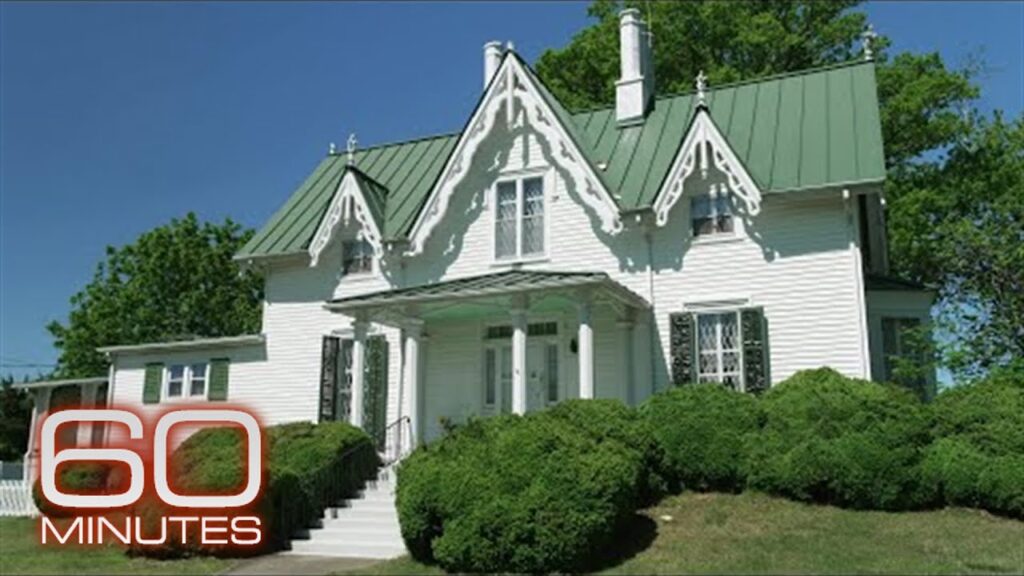
When Fred Miller purchased an old house in southern Virginia, he wanted somewhere large enough for his extended family to gather. He had no idea that the property would eventually answer questions about his family’s history that he had once considered almost impossible to answer.
The imposing white house was Sharswood, the former center of a plantation in Pittsylvania County, Virginia. Research undertaken after Miller’s purchase would establish an extraordinary connection: his great-great-grandparents, David and Violet Miller, had been enslaved there.
Lesley Stahl explores the Miller family’s discovery in the double-length “Sharswood” report featured on the September 6 edition of 60 Minutes. The story goes beyond an unusual property purchase, showing how census records, birth records, genealogy, archaeology and surviving buildings allowed one African American family to recover part of a history that slavery had made difficult to trace.

Fred Miller Buys Sharswood
Miller, an Air Force veteran who grew up in the area, purchased the Sharswood house in May 2020. His family remained close, frequently coming together for birthdays, meals and other celebrations, and he wanted a property that could accommodate those gatherings.
His sister, Karen Dixon-Rexroth, had encouraged him to buy it. Neither initially understood the significance the house would have for their own family. Miller told 60 Minutes that he had never even heard of a Miller plantation despite growing up nearby.
The previous owners were the Thompson family, who had acquired the property in 1917 and retained it for more than a century. Miller therefore became the owner of a place whose documented history extended far beyond anything he understood when he completed the purchase.
Karen became fascinated with that history. She began spending nights and weekends researching the house, its former owners and the surrounding property. What initially resembled an investigation into an interesting old Virginia home soon revealed something much larger.
Sharswood Was Once a Major Plantation
The house stands in Pittsylvania County near the North Carolina border, an area once closely associated with tobacco production. The surviving Gothic Revival house dates to around 1850, although structures on the property are considerably older.
Karen’s research revealed that Sharswood had been the center of a substantial plantation before the Civil War. CBS reported it as approximately 1,300 acres, while other historical research has described the larger plantation holdings as around 2,000 acres.
Its owners included Nathaniel Crenshaw Miller and Charles Edwin Miller. The recurrence of the Miller name eventually became important, although Fred and Karen did not initially make a connection between those white plantation owners and their own family surname.
The 1860 census recorded 58 enslaved people at Sharswood, including 23 children. Historical research also indicates that there were 12 structures on the plantation associated with the people enslaved there.
The numbers place Sharswood within a much larger system. 60 Minutes reported that more than 14,000 enslaved people lived in Pittsylvania County before the Civil War, while Virginia’s enslaved population approached half a million.
For Miller, however, the history would become far more personal than statistics about the plantation or county.
The Search for Fred Miller’s Family
Karen and other members of the family, including cousins Dexter Miller and Sonya Womack-Miranda, began trying to determine whether their own Miller ancestors could have been connected to Sharswood.
Dexter already knew more about the property’s past than Fred did. He had worked with Bill Thompson, a member of the family that owned Sharswood before Fred’s purchase. Decades earlier, Thompson had suggested to Dexter that his ancestors might have come from the plantation, partly because of the shared Miller surname. Dexter never had the evidence necessary to establish that connection and did not pass the theory on to Fred.
The family’s investigation gained momentum with the assistance of Karice Luck-Brimmer, a local historian and genealogist experienced in African American genealogy in Pittsylvania County. She helped the family work through census information and other historical records to move backward through the generations.
One crucial person was Fred’s great-grandmother Sarah Miller, who died in 1949. Her death certificate identified her parents as David and Violet Miller. That provided researchers with the names of the generation that had lived through emancipation.
The next challenge was proving where David and Violet had been before slavery ended.
Why Tracing Enslaved Ancestors Can Be So Difficult
The Miller family’s investigation illustrates one of the central difficulties in African American genealogy. Before emancipation, enslaved people were often recorded as property rather than as individuals in records created by slaveholders and government authorities.
The 1860 federal slave schedules, for example, did not identify the people enslaved at Sharswood by name. They were recorded principally by characteristics such as age and sex under the name of the enslaver. Researchers could see that Nathaniel Crenshaw Miller held 58 enslaved people, but the schedule alone could not reveal whether David or Violet was among them.
The 1870 census was therefore critical. Conducted after emancipation, it identified David and Violet Miller by name. The records showed them living near Sharswood and working as farmhands. Neither was recorded as being able to read or write. Their children were also listed.
Among those children were Emily, Sarah and Samuel Miller. Sarah was about one year old in 1870, while Samuel was five. Samuel’s age was particularly significant because it meant that he had been born before emancipation.
That gave Luck-Brimmer another avenue of investigation.
The Record That Connected Violet Miller to Sharswood
Luck-Brimmer searched the Virginia Slave Birth Index, a historical record containing births reported by slaveholders.
She found Samuel.
His birth was recorded under N.C. Miller, Nathaniel Crenshaw Miller, one of Sharswood’s owners. More importantly, the record identified Violet as Samuel’s mother.
The discovery created the documentary bridge the family had been seeking. Sarah’s death certificate connected Sarah to her parents, Violet and David. The 1870 census connected Sarah to her older brother Samuel. Samuel’s pre-emancipation birth record then connected Violet to Nathaniel Crenshaw Miller.
Luck-Brimmer regarded the record as definitive evidence that Violet had been enslaved by N.C. Miller. Taken with the family’s other research, it established the connection between Fred Miller’s ancestors and Sharswood.
Fred initially struggled to believe what his sister was telling him. He had unknowingly purchased the property where members of his own family had lived under slavery.
A house bought for descendants to celebrate together had once been a place where their ancestors were denied control over their own lives.
The Slave Quarters Behind the House
Sharswood is important not only because documentary evidence survives. Parts of the physical landscape inhabited by enslaved people remain as well.
Behind the main residence is a small timber-framed structure that predates the Gothic Revival house. Preservation Virginia says the building appears to have been constructed during the 18th century. Historical investigation indicates that it originally served as a house for a white family before being divided into two single-room living spaces used by enslaved households. It may also have functioned as a kitchen or laundry at different times.
Other historic structures survive on the property, including a brick smokehouse, office and covered well. The existence of the quarters provides a stark contrast with the main residence.
The grand house represented the wealth generated by the plantation. A short distance behind it stood the much smaller space occupied by people whose forced labor helped sustain that system.
For Fred, ownership of both structures created an unusual responsibility. The slave quarters were no longer an abstract historic site. They represented a place where people connected to his family and others enslaved at Sharswood may have lived and worked.
The Search Leads to a Forgotten Cemetery
Another discovery took the family beyond Fred’s property line.
During an early visit by the 60 Minutes production team, Dexter Miller spoke with his former colleague Bill Thompson. Dexter asked a question that had troubled him: Where was the cemetery for the enslaved people of Sharswood?
Thompson knew the answer.
He directed Dexter toward a cluster of trees just beyond Fred’s property. Members of the Miller family and the 60 Minutes team went there and found the likely burial ground of people enslaved at Sharswood.
The cemetery contained stones marking graves, but generations of neglect had made individual burials difficult or impossible to identify. Historical documentation of Sharswood also records the existence of a cemetery for enslaved people whose grave markers are no longer identifiable.
For Fred, visiting the burial ground raised the possibility that he was standing beside the graves of his own ancestors.
It also expanded the family’s project. Preserving Sharswood would mean considering not only the main house but the surviving quarters, landscape and burial ground that documented the lives of the people who had been enslaved there.
Sharswood Becomes a Place to Reclaim History
The Miller family’s discovery gives Sharswood a rare modern history. A property built around slavery eventually passed into the ownership of a descendant of people enslaved there.
Fred has spoken about the emotional weight of knowing that members of his family once moved through the same spaces. He told 60 Minutes that wear visible on the basement stairs made him think about enslaved people carrying food into the main house and the possibility that his own relatives had walked those steps.
At the same time, the family’s response has not been limited to grief. Ownership gives Fred an opportunity to decide how the property and its history will be treated.
He told Stahl that he wanted historians and others interested in learning about Sharswood to have access to it. Since the original 60 Minutes report, Miller has established the nonprofit Sharswood Foundation, begun offering tours and worked toward maintaining the surviving slave quarters and cemetery. He also took a job in Virginia that allowed him to live closer to his family and Sharswood.
The work turns a private family discovery into a broader preservation project. The main house can tell part of Sharswood’s history, but the quarters, cemetery and surviving records make it possible to tell the story of the people whose labor sustained the plantation as well.
What Sharswood Means to the Miller Family Today
There is a striking symmetry to the way the story ends. Fred bought Sharswood without knowing its history because he wanted somewhere his family could be together.
That remains one of its purposes.
The difference is that gatherings now take place with an understanding of the generations who came before them. Fred and his relatives know the names David and Violet Miller. They know where the couple lived after emancipation, and they have documentary evidence connecting Violet and her son Samuel to the man who enslaved them. They also know that somewhere within Sharswood’s landscape may lie the graves of members of their family.
The story demonstrates how much history can remain hidden in an apparently familiar place. Fred had grown up in the same part of Virginia without knowing that the large old house nearby was tied directly to his family.
Now the descendants of people once enslaved at Sharswood can gather inside its main house by choice.
For Fred Miller, that reversal is part of the property’s new meaning. When Stahl asked what he believed Violet and David would think about their descendants owning Sharswood, Miller said he hoped they would be proud of what the family had accomplished.
Lesley Stahl’s updated “Sharswood” report airs as part of the encore edition of 60 Minutes on Sunday, September 6, 2026, at 7:00 p.m. ET/PT on CBS, with the program also streaming on Paramount+.