
Laser Focus: 60 Minutes Reports on the Race to Stop Drone Warfare with Laser Weapons
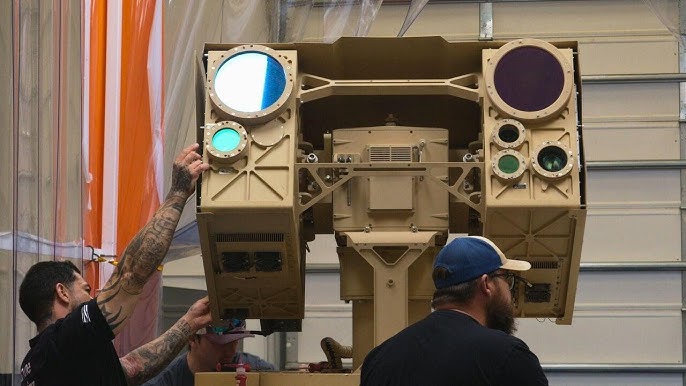
CBS’s 60 Minutes examines emerging military technology in the segment “Laser Focus,” airing Sunday, March 15, 2026. Correspondent Lesley Stahl investigates a new approach to countering drone warfare, one of the most rapidly evolving threats facing modern militaries. As inexpensive drones increasingly appear on battlefields and in regional conflicts, defense contractors and the Pentagon are working to develop directed energy weapons that could neutralize them quickly and at a much lower cost than traditional defenses.
The report focuses on a Pentagon contractor developing a laser-based system designed to destroy hostile drones in flight. Stahl’s visit offers a look at the science behind the technology and raises a larger question facing military planners. Can laser weapons realistically provide a reliable defense against the growing threat posed by small, inexpensive drones? Produced by Shachar Bar-On and Jinsol Jung, the segment places this technological race within the broader context of modern warfare.
The Rising Threat of Drone Warfare
The widespread availability of drones has transformed the nature of conflict in recent years. Once primarily used by advanced militaries, drone technology has become relatively cheap and accessible, allowing both state actors and non-state groups to deploy unmanned aircraft for surveillance, reconnaissance, and attacks.
Iran has become one of the leading developers of low-cost drone technology in the Middle East. Over the past decade, the country has produced a variety of unmanned aerial vehicles capable of carrying explosives or gathering intelligence. These drones have appeared in several conflicts and have been used by allied groups throughout the region.
In the ongoing conflict involving Iran and its adversaries in the Persian Gulf, these drones have been used to threaten military bases, naval vessels, and infrastructure. Their relatively small size and ability to fly at low altitudes make them difficult to detect and intercept using traditional air defense systems.
The use of swarms of inexpensive drones also presents a financial challenge for militaries relying on costly missile defenses. Interceptor missiles can cost hundreds of thousands of dollars each, while the drones they destroy may cost only a few thousand. This imbalance has forced defense planners to search for more efficient solutions.
The Promise of Directed Energy Weapons
One potential solution is the development of directed energy weapons, particularly high-energy lasers. Unlike traditional weapons that rely on projectiles or explosives, laser systems deliver concentrated beams of energy capable of heating and disabling targets within seconds.
When aimed at a drone, a laser can burn through key components such as sensors, motors, or structural elements. Because the beam travels at the speed of light, it can strike targets almost instantly after being directed toward them.
Another advantage of laser systems is cost. Once the equipment is installed, each shot requires only electricity rather than expensive munitions. This could allow military forces to defend against large numbers of drones without rapidly exhausting supplies of interceptor missiles.
However, the technology still faces several engineering challenges. High-energy lasers require substantial power generation and cooling systems. Atmospheric conditions such as dust, humidity, and smoke can also affect the strength and accuracy of the beam, particularly in desert or maritime environments like the Persian Gulf.
How Laser Systems Are Being Developed
In the 60 Minutes report, Lesley Stahl visits a defense contractor working with the Pentagon to develop a laser system designed to counter small aerial threats. Engineers demonstrate how the system identifies a drone, tracks it, and focuses a powerful beam of energy on the target.
The technology relies on advanced sensors and targeting software that allow the laser to remain precisely focused even as the drone moves through the air. Maintaining accuracy is essential because even small movements can reduce the beam’s effectiveness.
Developers are also working to integrate laser weapons with existing radar and air defense systems. By combining detection technology with directed energy weapons, the goal is to create layered defenses capable of responding quickly to emerging threats.
The report also examines how these systems might eventually be deployed on naval vessels, military bases, or mobile ground platforms. Each environment presents unique challenges involving power supply, stability, and targeting precision.
Strategic Implications for Future Conflicts
The development of laser weapons represents a significant shift in how militaries may defend themselves against aerial threats. If the technology proves reliable in real-world conditions, it could change the balance between offensive drone capabilities and defensive countermeasures.
For nations facing large numbers of inexpensive drones, laser systems offer the possibility of sustained defense without the financial burden associated with missile interceptors. This could become particularly important in regions where drone attacks occur frequently.
At the same time, the introduction of directed energy weapons may also trigger new technological competition among rival powers. As defensive technologies improve, adversaries may respond by developing more advanced drones capable of evading or overwhelming these systems.
The 60 Minutes segment highlights how rapidly military innovation is evolving in response to new threats. While laser weapons have long been associated with science fiction, they are now approaching operational reality. As Stahl’s report suggests, the coming years may determine whether these systems become a central component of modern defense strategies.
More 60 Minutes March 15 2026
- 60 Minutes Reports on “Choke Point” & “Growing Up Behind Walls” on March 15 2026
- Choke Point: 60 Minutes Reports on the Strait of Hormuz Crisis Threatening Global Oil Supplies
- Laser Focus: 60 Minutes Reports on the Race to Stop Drone Warfare with Laser Weapons
- Growing Up Behind Walls: 60 Minutes Reports from a Sanctuary in Crisis-Torn Haiti