
Turning the Ship Around: 60 Minutes Investigates America’s Shipbuilding Decline
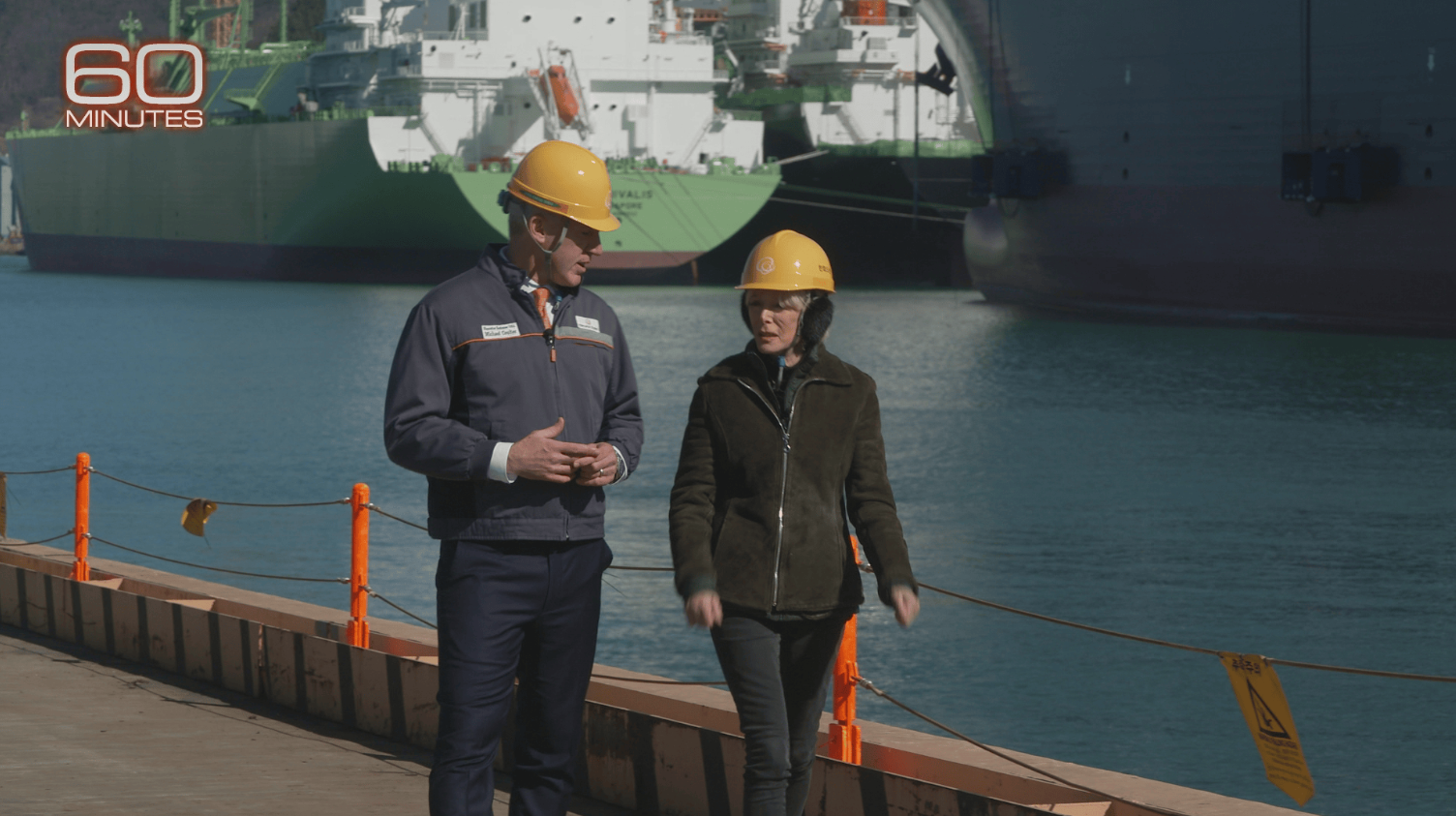
The March 22, 2026 broadcast of 60 Minutes continues with “Turning the Ship Around,” a report that examines the long decline of American shipbuilding and the renewed effort to rebuild it. Correspondent Lesley Stahl travels to both South Korea and the United States to explore how international cooperation and private investment are being used to revive an industry once central to American economic and military strength. The segment places the issue within a broader national conversation about manufacturing, supply chains, and security.
- 60 Minutes Reports on “Elemental Crisis”, “Turning the Ship Around” & “The Dog Aging Project” on March 22 2026
- Elemental Crisis: 60 Minutes Investigates America’s Rare Earth Race
- The Dog Aging Project: 60 Minutes Reports on a 50,000-Dog Study
The Decline of American Shipbuilding
Shipbuilding in the United States was once a defining industry, particularly during and after World War II, when American shipyards produced vessels at an unmatched pace. Over time, however, a combination of policy decisions, rising costs, and global competition led to a steady decline. Many shipyards closed, and production capacity shrank to a fraction of what it once was.
Today, the contrast with global competitors is stark. The United States produces only a small number of large commercial ships each year, while countries such as China and South Korea dominate the market. This shift has raised concerns not only about economic competitiveness but also about the ability to support military and logistical needs during times of crisis.
A Growing National Security Concern
The decline in shipbuilding has moved beyond an economic issue and into the realm of national security. A limited domestic shipbuilding capacity can affect the ability to maintain and expand naval fleets, as well as to support global trade operations. Policymakers have increasingly described the situation as a vulnerability, particularly as geopolitical tensions continue to shape international relations.
The segment highlights how recent administrations have elevated the issue, framing it as a priority for industrial policy. Reviving shipbuilding is seen as a way to strengthen both economic resilience and defense readiness. It also reflects a broader effort to rebuild domestic manufacturing sectors that have been lost or weakened over time.
South Korea’s Role in Reviving the Industry
A key focus of the report is the role of South Korea, one of the world’s leading shipbuilding nations. Companies such as Hanwha have developed advanced expertise, efficient production methods, and large-scale facilities that allow them to compete globally. Their success has made them valuable partners for countries looking to rebuild their own capabilities.
Hanwha’s investment in the Philadelphia shipyard represents a significant step in this direction. By acquiring and revitalizing the facility, the company aims to bring modern shipbuilding techniques and management practices to the United States. Stahl’s reporting from South Korea provides insight into how these shipyards operate, offering a contrast to the challenges faced by American counterparts.
Revitalizing the Philadelphia Shipyard
The Philadelphia shipyard stands as a symbol of both decline and potential renewal. Once a major hub of industrial activity, it has faced periods of uncertainty and reduced output. The involvement of Hanwha introduces new resources and expertise, with the goal of transforming the yard into a competitive and sustainable operation.
The segment explores how this partnership is expected to work in practice. It includes the transfer of knowledge, investment in infrastructure, and efforts to train a skilled workforce. Reviving shipbuilding requires more than capital; it depends on rebuilding a network of suppliers, engineers, and workers who can support long-term production.
The Broader Push for Industrial Renewal
“Turning the Ship Around” places the Philadelphia project within a wider effort to restore American industrial capacity. Shipbuilding is one part of a larger strategy that includes investments in manufacturing, energy, and technology. These initiatives reflect a shift toward strengthening domestic production in response to global competition and supply chain disruptions.
The report suggests that success will depend on sustained commitment from both government and industry. Reviving a sector that has declined over decades cannot happen quickly, and it requires coordination across multiple levels. The segment presents a cautious but detailed look at how partnerships and policy changes could reshape the future of American shipbuilding, with implications that extend far beyond the shipyards themselves.
More 60 Minutes March 22 2026
- 60 Minutes Reports on “Elemental Crisis”, “Turning the Ship Around” & “The Dog Aging Project” on March 22 2026
- Elemental Crisis: 60 Minutes Investigates America’s Rare Earth Race
- Turning the Ship Around: 60 Minutes Investigates America’s Shipbuilding Decline
- The Dog Aging Project: 60 Minutes Reports on a 50,000-Dog Study
More Feature Articles
- “Murder She Wrote: The Kouri Richins Trial”: 20/20 Reports March 20 2026
- “Under the Bay Bridge”: Dateline Reports on Bob Lee Homicide March 20 2026
- “What the Neighbors Saw”: 48 Hours Reports on Gary Herbst Homicide March 21 2026
- 60 Minutes Reports on “Elemental Crisis”, “Turning the Ship Around” & “The Dog Aging Project” on March 22 2026








Why didn’t the 60 Minute segment on March 22nd on the Collapse of shipbuilding in the U.S. does not reference the dominance of the U.S. in shipbuilding after World War II. There was no mention of the contribution of “Rosie the Riveter” to the shipbuilding during WW II. According to the book titled “Ships for Victory, A History of Shipbuilding under the U.S. Maritime Commission in World War II” by Frederic C. Lane, states on page xiii “By the end of the war U.S, shipyards working under the Maritime Commission’s direction had built a total of 5,777 cargo ships, . . .” Why did 60 Minutes mention the WW II history of building cargo ships in the segment?