


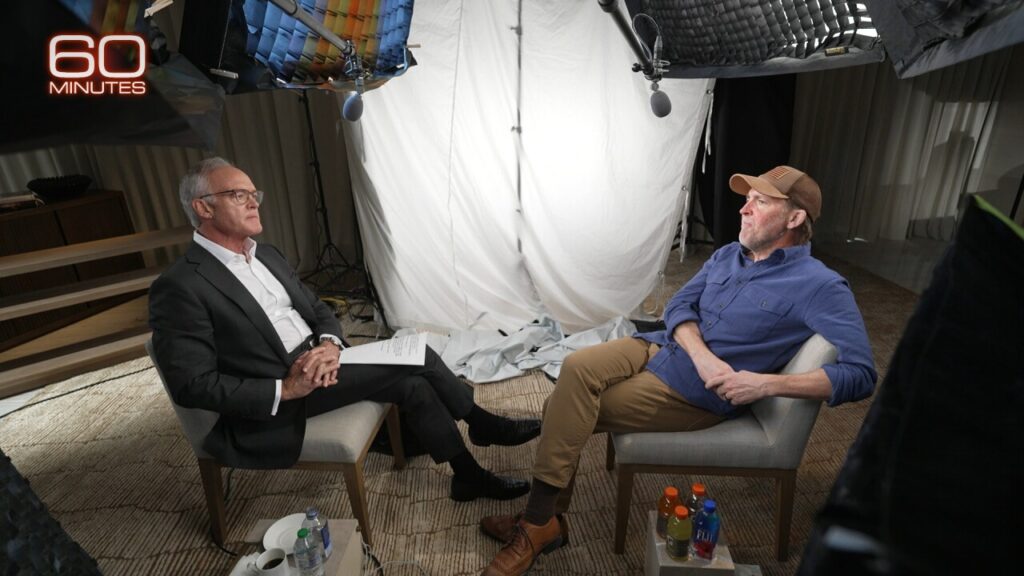
On Sunday, April 26, 2026, 60 Minutes presents a deeply personal and wide-ranging interview with former Nebraska Senator Ben Sasse, who is facing terminal pancreatic cancer at age 54. In conversation with Scott Pelley, Sasse steps away from the usual rhythms of political debate and instead reflects on the larger questions shaping his final chapter. The segment positions his story not simply as a political retrospective, but as a meditation on life, belief, and the state of the country.
Sasse, known for his academic background and reputation as a thoughtful conservative voice, uses the interview to share what he describes as “last lessons.” The tone is reflective rather than combative, with a focus on what he believes still matters in American life. His diagnosis provides the context for a conversation that moves beyond policy, placing greater emphasis on meaning, relationships, and the legacy one leaves behind.

- 60 Minutes Reports on “Ben Sasse” & “The Pigeon Mafia” on April 26 2026
- Shots Fired: 60 Minutes Investigates the Correspondents’ Dinner Scare & Interviews Trump
- The Pigeon Mafia: 60 Minutes Investigates High-Stakes Theft in Elite Racing
A Career Shaped by Principle and Dissent
Before entering politics, Sasse built a career in academia and public service, including roles in the U.S. Department of Health and Human Services and as president of Midland University. Elected to the U.S. Senate in 2014, he quickly developed a reputation for independence within his party. He was often willing to challenge both Republican and Democratic leadership, particularly on issues related to constitutional norms and the tone of national discourse.
During his time in the Senate, Sasse became known for his criticism of political tribalism and what he saw as a growing culture of division. He frequently spoke about the importance of civic education and the need for Americans to engage more deeply with their communities. That perspective carries into the 60 Minutes interview, where he reflects on the long-term health of the country and the responsibilities of both leaders and citizens.
Confronting Illness and Redefining Priorities
Sasse’s pancreatic cancer diagnosis shifts the focus of the interview toward more personal terrain. Pancreatic cancer is widely regarded as one of the most aggressive forms of the disease, often diagnosed at an advanced stage and associated with low survival rates. Against that backdrop, Sasse speaks candidly about how his understanding of time, purpose, and relationships has changed.
The conversation explores how facing a terminal illness can bring clarity to what matters most. Sasse discusses the role of faith in his life and how it shapes his view of mortality. He also reflects on family, describing the importance of being present and intentional in the time that remains. Rather than framing the diagnosis solely in terms of loss, the interview presents it as a moment of focus and recalibration.
Faith, Technology, and the Future of America
One of the more distinctive elements of the segment is Sasse’s effort to connect personal reflection with broader societal issues. He speaks about the role of faith not only as a private belief system but as a source of resilience and community. This perspective informs his views on how Americans might navigate division and uncertainty.
At the same time, Sasse addresses the growing influence of artificial intelligence, raising questions about how rapidly advancing technology could reshape work, education, and human relationships. His comments suggest a cautious optimism, paired with concern about whether society is prepared for the pace of change. By linking these themes, the interview situates his personal story within a larger conversation about the future.
Extending the Conversation Beyond the Broadcast
The 60 Minutes segment serves as an introduction to a broader discussion that continues in a special edition of Things That Matter. The extended interview allows Sasse to elaborate on topics only briefly touched on during the broadcast, while a town hall moderated by Scott Pelley brings in perspectives from individuals dealing with their own health challenges.
This extended format adds another layer to the story, turning a one-on-one interview into a shared dialogue. Audience members raise questions about faith, mortality, and how to find meaning in difficult circumstances. The result is a more expansive exploration of the themes introduced on 60 Minutes, reinforcing the segment’s focus on reflection, connection, and the search for purpose.
More 60 Minutes April 26 2026
- 60 Minutes Reports on “Ben Sasse” & “The Pigeon Mafia” on April 26 2026
- Shots Fired: 60 Minutes Investigates the Correspondents’ Dinner Scare & Interviews Trump
- Ben Sasse: 60 Minutes Reports a Final Conversation on Faith, Family, and Facing Mortality
- The Pigeon Mafia: 60 Minutes Investigates High-Stakes Theft in Elite Racing
More Feature Articles
- “Book of Lies”: Dateline Reports on Kouri Richins Case April 24 2026
- 20/20 Pre-Empted April 24 2026 for NFL Draft Coverage on ABC
- “Down the Rabbit Hole”: Dateline Reports on Mary Ann Murphy Homicide April 25 2026
- “The Killing of Theresa Fusco”: 48 Hours Reports April 25 2026
- 60 Minutes Reports on “Ben Sasse” & “The Pigeon Mafia” on April 26 2026