
Destination: Nowhere: 60 Minutes Investigates Trump’s Controversial Third-Country Deportations
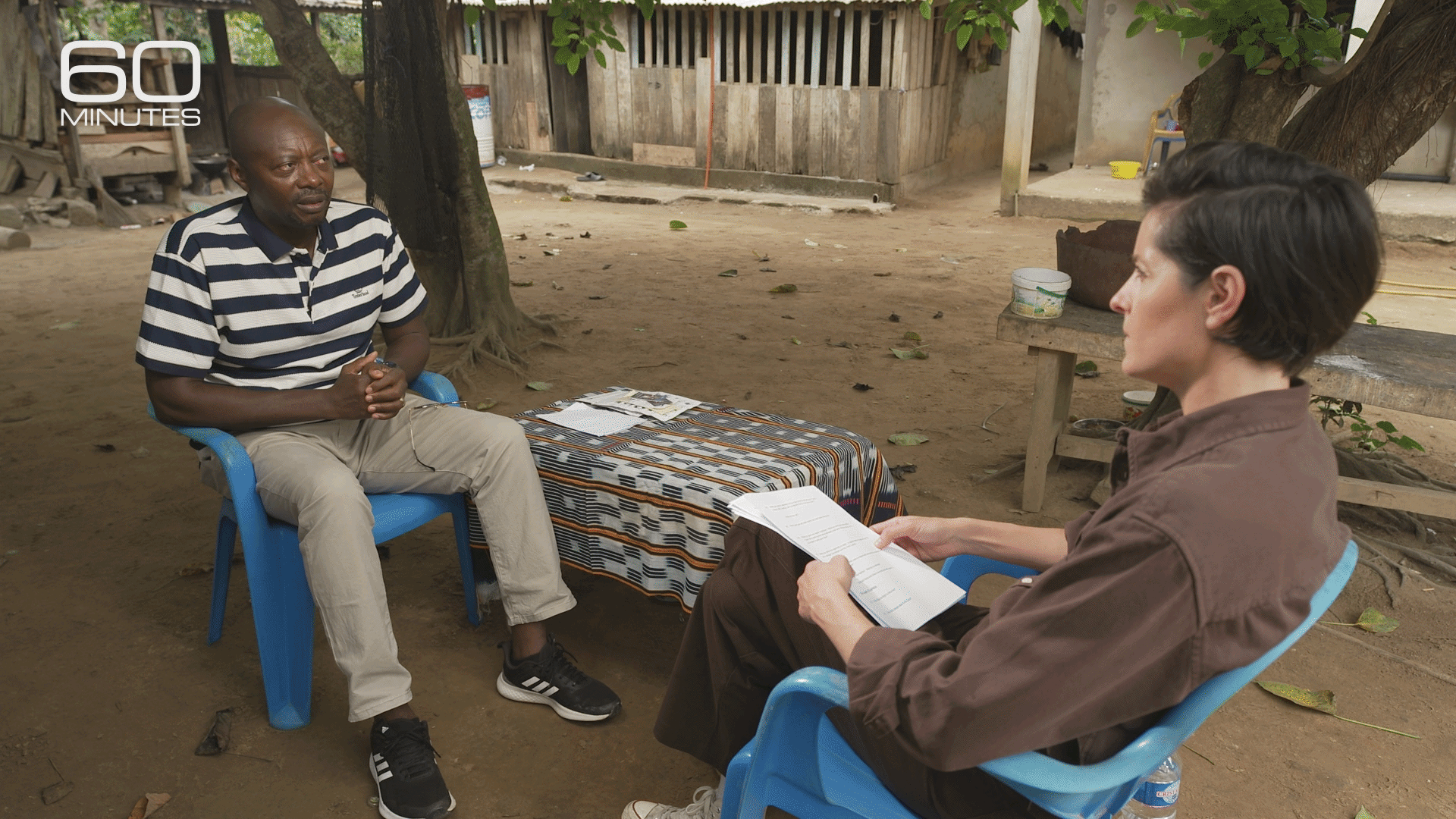
60 Minutes investigates one of the most controversial elements of the Trump administration’s immigration crackdown on Sunday, October 25, examining how deportations to third countries can leave migrants facing removal to nations where American courts have determined they could be persecuted or tortured.
In a report titled “Destination: Nowhere,” correspondent Gianna Toboni travels to West Africa to investigate what happens after the United States sends deportees to countries where they are not citizens and may have no family, community or other personal connections.
The investigation focuses on a particularly troubling consequence of these arrangements: some receiving countries are reportedly sending deportees onward to their original homelands, even when U.S. immigration judges have ruled that returning them directly would put their safety at risk.
Toboni speaks with a man who says he was sent against his will to his home country despite such a ruling. She also interviews James Percival, the Department of Homeland Security’s top lawyer, about the legal and practical consequences of the administration’s deportation policies.
- 60 Minutes Reports on “Destination: Nowhere”, “#FreeTinaPeters” & “Australia’s Experiment” October 25 2026
- #FreeTinaPeters: 60 Minutes Investigates Trump’s Pressure Campaign and Colorado’s Disaster Funding
- Australia’s Experiment: 60 Minutes Investigates Whether the Under-16 Social Media Ban Is Working
What Are Third-Country Deportations?
Third-country deportation involves removing an individual from the United States to a country other than their country of citizenship or nationality.
While deportations typically involve returning people to their home countries, American immigration law permits removal to certain alternative destinations under specified circumstances. These arrangements become especially contentious when deportees have no meaningful connection to the receiving country.
The Trump administration has increasingly relied on third-country arrangements as part of its broader effort to accelerate immigration enforcement and expand the number of people removed from the United States.
For some migrants, the legal situation is particularly complicated. A person may have been ordered removed from the United States while simultaneously receiving protection against deportation to a particular country because of the dangers they would face there.
That distinction is central to the 60 Minutes investigation. A ruling preventing deportation to one country does not necessarily establish a right to remain in the United States, but it does impose important restrictions on where the government can send that person.
The question is what happens when a third country subsequently transfers the deportee to the very destination that an American court considered unsafe.
Why Immigration Judges Block Some Deportations
Under U.S. immigration law and international obligations, individuals can receive protection against removal to countries where they face serious threats.
One important protection is known as withholding of removal. It can prevent the government from deporting someone to a particular country when the person establishes that persecution on a protected ground is more likely than not.
A separate protection arises under the Convention Against Torture, an international treaty that prohibits sending individuals to countries where there are substantial grounds for believing they would face torture.
In American immigration proceedings, protection under the convention generally requires establishing that torture is more likely than not if the individual is returned to the proposed destination.
These protections are different from asylum. Someone who receives withholding of removal or protection under the Convention Against Torture may still be subject to a removal order and may be deported to another country where the applicable legal requirements are satisfied.
This creates a complicated situation for migrants who cannot safely return home but have no secure immigration status in the United States.
Their safety can depend on whether another country agrees to accept them and whether that country respects the restrictions associated with their removal.
The Danger of Being Sent Back Through Another Country
The central concern explored in “Destination: Nowhere” is a practice sometimes described as indirect or chain refoulement.
Refoulement refers to returning someone to a place where they face persecution, torture or other serious prohibited harm. Indirect refoulement can arise when a person is transferred to an intermediate country that subsequently sends them to an unsafe destination.
The distinction matters because an initial transfer may appear to avoid a prohibited direct deportation while ultimately producing the same dangerous outcome.
For example, an individual who has secured protection against removal to their homeland might instead be deported to another nation. If authorities in that receiving country then return the individual home, the protection granted by the original immigration ruling may fail to prevent the feared harm.
Whether the United States bears legal responsibility in a particular case depends on the governing law, the circumstances of the transfer, the safeguards obtained and what officials knew about the risk of onward removal.
The 60 Minutes investigation examines this problem through the experiences of deportees who have passed through third-country arrangements.
Toboni’s reporting in West Africa includes an interview with a man who says he was forcibly returned to his home country despite an American judge’s determination that he should not be sent there.
His account raises questions about the effectiveness of the safeguards intended to prevent deportees from being returned to dangerous conditions.
More Than 27,000 Third-Country Deportations Under Trump
The scale of the administration’s third-country deportation programme has expanded significantly since President Trump returned to office in January 2025.
An October 8, 2026, Human Rights Watch investigation found that U.S. authorities deported 27,943 people to third countries between January 20, 2025, and August 5, 2026, more than triple the 8,563 recorded during the comparable earlier period.
The number of people deported to African countries other than their homelands increased more than fivefold, from 103 to 536.
The report documented cases involving Ghana, Eswatini, South Sudan, Cameroon and Equatorial Guinea, including accounts of detention, mistreatment and onward transfers to countries where deportees feared persecution or torture.
CBS News separately reported in August that more than 100 people from countries including Afghanistan, Cuba and Nicaragua had been deported to eight African nations over a 10-day period. The findings illustrated how the administration had expanded its use of African destinations for people originating from elsewhere in the world.
Ghana Becomes a Focus of the Deportation Controversy
Ghana has emerged as a particularly important destination in the third-country deportation programme.
According to Human Rights Watch, more than 100 people from other countries were believed to have been deported from the United States to Ghana between September 2025 and July 2026.
Many had previously obtained U.S. immigration court protections preventing their return to their countries of origin.
Human Rights Watch cited a January 2026 Reuters investigation that found Ghana had returned at least 22 deportees to places where they faced likely harm, despite American immigration judges having granted protection against those removals.
One of the cases documented by Human Rights Watch involved a Nigerian man who said he had fled torture and threats from military and police officers. Although an American immigration judge granted him withholding of removal, he was subsequently sent to Ghana.
These cases demonstrate why Ghana has become central to questions about whether third-country deportation agreements provide meaningful safeguards for people with existing protection orders.
Federal Courts Challenge the Administration’s Deportation Procedures
The legal battle over third-country deportations has reached some of America’s highest courts.
In June 2025, the U.S. Supreme Court stayed a lower-court injunction that had required the government to provide advance notice and a meaningful opportunity to raise objections before carrying out certain third-country removals.
The decision allowed the administration to proceed while litigation continued, although it did not finally resolve the underlying legal questions.
The dispute continued into 2026. In September, the U.S. Court of Appeals for the First Circuit addressed requirements involving the statutory order of permissible removal destinations and the opportunity for individuals to raise claims concerning persecution or torture. The litigation highlighted the continuing conflict between the administration’s enforcement policies and protections established under immigration law.
The central issue is not simply whether the government has authority to deport individuals who lack permission to remain in the United States. It is whether that authority can be exercised through arrangements that expose people to dangers from which American law is intended to protect them.
A New Warning Over Deportations to Sierra Leone
The controversy has continued in the days leading up to the 60 Minutes broadcast.
On October 23, Reuters reported that Amnesty International had urged Sierra Leone to halt the expected repatriation of three people recently deported there from the United States.
The individuals, identified as Abalo Agba of Togo, Alfred Kamara of Liberia and Fatou Traore of Ivory Coast, had each reportedly lived in the United States for more than 20 years and had children under 18 remaining in the country.
All three had previously received protection against removal to their homelands through American immigration proceedings.
According to the report, Sierra Leone had agreed to accept up to 300 third-country nationals from West Africa annually under an arrangement with Washington.
The latest intervention from Amnesty International adds urgency to the questions raised in Sunday’s broadcast about what protections remain available once deportees are transferred into the custody of another government.
Gianna Toboni Confronts Homeland Security Over the Policy
In “Destination: Nowhere,” Gianna Toboni takes those questions directly to the Department of Homeland Security.
Her interview with James Percival, the department’s top lawyer, is expected to examine the administration’s approach to removals involving countries other than a deportee’s homeland.
The investigation also brings the experiences of affected migrants into focus, moving beyond the legal arguments to examine what happens to individuals after they are placed on deportation flights and transferred into foreign custody.
The report comes as new research, ongoing litigation and fresh allegations of forced returns place increasing scrutiny on the administration’s agreements with African governments.
“Destination: Nowhere” airs on 60 Minutes Sunday, October 25, 2026, at 7 p.m. ET/PT on CBS, with streaming available on Paramount+. The investigation is reported by Gianna Toboni and produced by Andy Court, Annabelle Hanflig and Camilo Montoya-Galvez.
More 60 Minutes October 25 2026
- 60 Minutes Reports on “Destination: Nowhere”, “#FreeTinaPeters” & “Australia’s Experiment” October 25 2026
- Destination: Nowhere: 60 Minutes Investigates Trump’s Controversial Third-Country Deportations
- #FreeTinaPeters: 60 Minutes Investigates Trump’s Pressure Campaign and Colorado’s Disaster Funding
- Australia’s Experiment: 60 Minutes Investigates Whether the Under-16 Social Media Ban Is Working
More Feature Articles
- “Help Dale Find Dee”: 20/20 Reports on Dee Warner Homicide October 23 2026
- “Blindsided”: Brandon Boudreaux Breaks His Silence on Lori Vallow Daybell Murder Plot on Dateline NBC October 23 2026 Episode
- “What the Cameras Saw”: 48 Hours Reports on Savannah Hancock Tolbert Homicide October 24 2026
- “The Mansion Above Dale Hollow Lake”: 48 Hours Reports on Michael Harding Homicide October 24 2026
- 60 Minutes Reports on “Destination: Nowhere”, “#FreeTinaPeters” & “Australia’s Experiment” October 25 2026