
Donald Trump: 60 Minutes Investigates the Fallout From Republicans’ Devastating Midterm Election Losses
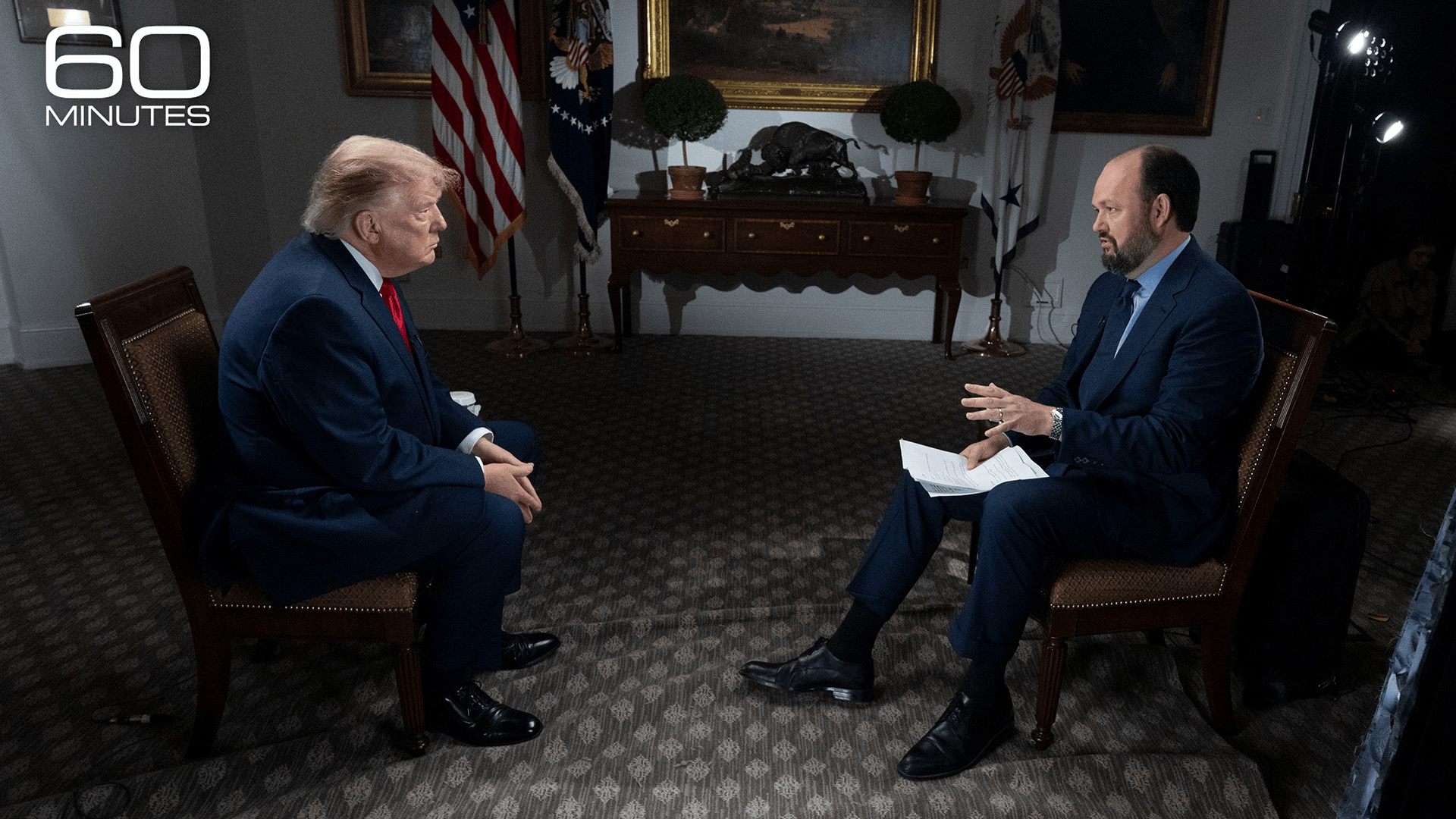
President Donald Trump sits down with 60 Minutes correspondent Ross Douthat for his first major interview following the 2026 midterm elections, facing questions about Republican defeats, the prospect of congressional investigations, the American economy and two major international conflicts.
The interview, airing Sunday, November 8, 2026, comes at a critical point in Trump’s second presidency, as the administration confronts the political consequences of the midterm elections and prepares for a potentially more difficult relationship with Congress.
In a double-length segment titled “Donald Trump,” Douthat questions the president about what went wrong for Republicans, whether he can work with Democrats and how his administration intends to address the wars involving Iran and Ukraine.
The discussion also examines economic conditions and the president’s approach to governing during the remaining two years of his term.
With the midterms now over, attention is turning to whether the election results will lead to changes in White House strategy, greater confrontation with congressional opponents or attempts to reach bipartisan agreements.
- 60 Minutes Reports on “Donald Trump” & “France on Fire” November 8 2026
- France on Fire: 60 Minutes Investigates the Nationwide Protests Rocking France
Trump’s First Major Interview Since the 2026 Midterm Elections
The November 8 interview arrives just five days after Americans voted in the midterm elections on Tuesday, November 3.
Midterm elections are often interpreted as a referendum on the sitting president, particularly when voters are dissatisfied with economic conditions, government policies or the direction of the country.
Historically, the president’s party has frequently lost seats in Congress during midterm elections. The pattern reflects several factors, including opposition-party mobilization, dissatisfaction among some voters and the difficulty of maintaining the electoral coalition that delivered a presidential victory.
For Trump, the Republican losses create a new political challenge.
The president entered his second term in January 2025 with a Republican-controlled Congress, providing opportunities to advance legislation and confirm administration appointments.
The midterm results have raised questions about the strength of that political coalition and the extent to which Republican lawmakers will continue supporting the White House’s priorities.
Douthat’s interview offers Trump an opportunity to explain his interpretation of the results and whether he believes the losses reflect dissatisfaction with particular policies, local political circumstances or broader national trends.
The conversation is also significant because it provides one of the earliest extended public examinations of the president’s post-election strategy.
Rather than focusing exclusively on campaign rhetoric, the interview addresses the practical challenges of governing after voters have reshaped the political environment.
Why Republican Midterm Losses Matter for Trump’s Second Term
The consequences of a midterm election extend beyond the immediate number of seats won or lost.
Control of Congress affects which bills reach the president’s desk, how federal spending is negotiated and the degree of oversight the administration faces.
The House of Representatives plays a particularly important role in initiating revenue legislation, approving appropriations and conducting investigations through its committees.
The Senate has separate responsibilities, including confirming senior executive branch officials and federal judges.
When the president’s party controls both chambers, it generally has greater opportunities to advance its legislative agenda, although internal disagreements and Senate procedural rules can still limit what is achievable.
When opposition lawmakers gain control of a chamber, they can influence committee leadership, legislative priorities and the oversight process.
That creates the possibility of more difficult negotiations over federal spending, taxes, immigration, healthcare and other contentious issues.
For Trump, the challenge is determining which elements of his agenda can proceed through existing executive authority and which require cooperation from Congress.
The midterm results may also influence how Republican lawmakers position themselves ahead of the 2028 presidential election.
Some may seek to maintain close alignment with Trump, while others could place greater emphasis on local political concerns or distance themselves from controversial administration decisions.
The 60 Minutes interview examines how the president intends to navigate those pressures.
Congressional Investigations Could Become a Major Challenge
One of the most consequential subjects in Douthat’s interview is the prospect of congressional investigations into the Trump administration.
Congress has broad authority to investigate government activities as part of its legislative and oversight responsibilities.
Committees can hold public hearings, request records, interview witnesses and, within legal limits, issue subpoenas.
These powers allow lawmakers to examine how federal agencies operate, how public money is spent and whether executive branch officials have complied with applicable laws.
Oversight is a routine part of the American constitutional system, but investigations can become particularly contentious when Congress and the White House are controlled by opposing parties.
During Trump’s first presidency, congressional investigations became a defining feature of his relationship with Democrats.
Following the 2018 midterm elections, Democrats took control of the House of Representatives and initiated or expanded inquiries into several aspects of the administration.
Trump was subsequently impeached by the House in 2019 and again in 2021. The Senate acquitted him in both proceedings.
Those earlier confrontations provide important historical context for the questions now facing the president.
The possibility of new investigations raises questions about how the White House would respond to congressional requests for documents, testimony and explanations of administration decisions.
It also highlights the distinction between political disagreement and the legal authority of Congress to conduct oversight.
Douthat’s interview addresses how Trump views the prospect of renewed scrutiny and what it could mean for the remainder of his presidency.
Can Trump Work With Democrats After the Election?
Another central issue is whether Trump is prepared to negotiate with Democrats on major legislation.
Bipartisan cooperation has become increasingly difficult in Washington as the two major parties have grown more divided over economic policy, immigration, healthcare and the role of the federal government.
Nevertheless, some government responsibilities require lawmakers to reach agreements even when they disagree on broader political priorities.
Federal spending is one example.
Congress must approve appropriations to fund government operations, and disagreements over spending levels or policy conditions can produce budget standoffs and the threat of shutdowns.
Other issues, including infrastructure, disaster assistance and certain national security measures, have historically attracted support from lawmakers in both parties.
Trump’s political approach has frequently emphasized confrontation with Democratic opponents, making the question of cooperation particularly significant.
The president must decide whether to pursue negotiated compromises, rely more heavily on executive actions or attempt to pressure Congress through public campaigning.
Democratic leaders face their own choices about when to oppose the administration and when cooperation might advance their policy goals.
The November 8 interview offers viewers an opportunity to hear how Trump intends to approach those relationships following the election.
Any willingness to negotiate will ultimately be tested by the administration’s actions and the legislation Congress considers in the months ahead.
The US Economy Remains a Central Political Test
Economic conditions are another major subject of the interview.
Throughout his political career, Trump has emphasized economic growth, manufacturing, trade and the financial wellbeing of American households.
His second administration has pursued an agenda involving tariffs, tax policy, domestic energy production and regulatory changes.
Supporters argue that these policies can strengthen American industries, encourage investment and reduce dependence on foreign suppliers.
Critics have questioned whether tariffs and other trade restrictions increase costs for consumers and businesses, particularly when imported materials are essential to domestic production.
Tariffs can create different effects across industries.
Some domestic manufacturers may benefit from reduced competition with imported products, while businesses relying on foreign components can face higher costs.
The overall economic impact depends on factors including the size of the tariffs, how businesses adjust their supply chains and whether trading partners introduce retaliatory measures.
For households, concerns about food prices, housing affordability, energy bills and employment opportunities can have a direct influence on political attitudes.
Even when national economic indicators appear relatively strong, individual experiences may differ substantially depending on location, income and industry.
The midterm elections have therefore increased attention on how voters perceive the administration’s economic record.
Douthat’s questions provide Trump with an opportunity to defend his policies and explain how he intends to respond to continuing concerns about the cost of living.
The War With Iran Raises Questions About America’s Military Strategy
The interview also addresses the war involving Iran, one of the most serious foreign policy challenges confronting the Trump administration.
Iran occupies a strategically important position in the Middle East, with its geography, military capabilities and regional relationships influencing security across the Persian Gulf.
The region is particularly significant for international energy markets because of the volume of oil and natural gas transported through nearby shipping routes.
The Strait of Hormuz, located between Iran and Oman, is one of the world’s most important maritime passages for energy exports.
Disruption to shipping through the strait can create uncertainty for international markets, affecting energy prices and businesses far beyond the Middle East.
Military conflict involving Iran also raises questions about the safety of American personnel, the security of regional allies and the risk of escalation.
For the Trump administration, the central challenge is balancing military objectives with the potential consequences of a prolonged conflict.
Douthat’s interview provides an opportunity to question the president about the administration’s strategy, its diplomatic options and how it intends to define success.
The discussion is especially important because decisions about military action can have consequences for American taxpayers, service members and the wider international community.
The conflict also intersects with domestic economic concerns, particularly where energy supply disruptions affect fuel costs and inflation.
As a result, the war is not simply a foreign policy issue but one with potential consequences for the American economy and the president’s political standing.
Trump’s Approach to the War in Ukraine Faces Continued Scrutiny
The war in Ukraine is another major topic in the 60 Minutes interview.
Russia launched its full-scale invasion of Ukraine in February 2022, triggering the largest major interstate war in Europe in decades.
The conflict has resulted in extensive casualties, destruction of infrastructure and the displacement of millions of people.
The United States has played a significant role in international responses to the invasion, including military assistance, sanctions and diplomatic coordination with European allies.
Trump has repeatedly emphasized his desire to end the war through negotiations, distinguishing his approach from those who favor sustained military assistance as a means of strengthening Ukraine’s position.
However, reaching a durable agreement presents major difficulties.
Territorial control, security guarantees, Ukraine’s sovereignty and Russia’s future military intentions remain central questions.
European governments also have a substantial interest in the outcome because of the implications for regional security and the credibility of international commitments.
Any settlement would need to address not only an immediate cessation of hostilities but also the conditions under which fighting could resume.
Douthat’s questions about Ukraine offer Trump an opportunity to explain his diplomatic priorities and the role he believes the United States should play in achieving a resolution.
The discussion comes as the administration faces competing international demands and domestic political pressures over American involvement in overseas conflicts.
Two International Conflicts and the Challenge of Presidential Leadership
The inclusion of both Iran and Ukraine in the interview highlights the complexity of the president’s foreign policy responsibilities.
Although the conflicts have different origins, participants and strategic implications, both require decisions about military commitments, diplomatic relationships and the use of American influence.
The administration must also consider the financial and economic consequences of prolonged international instability.
Wars can affect global supply chains, energy markets, government budgets and investor confidence.
They can also strain relationships between allies whose security priorities or preferred diplomatic approaches differ.
For Trump, these challenges arise alongside domestic demands for economic improvement and political accountability.
The central question is how the administration intends to balance those competing responsibilities.
The 60 Minutes interview gives the president an extended opportunity to explain his priorities while allowing Douthat to examine the relationship between the administration’s international actions and its domestic political agenda.
Ross Douthat Brings a Political and Historical Perspective to the Interview
The choice of Ross Douthat as interviewer is notable because of his background as a political commentator and opinion writer.
Douthat is known for examining American conservatism, religion, political institutions and the cultural forces influencing national debates.
His work has frequently explored tensions within the Republican Party and the changing nature of American political coalitions.
Those subjects are particularly relevant to Trump’s second presidency.
The president’s political movement has reshaped the Republican Party, influencing its approach to trade, immigration, foreign policy and relationships with traditional political institutions.
The midterm election results provide an opportunity to examine whether that political transformation remains electorally effective and how the party might evolve.
Douthat’s questions about working with Democrats, congressional investigations and international conflicts connect immediate political developments with larger questions about presidential power and American governance.
The double-length format allows more room to explore those subjects than a conventional short television interview.
For viewers, the segment offers a chance to assess the president’s answers in the context of the challenges facing his administration.
What the Interview Could Reveal About the Rest of Trump’s Presidency
The remaining years of Trump’s second term will be shaped by the relationship between the White House and Congress, economic developments and international events.
The midterm elections represent a significant turning point because they establish the political environment in which the administration must operate until the next presidential election.
The results may affect the president’s ability to advance legislation and could change the intensity of congressional oversight.
Economic conditions will continue influencing public confidence, particularly if households remain concerned about living costs.
Meanwhile, the wars involving Iran and Ukraine present major challenges that cannot be resolved through domestic political messaging alone.
The interview also takes place as attention gradually turns toward the 2028 presidential election and the future direction of the Republican Party.
Although Trump is constitutionally barred from being elected to a third presidential term under the Twenty-Second Amendment, his political influence could remain significant as potential successors emerge.
The administration’s performance during the final two years of his presidency may shape both his political legacy and the Republican Party’s prospects beyond his time in office.
For that reason, the November 8 interview is more than a discussion of a single election.
It is an opportunity to examine how Trump intends to govern through a new phase of his presidency and respond to challenges that could define his remaining time in the White House.
When to Watch Donald Trump’s 60 Minutes Interview
President Donald Trump’s interview with Ross Douthat airs Sunday, November 8, 2026, on CBS.
The double-length segment is part of a new edition of 60 Minutes scheduled for 7:00-8:00 PM ET/PT, with streaming available on Paramount+.
The interview covers Republican losses in the midterm elections, the prospect of congressional investigations, relations with Democrats, the economy and the wars involving Iran and Ukraine.
Graham Messick and Andy Court are the producers.
The episode also features “France on Fire,” in which correspondent Trevor Phillips investigates demonstrations sweeping France and interviews National Rally leader Marine Le Pen about the unrest and her latest presidential ambitions.
For viewers interested in American politics, the Trump interview offers a timely examination of a president confronting election setbacks, growing pressure over domestic policy and major international challenges.
The conversation could provide important insight into the White House’s priorities as the administration enters the final two years of Trump’s second term.
More 60 Minutes November 8 2026
- 60 Minutes Reports on “Donald Trump” & “France on Fire” November 8 2026
- Donald Trump: 60 Minutes Investigates the Fallout From Republicans’ Devastating Midterm Election Losses
- France on Fire: 60 Minutes Investigates the Nationwide Protests Rocking France
More Feature Articles
- “JonBenét Ramsey: Race Against Time, Who Is ‘Unknown Male 1′?”: 20/20 Reports November 6 2026
- “Deadly Intersection”: Dateline Reports on Jacquelyn Smith Homicide November 6 2026
- 48 Hours November 7 2026 Pre-Empted for Army–Air Force Football
- 60 Minutes Reports on “Donald Trump” & “France on Fire” November 8 2026