Elemental Crisis: 60 Minutes Investigates America’s Rare Earth Race on July 5 2026
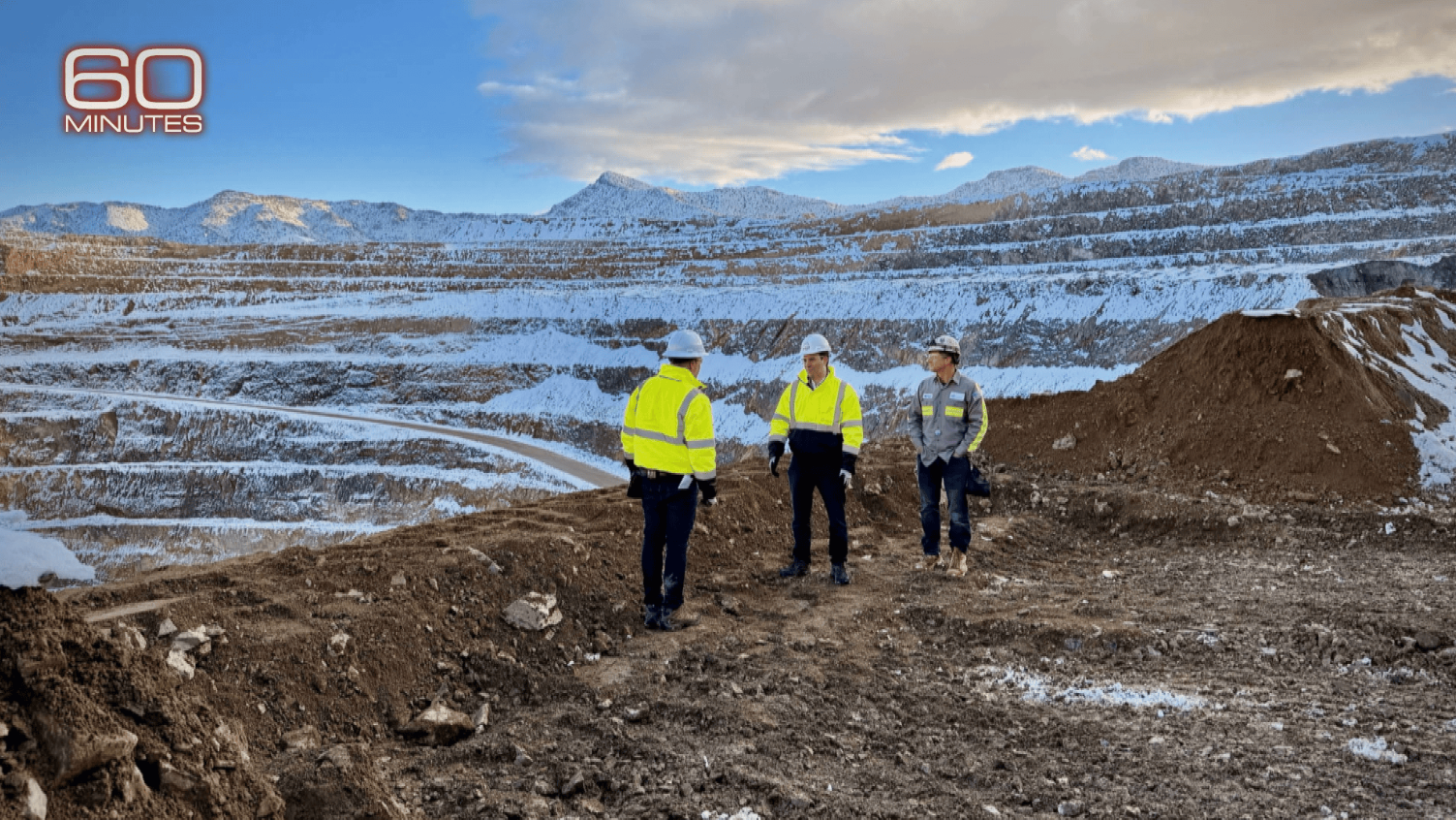
This week, 60 Minutes revisits one of the most important geopolitical stories shaping the global economy as Jon Wertheim reports from the only active rare earth mine in the United States. The encore presentation of “Elemental Crisis” examines America’s growing effort to rebuild a domestic supply chain for the minerals that power everything from smartphones to advanced military technology.
Reporting from the Mojave Desert near the California-Nevada border, Wertheim explores how a once-overlooked mining operation has become central to U.S. national security strategy. As tensions between the United States and China continue to influence trade, manufacturing and defense policy, rare earth elements have emerged as one of the world’s most valuable strategic resources.
- 60 Minutes Reports on “Elemental Crisis”, “The Knowledge” & “Banana Ball” on July 5 2026
- The Knowledge: 60 Minutes Explores London’s Legendary Black Cab Test on July 5 2026
- Banana Ball: 60 Minutes Explores Baseball’s Wildest New Phenomenon on July 5 2026
What Are Rare Earth Elements?
Despite their name, rare earth elements are not especially scarce in the Earth’s crust. Instead, they are difficult and expensive to extract, separate and refine into usable materials because they typically occur together in low concentrations mixed with other minerals.
The rare earth family consists of 17 metallic elements, including neodymium, dysprosium, terbium and praseodymium. Each possesses unique magnetic, electrical and chemical properties that make them indispensable in modern manufacturing.
These materials are found in countless products that people use every day. Smartphones rely on rare earth magnets to power speakers and vibration motors. Electric vehicles use them in high-performance motors. Wind turbines depend on powerful permanent magnets manufactured from rare earth alloys, while computer hard drives, medical imaging equipment, fiber-optic communications systems and rechargeable batteries also incorporate these critical materials.
Although consumers rarely think about them, rare earth elements have become fundamental building blocks of the modern digital economy.
Why Rare Earths Have Become a National Security Priority
Beyond consumer electronics, rare earth elements play a vital role in military technology.
Modern fighter aircraft require rare earth magnets in engines, radar systems and electronic warfare equipment. Guided missiles, submarines, drones, satellites and precision weapons all depend on components manufactured from these specialized materials. Even advanced communications systems and laser targeting equipment often require rare earth elements during production.
Because of their importance, governments increasingly classify rare earths as critical minerals essential to national security.
Over the past two decades, policymakers in Washington have become increasingly concerned about the concentration of global supply. If access to these materials were interrupted, manufacturing across multiple industries could face significant disruption, affecting everything from automobile production to defense procurement.
China’s Dominance of the Global Supply Chain
China’s influence over rare earth production did not happen overnight.
Beginning in the 1980s and 1990s, China invested heavily in mining operations while also developing refining and processing facilities capable of separating individual rare earth elements at industrial scale. As environmental regulations and production costs increased elsewhere, many competing mines closed, leaving China with overwhelming control over the global market.
Today, China not only mines a substantial share of the world’s rare earth ores but also dominates the complex refining process that transforms raw material into usable metals and magnets. These manufacturing capabilities are often even more strategically important than mining itself.
The result is a supply chain in which many countries depend on Chinese processing facilities even when raw materials originate elsewhere.
This concentration has created vulnerabilities for manufacturers worldwide, particularly during periods of heightened diplomatic or economic tension.
America’s Only Active Rare Earth Mine
The focus of 60 Minutes is the Mountain Pass Mine in California’s Mojave Desert, the only active rare earth mining operation currently operating in the United States.
Mountain Pass has a long history. The site first began producing rare earth materials during the 1950s and for many years supplied much of the world’s demand. During its peak decades, the mine was considered one of the world’s leading producers.
However, changing market conditions, falling prices and increased international competition eventually led to financial difficulties. Operations declined, ownership changed multiple times and production was eventually suspended after bankruptcy.
The facility has since undergone a dramatic revival under new ownership. Significant investment has modernized mining operations while expanding domestic processing capabilities. The federal government has also supported efforts to strengthen the site’s role within a broader American critical minerals strategy.
Rather than exporting raw materials for overseas processing, current plans emphasize building a complete domestic supply chain capable of producing finished rare earth magnets inside the United States.
Rebuilding an Entire Industry
Mining represents only one step in an exceptionally complicated production process.
After ore is extracted, it must undergo extensive chemical processing to separate individual rare earth elements from one another. Each element requires highly specialized purification before it can be transformed into metals, alloys and powerful permanent magnets.
For decades, much of this processing infrastructure disappeared from the United States as production shifted overseas.
Rebuilding these capabilities requires billions of dollars in investment, highly skilled workers, advanced manufacturing facilities and years of technical development. Companies must also comply with stringent environmental regulations governing chemical processing and waste management.
Federal investment, public-private partnerships and long-term industrial planning have become increasingly important as policymakers attempt to restore domestic production capacity across the entire supply chain.
The Future of Critical Minerals
Demand for rare earth elements is expected to continue growing rapidly over the coming decades.
Global adoption of electric vehicles, renewable energy technologies, advanced robotics and artificial intelligence systems is increasing demand for high-performance magnets and specialized electronic components. At the same time, military modernization programs around the world continue to require sophisticated defense equipment that depends on rare earth materials.
Governments are now investing in new mining projects, alternative sources of supply and recycling technologies designed to recover rare earth elements from discarded electronics and industrial equipment. Researchers are also investigating substitute materials that could reduce dependence on the most constrained elements.
While China remains the dominant player in the industry, efforts underway in the United States and other countries aim to create more resilient supply chains capable of supporting future technological and economic growth.
Why This Story Matters
The rare earth industry rarely attracts widespread public attention, yet it sits at the center of many of today’s biggest geopolitical and technological challenges.
As 60 Minutes explores in “Elemental Crisis,” securing reliable access to these critical minerals has become about far more than mining. It now touches trade policy, economic competitiveness, national defense, clean energy development and the future of advanced manufacturing.
By taking viewers inside America’s only active rare earth mine, the report offers a closer look at the enormous effort required to rebuild an industry that many believe will shape the next generation of global technological leadership.
More 60 Minutes July 5 2026
- 60 Minutes Reports on “Elemental Crisis”, “The Knowledge” & “Banana Ball” on July 5 2026
- Elemental Crisis: 60 Minutes Investigates America’s Rare Earth Race on July 5 2026
- The Knowledge: 60 Minutes Explores London’s Legendary Black Cab Test on July 5 2026
- Banana Ball: 60 Minutes Explores Baseball’s Wildest New Phenomenon on July 5 2026
More Feature Articles
- “Out of the Darkness”: Dateline NBC Revisits Robert “Bob” Poynter Homicide July 3 2026
- 20/20 Pre-Empted on July 3 2026 for Disney Celebrates America
- 48 Hours Pre-Empted on July 4 2026 for The Great American Block Party 250
- 60 Minutes Reports on “Elemental Crisis”, “The Knowledge” & “Banana Ball” on July 5 2026