


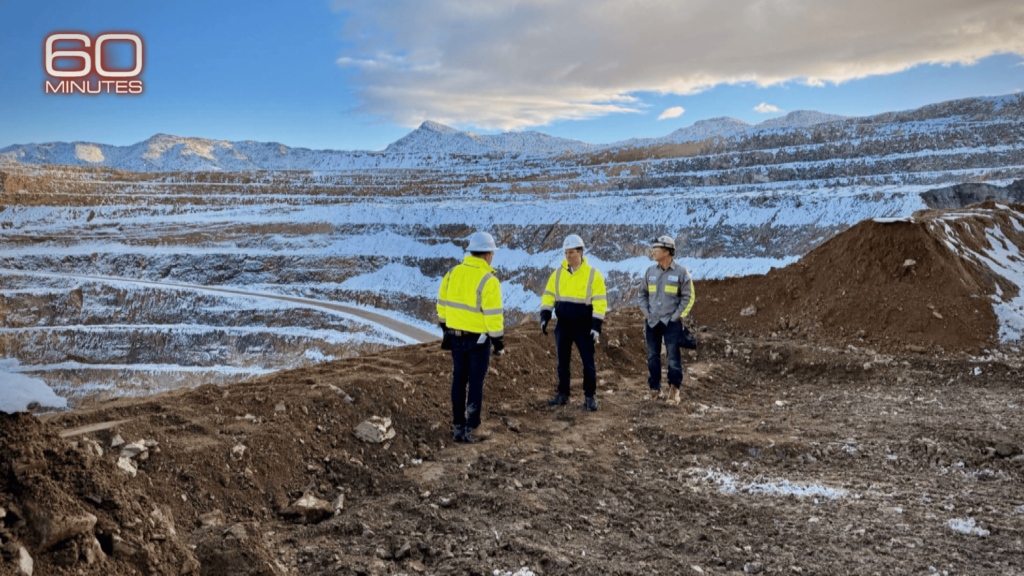
The March 22, 2026 edition of 60 Minutes opens with “Elemental Crisis,” a report that examines one of the most consequential and often overlooked battlegrounds in global competition. Correspondent Jon Wertheim travels to the Mojave Desert to explore the only active rare earth mine in the United States, placing a spotlight on a resource that underpins modern technology and national defense. The segment arrives at a time when supply chains, trade tensions, and industrial policy are increasingly tied to access to these critical materials.

- 60 Minutes Reports on “Elemental Crisis”, “Turning the Ship Around” & “The Dog Aging Project” on March 22 2026
- Turning the Ship Around: 60 Minutes Investigates America’s Shipbuilding Decline
- The Dog Aging Project: 60 Minutes Reports on a 50,000-Dog Study
What Are Rare Earths and Why They Matter
Rare earth elements are a group of 17 metals that play a central role in modern manufacturing and advanced technology. Despite the name, these elements are relatively abundant in the Earth’s crust, but they are difficult and costly to extract and refine. Their unique magnetic, luminescent, and electrochemical properties make them indispensable in products ranging from smartphones and wind turbines to electric vehicles and military hardware.
The importance of rare earths extends beyond consumer goods. They are essential for high-performance magnets used in fighter jets, guided missiles, radar systems, and drones. As a result, access to a stable supply has become a matter of national security. Governments around the world are increasingly aware that disruptions in rare earth availability could affect both economic stability and defense readiness.
China’s Dominance in the Global Supply Chain
China’s control over the rare earth industry did not happen overnight. Over several decades, the country invested heavily in mining, processing, and manufacturing capabilities, often at lower environmental and labor costs. This long-term strategy allowed China to build a dominant position, controlling a significant share of both raw material extraction and the refining process required to make rare earths usable.
This dominance has given China considerable leverage in global markets. In past disputes, China has signaled its willingness to restrict exports, raising concerns among countries that depend on these materials. The possibility of supply disruptions has prompted urgent discussions in the United States and its allies about how to reduce reliance on a single source for such critical components.
The Mojave Desert Mine and America’s Response
At the center of the 60 Minutes report is the Mountain Pass mine in California, the only operational rare earth mining site in the United States. Once a leading global producer, the mine fell into decline before being revived in recent years as part of a broader effort to restore domestic production. Its location in the Mojave Desert reflects both the geological conditions required for rare earth deposits and the logistical challenges of operating in remote environments.
The company managing the mine has taken steps to expand beyond extraction and move into processing and magnet production, areas where the United States has historically lagged. With partial ownership and support from the federal government, the operation represents a strategic shift toward rebuilding a full supply chain within the country. The goal is not only to mine raw materials but also to process them domestically, reducing dependence on overseas facilities.
Challenges in Rebuilding a Domestic Industry
Reestablishing a rare earth supply chain in the United States presents several challenges. Environmental regulations, while important, can slow the development of new mining and processing facilities. The chemical separation required to refine rare earths is complex and can produce hazardous waste, making it a difficult industry to scale quickly.
There are also economic hurdles. Competing with established global suppliers, particularly those with lower production costs, requires significant investment and long-term commitment. Building processing plants and manufacturing capabilities involves both technical expertise and financial risk. The report highlights how public and private sectors are working together to address these obstacles, though progress remains gradual.
National Security and the Future of Supply Chains
The renewed focus on rare earths reflects a broader shift in how countries approach supply chains for critical materials. Policymakers increasingly view domestic production as essential for resilience, especially in industries tied to defense and advanced technology. The Mountain Pass operation is one example of how the United States is attempting to regain control over key resources.
Looking ahead, the outcome of these efforts will shape the balance of power in technology and manufacturing. Expanding domestic capacity could reduce vulnerability to external pressures, but it will require sustained investment and coordination. “Elemental Crisis” presents this issue not as a distant policy debate, but as a present-day challenge with far-reaching implications for industry, security, and global competition.
More 60 Minutes March 22 2026
- 60 Minutes Reports on “Elemental Crisis”, “Turning the Ship Around” & “The Dog Aging Project” on March 22 2026
- Elemental Crisis: 60 Minutes Investigates America’s Rare Earth Race
- Turning the Ship Around: 60 Minutes Investigates America’s Shipbuilding Decline
- The Dog Aging Project: 60 Minutes Reports on a 50,000-Dog Study
More Feature Articles
- “Murder She Wrote: The Kouri Richins Trial”: 20/20 Reports March 20 2026
- “Under the Bay Bridge”: Dateline Reports on Bob Lee Homicide March 20 2026
- “What the Neighbors Saw”: 48 Hours Reports on Gary Herbst Homicide March 21 2026
- 60 Minutes Reports on “Elemental Crisis”, “Turning the Ship Around” & “The Dog Aging Project” on March 22 2026