


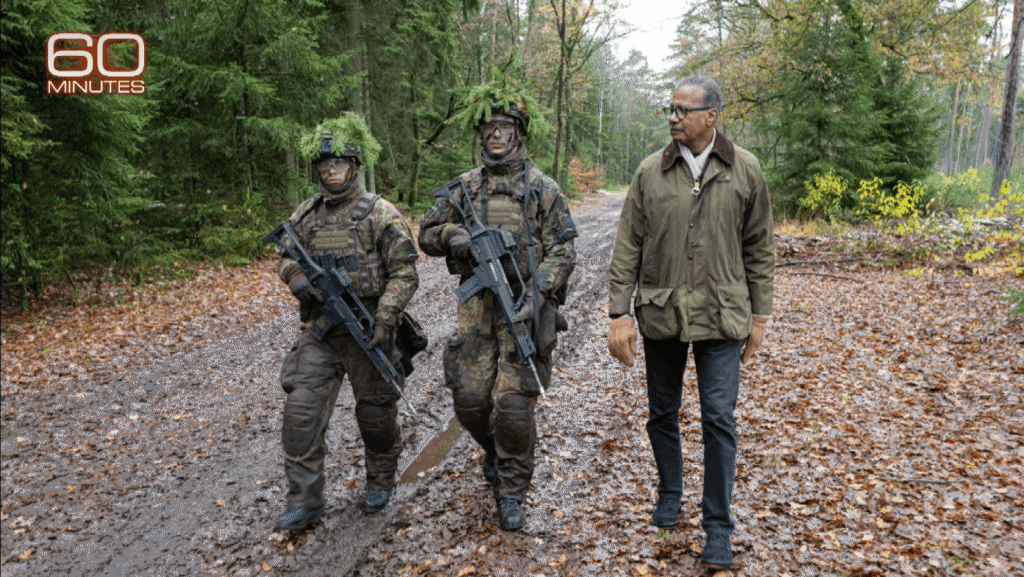
Germany’s relationship with military power has been shaped by history for more than eight decades. Following the devastation of World War II and the fall of Nazi Germany, the country adopted a cautious approach to military affairs, often emphasizing diplomacy, economic cooperation, and international partnerships over displays of military strength. For generations, German leaders viewed restraint as an essential part of the nation’s postwar identity.
That long-standing philosophy is now facing its greatest challenge in decades.
This week, 60 Minutes examines Germany’s dramatic military transformation as the war in Ukraine forces Europe to confront a new security reality. Correspondent Bill Whitaker travels to Germany to investigate how Europe’s largest economy is attempting to rebuild and modernize its armed forces at a pace not seen since the Cold War.

- 60 Minutes Reports on “Germany Rearms” & “Freezing the Biological Clock” on May 31 2026
- Freezing the Biological Clock: Why More Women Are Turning to Egg Freezing and What It Really Means on 60 Minutes
A Historic Turning Point Triggered by the Ukraine War
When Russian forces crossed into Ukraine in February 2022, the invasion sent shockwaves throughout Europe. For Germany, the attack represented more than a regional conflict. It shattered assumptions that large-scale war on the continent had become a relic of the past.
Just days after the invasion, German Chancellor Olaf Scholz announced what he called a “Zeitenwende,” or historic turning point. The government pledged a special €100 billion fund to modernize the country’s military, known as the Bundeswehr, and committed to significantly increasing defense spending.
The decision marked one of the most dramatic policy shifts in modern German history. For decades, Germany had faced criticism from NATO allies for underinvesting in defense. Suddenly, the country was preparing for a massive military expansion while simultaneously supplying weapons and assistance to Ukraine.
Germany’s Complex Military Legacy
Germany’s military ambitions cannot be understood without considering the nation’s past.
The horrors of World War II and the actions of Nazi Germany left a lasting impact on German society. Following the war, military power became a sensitive subject, and many Germans remained skeptical of any effort to strengthen the armed forces. The country’s constitution placed limits on military activities, and political leaders often prioritized peaceful international engagement.
Even after reunification in 1990, Germany continued to focus heavily on economic influence rather than military strength. While the Bundeswehr participated in NATO missions and international peacekeeping operations, military spending often lagged behind alliance expectations.
As a result, years of underinvestment created significant challenges. Reports emerged of aircraft unable to fly, shortages of ammunition, aging equipment, and personnel shortages. By the time Russia invaded Ukraine, many analysts argued that Germany’s military was not adequately prepared for a major conflict.
Building the Most Powerful Conventional Military in Europe
One of the most striking goals discussed in the 60 Minutes report is Germany’s ambition to develop the strongest conventional military force in Europe.
Achieving that objective will require more than simply increasing spending. Germany must recruit and train thousands of additional soldiers, modernize aging equipment, improve military infrastructure, and strengthen domestic defense production.
The Bundeswehr has already begun acquiring advanced fighter aircraft, modern air-defense systems, drones, armored vehicles, and upgraded communications technology. Military planners are also focused on improving readiness so forces can be deployed quickly if needed.
The effort comes as European nations increasingly recognize that security cannot be taken for granted. Governments across the continent are boosting defense budgets and reassessing military preparedness amid continuing tensions with Russia.
The Challenge of Recruiting a New Generation
One of the biggest obstacles facing Germany’s military expansion is finding enough personnel.
Like many Western nations, Germany faces demographic challenges, including an aging population and competition from the private sector for skilled workers. Military service no longer carries the same appeal it once did, particularly among younger generations who have grown up during decades of relative peace.
The Bundeswehr suspended mandatory military service in 2011, creating an all-volunteer force. As military leaders seek to expand troop numbers, discussions have emerged about whether some form of national service should return.
Bill Whitaker’s report includes a look at basic training, offering viewers insight into how Germany is preparing recruits for a rapidly changing security environment and attempting to attract a new generation to military careers.
Germany’s Role Within NATO
Germany’s military buildup extends beyond its national defense needs. The country plays a critical role within NATO, the military alliance that includes the United States, Canada, and most European democracies.
For years, American presidents from both parties urged Germany to increase defense spending and contribute more resources to collective security efforts. Russia’s invasion of Ukraine accelerated those discussions and created new urgency among NATO members.
As Germany expands its military capabilities, many allies view the effort as essential to strengthening Europe’s ability to defend itself. At the same time, the move raises questions about how the balance of military power within Europe may evolve in the coming years.
Germany’s geographic location places it at the center of the continent, making its armed forces particularly important for NATO planning and logistics.
A Defining Moment for Modern Germany
The transformation underway in Germany represents more than a military modernization project. It reflects a broader reassessment of how the country sees its place in a world marked by renewed geopolitical competition and growing security threats.
For decades, Germany’s postwar identity was closely linked to economic strength, diplomacy, and political stability. The war in Ukraine has prompted leaders to conclude that military readiness must once again become a central part of national security strategy.
As 60 Minutes explores this historic shift, viewers will gain insight into a nation attempting to balance the lessons of its past with the demands of an uncertain future. The outcome could help shape European security for decades to come.
Germany Rearms airs as part of 60 Minutes on CBS and Paramount+, with Bill Whitaker reporting and Marc Lieberman producing.
More 60 Minutes May 31 2026
- 60 Minutes Reports on “Germany Rearms” & “Freezing the Biological Clock” on May 31 2026
- Germany Rearms: How Russia’s War in Ukraine Is Reshaping Europe’s Military Giant on 60 Minutes
- Freezing the Biological Clock: Why More Women Are Turning to Egg Freezing and What It Really Means on 60 Minutes