


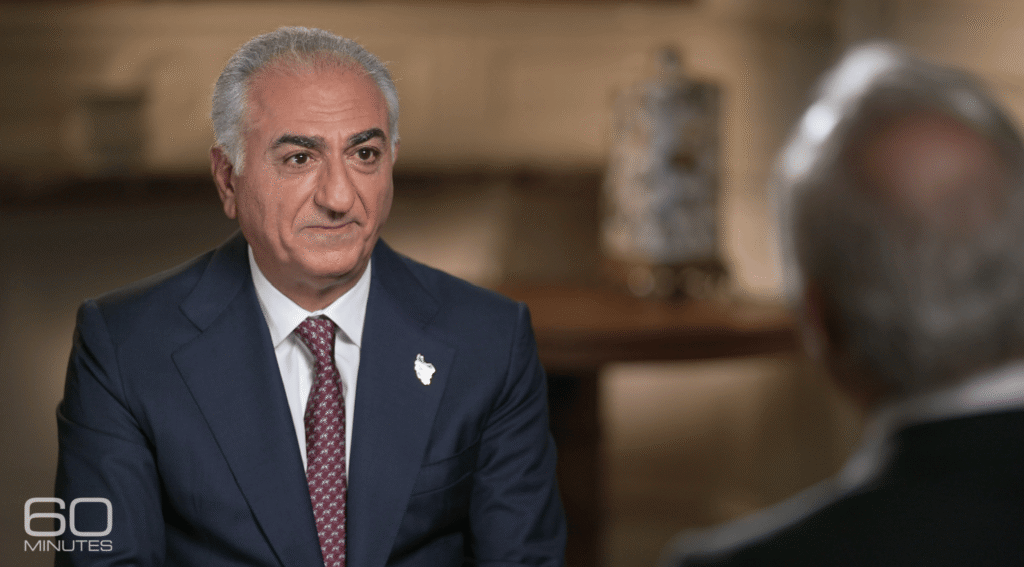
The March 1, 2026 edition of 60 Minutes opens with a special report examining a dramatic and unexpected development in the Middle East. Correspondent Scott Pelley reports on the aftermath of a surprise joint military operation by U.S. and Israeli forces that resulted in the death of Iran’s Supreme Leader, Ayatollah Ali Khamenei. The segment explores what this moment could mean for the future of Iran’s leadership, internal stability, and its role on the global stage.
At the center of the report is an interview with Reza Pahlavi, a prominent figure in the Iranian opposition and the son of Iran’s last monarch, who was overthrown during the 1979 Islamic Revolution. Pahlavi discusses the possibility of political transition and outlines his vision for a post-Islamic Republic Iran. The segment examines whether the current power vacuum could trigger meaningful change or lead to further uncertainty inside the country.

- 60 Minutes Reports on “Iran”, “Under Siege”, & “Breaking the Cycle” on March 1 2026
- Iran: 60 Minutes Reports on a Power Shift That Could Reshape the Nation
- Under Siege: 60 Minutes Investigates Rising Threats Against Federal Judges
- Growing Up Behind Walls: 60 Minutes Reports from a Sanctuary in Crisis-Torn Haiti
- Breaking the Cycle: 60 Minutes Reports on a New Legal Strategy After School Shootings
The Power Structure Left Behind
For more than three decades, Ayatollah Khamenei served as the most powerful figure in Iran’s political system. As Supreme Leader, he held ultimate authority over the military, intelligence services, judiciary, and key elements of foreign and nuclear policy. His death creates immediate questions about succession and the stability of Iran’s complex system of clerical and political control.
Under Iran’s constitution, the Assembly of Experts is responsible for appointing a new Supreme Leader. However, the process is deeply influenced by political factions, religious authorities, and the powerful Islamic Revolutionary Guard Corps. Analysts note that any transition period carries the risk of internal power struggles, particularly at a time when Iran is already facing economic pressure, public unrest, and international isolation.
Opposition Voices and the Prospect of Change
Reza Pahlavi has long positioned himself as a unifying figure for Iranians seeking political reform or a complete transformation of the current system. In his interview with 60 Minutes, he argues that the current moment presents a rare opportunity for Iranians to shape their own political future. He calls for a democratic transition and emphasizes the need for secular governance and greater political freedoms.
While opposition movements have gained visibility in recent years, experts caution that regime change in Iran would face significant obstacles. The country’s security apparatus remains powerful, and past protest movements have been met with force. The report examines the gap between opposition aspirations abroad and the complex realities on the ground inside Iran, where organized political alternatives remain limited.
Regional Stability and the Nuclear Question
Beyond Iran’s internal politics, the segment explores the broader international implications of the leadership crisis. One of the most urgent concerns is the status of Iran’s nuclear program. With the Supreme Leader gone, questions arise about who will control strategic decision-making and whether nuclear policy could shift during a period of political uncertainty.
Regional stability is also at stake. Iran plays a central role in Middle East geopolitics through its relationships with allied militias and governments across the region. Any disruption in leadership could affect those networks, potentially increasing tensions or creating unpredictable shifts in regional power dynamics. U.S., Israeli, and allied officials are closely monitoring developments as the situation evolves.
A Moment of Uncertainty
The 60 Minutes report presents this moment as a crossroads for Iran, with outcomes that remain uncertain. While some observers see an opening for political transformation, others warn that periods of sudden change can lead to consolidation of power rather than reform. Much will depend on how Iran’s political and security institutions respond in the weeks and months ahead.
By combining on-the-ground analysis with the perspective of a leading opposition figure, the segment highlights both the potential and the risks of this historic turning point. As the country enters a period of transition, the decisions made by Iran’s leaders, opposition movements, and international actors could shape the future of the Islamic Republic and the stability of the broader region for years to come.
More 60 Minutes March 1 2026
- 60 Minutes Reports on “Iran”, “Under Siege”, & “Breaking the Cycle” on March 1 2026
- Iran: 60 Minutes Reports on a Power Shift That Could Reshape the Nation
- Under Siege: 60 Minutes Investigates Rising Threats Against Federal Judges
- Growing Up Behind Walls: 60 Minutes Reports from a Sanctuary in Crisis-Torn Haiti
- Breaking the Cycle: 60 Minutes Reports on a New Legal Strategy After School Shootings
More Feature Articles
- “Yogurt Shop Murders”: 20/20 Reports on A Long Awaited Breakthrough February 27 2026
- “Malice”: Dateline Reports on William “Jake” Embert Homicide February 27 2026
- “Deadly Dance”: Dateline Reports on Doug Benefield Homicide February 28 2026
- “The Dead of Night”: Dateline Reports on LaJoya McCoy Homicide February 28 2026
- “The Woman Who Died Twice”: 48 Hours Reports on Mindi Kassotis Homicide February 28 2026
- 60 Minutes Reports on “Under Siege”, “Growing Up Behind Walls” & “Breaking the Cycle” on March 1 2026