


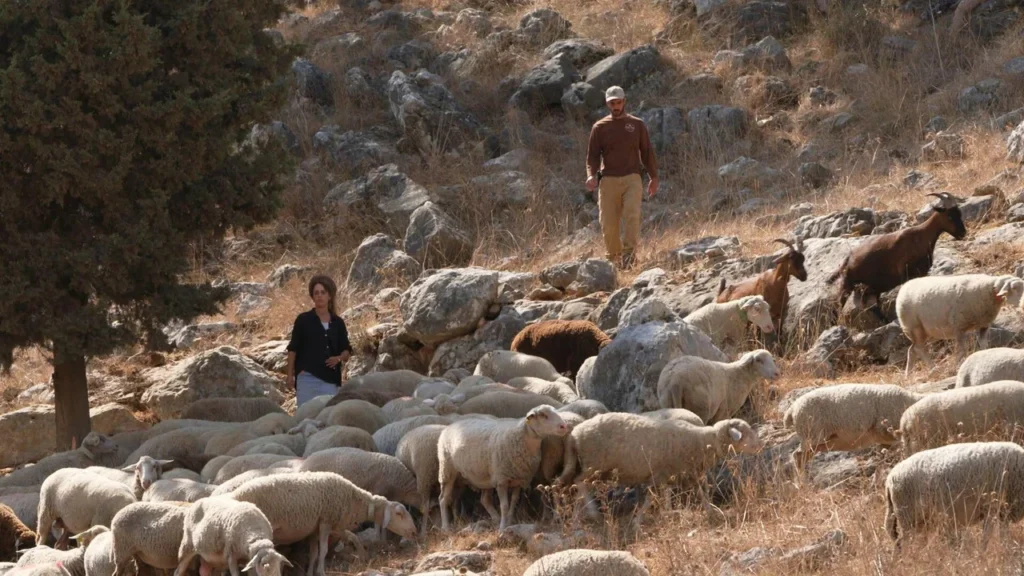
Escalating violence in the Israeli-occupied West Bank is drawing renewed international attention as militant settlers carry out attacks against Palestinian communities, raising serious questions about land rights, security and the future of the region.
In a 60 Minutes investigation titled “Lost Sheep,” veteran correspondent Lesley Stahl travels to the West Bank to examine the activities of the Hilltop Youth, a radical Israeli settler movement associated with attacks on Palestinian residents and efforts to establish unauthorized settlements.
The report, broadcast on Sunday, October 11, 2026, on CBS, explores the experiences of Palestinians facing intimidation and displacement, while also highlighting Jewish Israeli activists who are working to prevent violence and protect vulnerable communities.
With Israeli elections approaching, the investigation examines how the actions of militant settlers have become part of a much broader debate about the future of the West Bank, the Israeli government’s responsibilities and the prospects for peaceful coexistence.

- 60 Minutes Reports on “In the Line of Fire”, “Lost Sheep” & Jon Batiste” October 11 2026
- In the Line of Fire: 60 Minutes Investigates the Growing Threats Against President Trump
- Jon Batiste: 60 Minutes Profiles the Grammy-Winning Musician Bringing People Together Through Music
Who Are the Hilltop Youth in the West Bank?
The Hilltop Youth are a loosely organized movement of radical Israeli settlers, primarily young people, associated with the establishment of unauthorized outposts in the occupied West Bank.
The movement emerged during the 1990s and became particularly visible in the early 2000s, as groups of young settlers established makeshift communities on hilltops and other strategically located areas.
Unlike established Israeli settlements, which may have government authorization under Israeli domestic procedures, many Hilltop Youth outposts are created without formal Israeli government approval.
However, the distinction between authorized and unauthorized settlements under Israeli law does not resolve their international legal status. The United Nations and the International Court of Justice regard Israeli settlements in the occupied West Bank as contrary to international law, a position disputed by Israel.
Hilltop Youth activists are generally associated with a religious-nationalist ideology that views Jewish settlement throughout the biblical Land of Israel as an important religious and political objective.
Some participants regard the establishment of new outposts as a way to strengthen Israeli control over disputed territory and prevent the creation of a Palestinian state.
The movement is decentralized, and not everyone associated with it engages in violence. Nevertheless, militant elements have been linked to attacks against Palestinians, destruction of property and confrontations with Israeli security forces.
The 60 Minutes investigation examines the movement’s more violent activities and the consequences for Palestinian families living near settler outposts.
Why Has Settler Violence Increased in the West Bank?
Violence involving Israeli settlers and Palestinians has been a longstanding problem in the West Bank, but tensions intensified dramatically following the Hamas-led attacks against Israel on October 7, 2023, and the subsequent war in Gaza.
During this period, international organizations and human rights monitors documented increases in settler attacks, including assaults on residents, destruction of agricultural property, threats against farmers and efforts to prevent Palestinians from accessing their land.
The United Nations Office for the Coordination of Humanitarian Affairs has repeatedly reported incidents involving settler violence and Palestinian displacement.
Attacks have included the burning of vehicles and buildings, vandalism of agricultural equipment, damage to olive groves and physical assaults.
Some incidents have involved groups of settlers entering Palestinian communities, while others have occurred in agricultural areas where Palestinian farmers and shepherds depend on access to land for their livelihoods.
The violence has created particular difficulties for smaller rural communities, which often lack the resources or security infrastructure available in larger towns.
Israeli authorities have condemned certain acts of settler violence and carried out investigations and arrests. However, human rights organizations have criticized what they describe as insufficient law enforcement and inadequate accountability for perpetrators.
The result is a deeply contested security environment in which Palestinian residents frequently report feeling unable to rely on authorities for protection.
Palestinian Shepherding Communities Face Displacement
One of the most serious consequences of settler violence has been the displacement of Palestinian families from rural areas of the West Bank.
Many of the communities affected are small agricultural or shepherding villages whose residents depend on grazing land, water sources and access to surrounding farmland.
For these families, losing access to traditional grazing areas can threaten their entire way of life.
Residents have reported incidents involving threats, harassment, damaged property and restrictions on their ability to move livestock between grazing areas.
When attacks become persistent, some families face the difficult decision of remaining in increasingly dangerous conditions or leaving homes and land that may have been occupied by their relatives for generations.
Displacement can also create long-term economic consequences, particularly for households whose income depends on sheep, goats, agricultural production and local trade.
The United Nations and humanitarian organizations have documented the displacement of Palestinian communities following repeated settler attacks and restrictions on access to land.
In “Lost Sheep,” Lesley Stahl examines the experiences of Palestinians who have been driven from their homes, putting a human face on a conflict often discussed primarily in political and territorial terms.
The report highlights how disputes over individual hilltops, grazing areas and rural settlements can have consequences extending far beyond the immediate locations where confrontations occur.
Jewish Israeli Activists Working to Stop Settler Violence
Although settler violence frequently dominates international coverage of the West Bank, the 60 Minutes investigation also examines Israelis who oppose attacks on Palestinian communities.
Jewish Israeli activists have organized efforts to accompany Palestinian farmers, document incidents of violence and provide a protective presence in areas where residents face intimidation.
Organizations such as Rabbis for Human Rights, Ta’ayush and Standing Together have participated in different forms of human rights advocacy, solidarity work and efforts to promote cooperation between Israelis and Palestinians.
Their activities vary, but can include accompanying shepherds to grazing areas, helping farmers during the olive harvest, recording confrontations and drawing public attention to alleged abuses.
Some activists believe their presence can discourage attacks or provide witnesses when violence occurs.
Others focus on legal assistance, public advocacy and efforts to challenge policies they believe contribute to Palestinian displacement.
These activities are not without risk. Israeli activists working alongside Palestinians have sometimes faced hostility, threats and confrontations with militant settlers.
Their involvement also illustrates the diversity of opinion within Israeli society concerning settlements, Palestinian rights and the responsibilities of the Israeli state.
The 60 Minutes report examines this lesser-known aspect of the conflict, showing how some Jewish Israelis are attempting to intervene directly rather than simply observing the violence from a distance.
What Is Area C and Why Does It Matter?
Much of the conflict surrounding rural Palestinian communities occurs in Area C, a designation created under the Oslo II Accord in 1995.
The agreement divided the West Bank into three administrative areas known as Areas A, B and C, each with different arrangements for Palestinian and Israeli authority.
Area C comprises approximately 60% of the West Bank and remains under extensive Israeli civil and security control.
It includes most Israeli settlements, large areas of agricultural land and numerous Palestinian communities.
Palestinians living in Area C face substantial restrictions on construction and development, with building permits issued through Israeli authorities.
Human rights organizations and international agencies have criticized the difficulty Palestinians face in obtaining permits, arguing that the system contributes to housing insecurity and limits community development.
Israeli authorities maintain that planning and construction rules are necessary for orderly administration, security and enforcement of applicable regulations.
Disputes over land ownership, unauthorized construction and access to agricultural areas frequently become flashpoints between settlers and Palestinian residents.
For small shepherding communities, these disputes can become especially consequential when nearby outposts expand or access to grazing land becomes restricted.
Understanding Area C helps explain why apparently isolated confrontations over rural land have become part of a much larger political and territorial conflict.
The Political Debate Over Israeli Settlements
The future of Israeli settlements in the West Bank remains one of the most contentious issues in Israeli and Palestinian politics.
Supporters of settlement expansion frequently argue that Jewish communities have historic and religious connections to the territory, which many Israelis refer to by the biblical names Judea and Samaria.
Some also maintain that Israeli control of strategic areas is essential for national security, particularly given the history of attacks against Israeli civilians.
Opponents argue that settlement expansion undermines the possibility of establishing a viable Palestinian state and contributes to ongoing conflict over land, movement and political sovereignty.
Within Israel, disagreements also exist over how authorities should respond to violent settlers and whether unauthorized outposts should be dismantled, regulated or formally recognized.
These debates have become increasingly significant as religious-nationalist parties and settlement advocates have gained influence in Israeli politics.
The actions of militant groups such as the Hilltop Youth have consequently become relevant not only to security in the West Bank but also to debates over the direction of Israeli government policy.
How Israeli Elections Could Influence the West Bank
The 60 Minutes investigation comes against the backdrop of Israel’s approaching elections, when the future of settlements and the country’s broader security policies are expected to remain major political issues.
Different political parties have sharply contrasting positions on settlement construction, Palestinian self-determination and the appropriate response to violence in the occupied territories.
Some advocate expanding Israeli sovereignty or maintaining permanent Israeli control over substantial parts of the West Bank.
Others support stronger enforcement against violent settlers, limitations on settlement expansion or renewed diplomatic efforts toward a negotiated resolution of the Israeli-Palestinian conflict.
The outcome of an election could affect the government’s approach to unauthorized outposts, policing priorities and relationships with Palestinian communities.
However, any significant policy changes would also be shaped by coalition negotiations, security conditions, legal constraints and international diplomatic pressure.
For Palestinians living in vulnerable rural communities, these national political debates can have immediate consequences for their ability to remain on their land.
The 60 Minutes report places the experiences of affected residents within this broader political context, illustrating how decisions made by national leaders can influence daily life in remote West Bank villages.
Why the West Bank Conflict Remains So Difficult to Resolve
The West Bank has been under Israeli occupation since the 1967 Arab-Israeli War, when Israel captured the territory from Jordan.
Since then, the region has become central to competing Israeli and Palestinian national aspirations.
Palestinians regard the West Bank, alongside East Jerusalem and Gaza, as essential territory for a future independent state.
Many Israelis view parts of the West Bank as important to their country’s history, religion and security, although opinions differ significantly over the future political status of the territory.
The growth of Israeli settlements has complicated efforts to reach a negotiated agreement, particularly where expanding communities and infrastructure divide Palestinian population centers.
Security concerns, political divisions, disputes over Jerusalem and disagreements about borders have further obstructed peace negotiations.
Violence by militant settlers adds another dimension to these challenges by creating immediate humanitarian problems and deepening mistrust between communities.
The displacement of Palestinian residents also raises questions about whether demographic and territorial changes could make a future political settlement even more difficult.
Through its focus on the Hilltop Youth, Palestinian shepherding communities and Jewish Israeli activists, 60 Minutes explores how these wider political disputes are experienced by people living directly alongside one another.
Where to Watch 60 Minutes: Lost Sheep
“Lost Sheep” aired as part of the Sunday, October 11, 2026 episode of 60 Minutes on CBS.
Correspondent Lesley Stahl reports from the Israeli-occupied West Bank, examining militant settler violence, the activities of the Hilltop Youth and the experiences of Palestinians who have been forced from their land.
The investigation also highlights Jewish Israeli activists working to prevent attacks and support affected Palestinian communities.
The episode is available through CBS and Paramount+.
Shachar Bar-On is the producer.
More 60 Minutes October 11 2026
- 60 Minutes Reports on “In the Line of Fire”, “Lost Sheep” & Jon Batiste” October 11 2026
- In the Line of Fire: 60 Minutes Investigates the Growing Threats Against President Trump
- Lost Sheep: 60 Minutes Investigates Violent Israeli Settlers Driving Palestinians From Their Land
- Jon Batiste: 60 Minutes Profiles the Grammy-Winning Musician Bringing People Together Through Music