


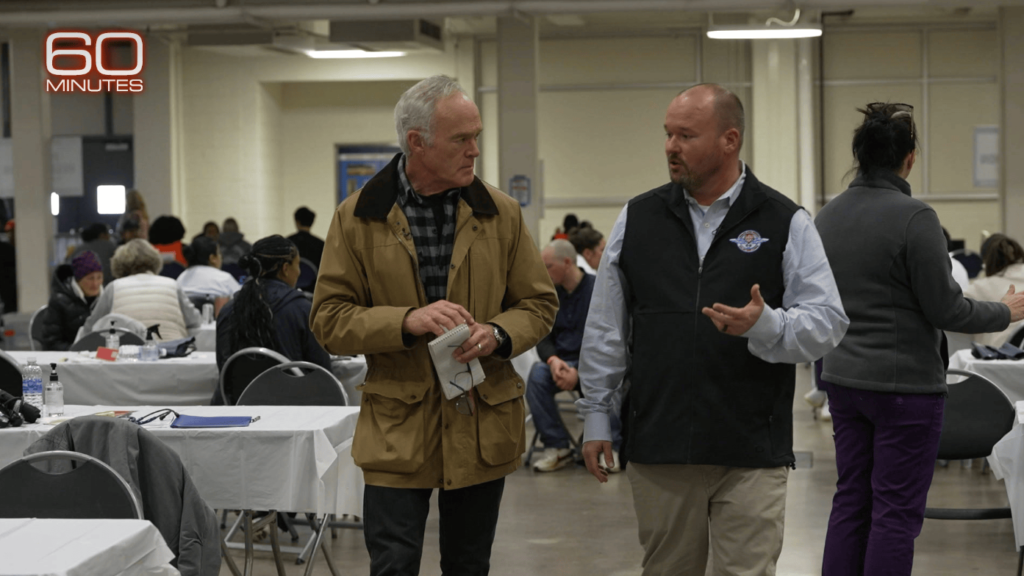
The April 5, 2026 broadcast of 60 Minutes opens with “Return to RAM,” a segment reported by Scott Pelley that revisits Remote Area Medical, a nonprofit providing free healthcare services across the United States. As the cost of care continues to rise and public health programs face ongoing pressure, the report places a renewed spotlight on a system that leaves many Americans without reliable access to basic medical treatment.
This segment builds on earlier coverage of Remote Area Medical and reflects how conditions have evolved in recent years. With more people finding themselves uninsured or underinsured, the need for temporary clinics has not diminished. Instead, the lines have grown longer, and the stories have become more urgent, underscoring a widening gap between healthcare availability and affordability.

- 60 Minutes Reports on “Return to RAM”, “Ghost Train”, “The Mardi Gras Indians” on April 5 2026
- Ghost Train: 60 Minutes Reports on America’s High-Speed Rail Struggles
- The Mardi Gras Indians: 60 Minutes Explores the Culture Behind the Masking Indians
The Origins and Mission of Remote Area Medical
Remote Area Medical, often referred to as RAM, was founded in 1985 by British philanthropist Stan Brock. The organization initially focused on delivering medical aid to remote regions in developing countries, using mobile clinics to reach populations with little or no access to healthcare. Over time, however, RAM’s mission shifted significantly as similar needs became increasingly visible within the United States.
Today, RAM operates hundreds of free clinics nationwide, staffed by volunteer doctors, nurses, dentists, and support workers. These events are typically held over weekends and offer services ranging from dental extractions and cleanings to eye exams and general medical care. The organization relies heavily on donated time and resources, allowing it to provide care at no cost to patients.
The shift from international aid to domestic service reflects broader systemic issues within the U.S. healthcare landscape. RAM’s continued presence highlights the reality that even in developed regions, access to essential care can remain out of reach for many individuals.
Rising Costs and the Strain on Healthcare Access
The segment arrives at a time when healthcare affordability remains a central concern. Insurance premiums in the Affordable Care Act marketplace have risen in many areas, placing additional financial strain on individuals and families. At the same time, proposed and enacted changes to Medicaid have created uncertainty for millions who rely on the program for coverage.
These pressures have led to a growing population of people who fall into coverage gaps. Some earn too much to qualify for Medicaid but cannot afford private insurance, while others may have insurance plans that do not adequately cover dental or vision care. As a result, many are forced to delay treatment or go without care altogether until conditions become severe.
“Return to RAM” captures how these systemic challenges translate into real-world consequences. Patients seeking help at RAM clinics often arrive with long-standing medical issues that have gone untreated due to cost barriers. The segment illustrates how financial limitations can shape health outcomes in profound ways.
Inside a RAM Clinic: Stories from the Front Lines
At the center of the report is a pop-up clinic where hundreds of patients gather in hopes of receiving care. Many arrive the night before, sleeping in their vehicles or waiting in line for hours to secure one of the limited spots available. The demand often exceeds capacity, meaning not everyone who comes will be seen.
The segment features individuals who have traveled significant distances, sometimes crossing state lines, to access services they cannot find or afford locally. For some, it is the only opportunity to receive dental work or obtain prescription glasses. Others are dealing with chronic pain or untreated conditions that have worsened over time.
Through these stories, the report conveys both the urgency and the emotional toll of limited healthcare access. It also highlights the dedication of volunteers who work long hours under demanding conditions to provide relief. Their efforts offer temporary solutions, but the scale of need points to deeper structural issues.
A Broader Reflection on the U.S. Healthcare System
“Return to RAM” ultimately raises larger questions about the sustainability and equity of healthcare in the United States. The reliance on charitable organizations to fill gaps in care suggests that existing systems are not reaching everyone who needs support. While RAM provides critical services, it is not designed to replace comprehensive, long-term healthcare access.
The segment also invites reflection on policy decisions and their impact on everyday lives. As debates over healthcare funding and reform continue, the experiences documented in this report serve as a reminder of what is at stake. Access to basic medical services remains a defining issue, affecting individuals across geographic and economic lines.
By revisiting Remote Area Medical, 60 Minutes presents a clear and grounded look at a persistent challenge. The stories shared in this segment offer insight into the realities faced by many Americans and underscore the importance of ongoing discussion around healthcare access and affordability.
The April 5, 2026 broadcast of 60 Minutes opens with “Return to RAM,” a segment reported by Scott Pelley that revisits Remote Area Medical, a nonprofit providing free healthcare services across the United States. As the cost of care continues to rise and public health programs face ongoing pressure, the report places a renewed spotlight on a system that leaves many Americans without reliable access to basic medical treatment.
This segment builds on earlier coverage of Remote Area Medical and reflects how conditions have evolved in recent years. With more people finding themselves uninsured or underinsured, the need for temporary clinics has not diminished. Instead, the lines have grown longer, and the stories have become more urgent, underscoring a widening gap between healthcare availability and affordability.
The Origins and Mission of Remote Area Medical
Remote Area Medical, often referred to as RAM, was founded in 1985 by British philanthropist Stan Brock. The organization initially focused on delivering medical aid to remote regions in developing countries, using mobile clinics to reach populations with little or no access to healthcare. Over time, however, RAM’s mission shifted significantly as similar needs became increasingly visible within the United States.
Today, RAM operates hundreds of free clinics nationwide, staffed by volunteer doctors, nurses, dentists, and support workers. These events are typically held over weekends and offer services ranging from dental extractions and cleanings to eye exams and general medical care. The organization relies heavily on donated time and resources, allowing it to provide care at no cost to patients.
The shift from international aid to domestic service reflects broader systemic issues within the U.S. healthcare landscape. RAM’s continued presence highlights the reality that even in developed regions, access to essential care can remain out of reach for many individuals.
Rising Costs and the Strain on Healthcare Access
The segment arrives at a time when healthcare affordability remains a central concern. Insurance premiums in the Affordable Care Act marketplace have risen in many areas, placing additional financial strain on individuals and families. At the same time, proposed and enacted changes to Medicaid have created uncertainty for millions who rely on the program for coverage.
These pressures have led to a growing population of people who fall into coverage gaps. Some earn too much to qualify for Medicaid but cannot afford private insurance, while others may have insurance plans that do not adequately cover dental or vision care. As a result, many are forced to delay treatment or go without care altogether until conditions become severe.
“Return to RAM” captures how these systemic challenges translate into real-world consequences. Patients seeking help at RAM clinics often arrive with long-standing medical issues that have gone untreated due to cost barriers. The segment illustrates how financial limitations can shape health outcomes in profound ways.
Inside a RAM Clinic: Stories from the Front Lines
At the center of the report is a pop-up clinic where hundreds of patients gather in hopes of receiving care. Many arrive the night before, sleeping in their vehicles or waiting in line for hours to secure one of the limited spots available. The demand often exceeds capacity, meaning not everyone who comes will be seen.
The segment features individuals who have traveled significant distances, sometimes crossing state lines, to access services they cannot find or afford locally. For some, it is the only opportunity to receive dental work or obtain prescription glasses. Others are dealing with chronic pain or untreated conditions that have worsened over time.
Through these stories, the report conveys both the urgency and the emotional toll of limited healthcare access. It also highlights the dedication of volunteers who work long hours under demanding conditions to provide relief. Their efforts offer temporary solutions, but the scale of need points to deeper structural issues.
A Broader Reflection on the U.S. Healthcare System
“Return to RAM” ultimately raises larger questions about the sustainability and equity of healthcare in the United States. The reliance on charitable organizations to fill gaps in care suggests that existing systems are not reaching everyone who needs support. While RAM provides critical services, it is not designed to replace comprehensive, long-term healthcare access.
The segment also invites reflection on policy decisions and their impact on everyday lives. As debates over healthcare funding and reform continue, the experiences documented in this report serve as a reminder of what is at stake. Access to basic medical services remains a defining issue, affecting individuals across geographic and economic lines.
By revisiting Remote Area Medical, 60 Minutes presents a clear and grounded look at a persistent challenge. The stories shared in this segment offer insight into the realities faced by many Americans and underscore the importance of ongoing discussion around healthcare access and affordability.
More 60 Minutes April 5 2026
- 60 Minutes Reports on “Return to RAM”, “Ghost Train”, “The Mardi Gras Indians” on April 5 2026
- Return to RAM: 60 Minutes Reports on the Rising Demand for Free Healthcare in America
- Ghost Train: 60 Minutes Reports on America’s High-Speed Rail Struggles
- The Mardi Gras Indians: 60 Minutes Explores the Culture Behind the Masking Indians
More Feature Articles
- “The Neighbor From Hell”: 20/20 Reports on Ajike Owens Homicide April 3 2026
- “Temptation”: Dateline Examines the Banfield Double Murder Case April 3 2026
- “Before the Storm”: Dateline Reports on Crystal McDowell Homicide April 4 2026
- “The Root Beer Float Murder”: 48 Hours Reports on Harold Allen Homicide April 4 2026
- 60 Minutes Reports on “Return to RAM”, “Ghost Train”, “The Mardi Gras Indians” on April 5 2026