


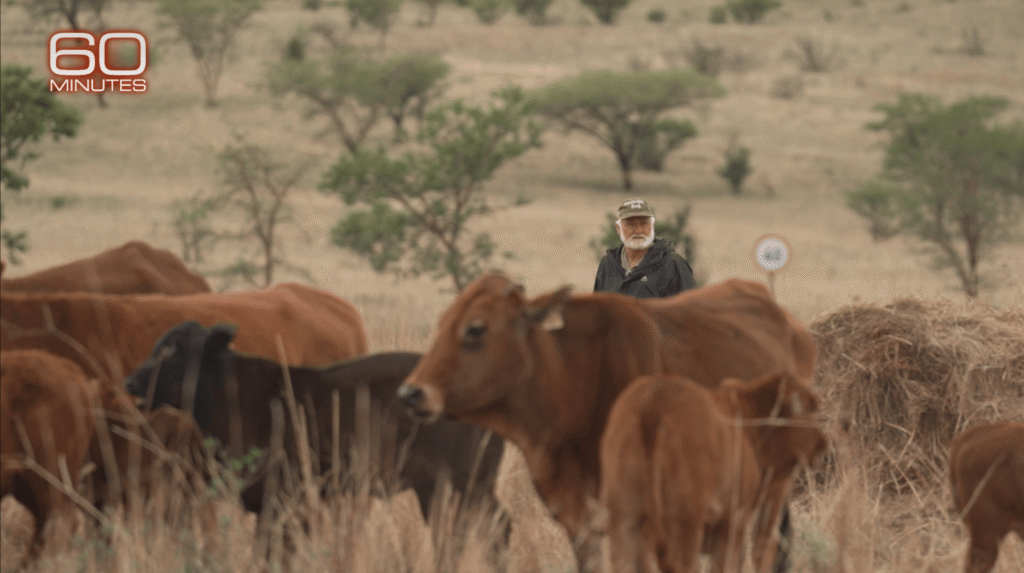
The 60 Minutes segment on South Africa focuses on a policy decision that drew international attention and debate. When former President Donald Trump announced plans to pause migration from what he described as “third world countries,” the administration made one notable exception: the resettlement of white South African refugees, many of them Afrikaners.
The decision was based on claims that white farmers in South Africa were facing widespread violence and even genocide. Those assertions quickly became the subject of political and diplomatic dispute. The South African government strongly rejected the characterization, stating that crime in the country affects people of all racial groups and is not targeted along racial lines.
Anderson Cooper’s report travels to South Africa to move beyond political statements and examine conditions on the ground. By speaking directly with farmers, community members, and local officials, the segment explores how security concerns, economic pressures, and historical tensions intersect in one of the world’s most complex social landscapes.

- 60 Minutes Reports on “Left Behind”, “South Africa’s Refugees” & “Is That Art?” on February 22 2026
- “Left Behind”: 60 Minutes Reports on Hunger, Hardship, and Survival in America’s Coal Country
- “Is That Art?”: 60 Minutes Explores the Rise and Controversy of AI Creations
The Legacy of Land and Inequality
Understanding the current debate requires looking at South Africa’s history. Under apartheid, the country’s system of institutionalized racial segregation, the white minority controlled the vast majority of land and economic resources. Even decades after apartheid ended in 1994, land ownership remains highly unequal.
The South African government has pursued land reform policies aimed at redistributing agricultural land to address these historic imbalances. While the goal is to promote fairness and economic opportunity, the process has been politically sensitive and often controversial.
Some white farmers fear that land reform could threaten their livelihoods or property rights. Others worry about broader uncertainty in the agricultural sector. At the same time, many Black South Africans argue that land reform has moved too slowly and that economic inequality remains one of the country’s most pressing challenges.
The debate over migration and refugee status cannot be separated from these deeper questions about land, ownership, and the legacy of apartheid.
Crime, Violence, and Competing Narratives
South Africa has one of the highest violent crime rates in the world, and farm attacks have become a symbol within the broader political conversation. Some advocacy groups argue that farmers are being specifically targeted and that rural crime has created a climate of fear in agricultural communities.
However, crime statistics show that violence is widespread across the country and affects people in urban and rural areas of all backgrounds. South African officials and many independent analysts dispute the claim that there is a coordinated or racially motivated campaign against white farmers.
This gap between perception and data has fueled competing narratives internationally. For some observers, the issue represents a humanitarian concern. For others, it reflects the way local crime and political tensions have been framed and amplified in global political debates.
The 60 Minutes report aims to present a more nuanced view by including voices from multiple sides of the issue.
Immigration Policy and Global Implications
The decision to prioritize one specific group for refugee resettlement raised broader questions about how refugee policy is shaped. Traditionally, U.S. refugee admissions have focused on people fleeing war, political persecution, or humanitarian crises, often in regions experiencing large-scale displacement.
By contrast, the situation in South Africa involves a middle-income country with functioning institutions, even as it struggles with inequality, crime, and economic challenges. The policy shift prompted debate among immigration experts, human rights organizations, and policymakers about how refugee status should be defined and applied.
Critics argued that the exception reflected political considerations rather than consistent humanitarian criteria. Supporters said the policy responded to legitimate security concerns raised by affected communities.
A Country at a Crossroads
For South Africans themselves, the issue is part of a larger national conversation about safety, economic opportunity, and social cohesion. Farmers face rising costs, climate pressures, and security concerns, while many rural and urban communities continue to struggle with unemployment and poverty.
The country’s future depends on balancing land reform, economic growth, and public safety while maintaining stability in a diverse society still shaped by its past. Many South Africans, regardless of background, share concerns about crime and economic uncertainty, even as they differ on the causes and solutions.
By focusing on personal stories and local perspectives, the 60 Minutes segment highlights the complexity behind a headline-driven controversy. The report underscores that the situation cannot be reduced to simple political claims, but instead reflects the ongoing challenges of a nation working to address inequality, security, and reconciliation more than three decades after the end of apartheid.
More 60 Minutes February 22 2026
- 60 Minutes Reports on “Left Behind”, “South Africa’s Refugees” & “Is That Art?” on February 22 2026
- “Left Behind”: 60 Minutes Reports on Hunger, Hardship, and Survival in America’s Coal Country
- “South Africa’s Refugees”: 60 Minutes Investigates a Controversial Immigration Exception
- “Is That Art?”: 60 Minutes Explores the Rise and Controversy of AI Creations
More Feature Articles
- “The Au Pair, the Affair and Murder”: 20/20 Reports on Christine Banfield & Joseph Ryan Homicides February 20 2026
- Dateline NBC Pre-Empted February 20 2026 for Winter Olympics Coverage
- “Sade Robinson and the Secret Beach”: 48 Hours Reports February 21 2026
- 60 Minutes Reports on “Left Behind”, “South Africa’s Refugees” & “Is That Art?” on February 22 2026