The Looting of Cambodia: 60 Minutes Investigates One of History’s Greatest Art Heists
CBS’s 60 Minutes turns its attention to one of the largest and longest-running cultural crimes ever uncovered in “The Looting of Cambodia.” In a special double-length investigation, correspondent Anderson Cooper examines how thousands of priceless religious artifacts disappeared from Cambodia’s ancient temples during decades of war and political upheaval before resurfacing in prestigious museums and private collections around the world.
The encore presentation revisits a year-long investigation into the international trafficking network allegedly masterminded by British art dealer Douglas Latchford. The report follows Cambodia’s continuing effort to recover its cultural heritage, a campaign that has resulted in the return of hundreds of artifacts but has also exposed the role played by collectors, dealers, auction houses, and museums in one of history’s most significant antiquities scandals.
- 60 Minutes Reports on “Betting on War” & “The Looting of Cambodia” on June 28 2026
- Betting on War: 60 Minutes Investigates the Explosive Rise of Wagers on Global Conflict on June 28 2026
Cambodia’s Ancient Heritage
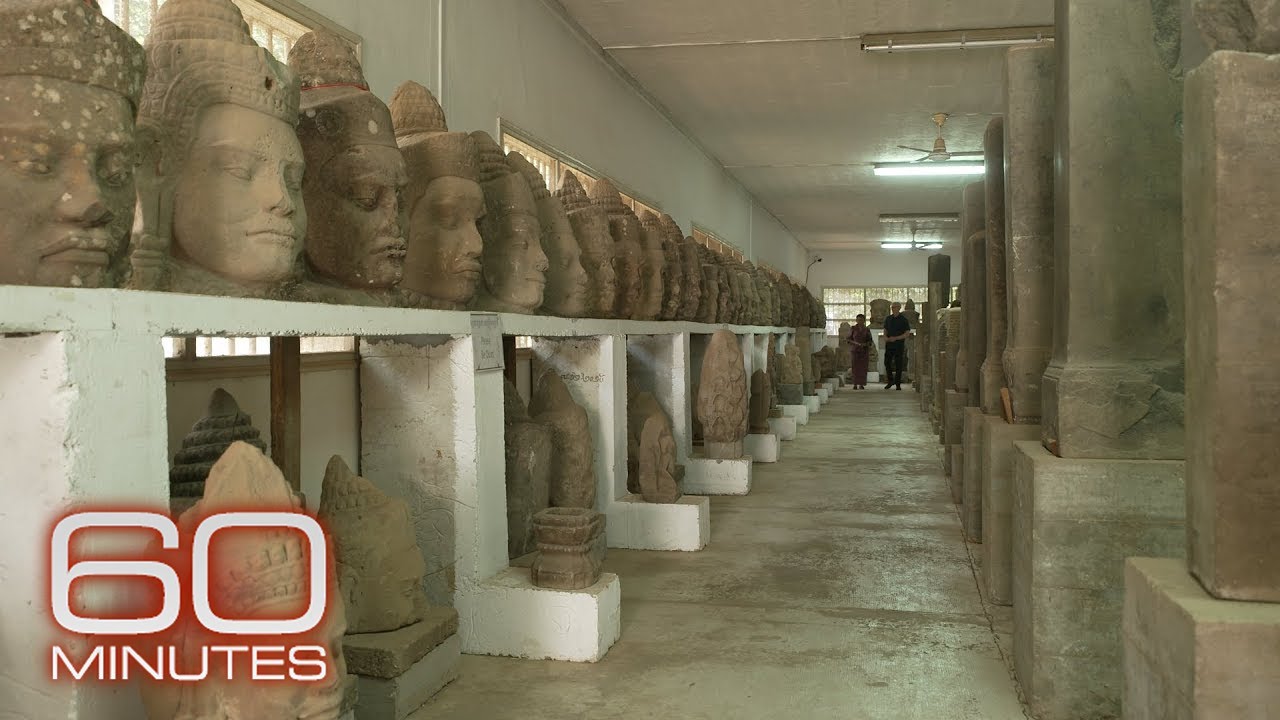
Cambodia is home to one of the world’s richest collections of ancient religious monuments. The Khmer Empire, which flourished between the ninth and fifteenth centuries, constructed thousands of Hindu and Buddhist temples across the country, including the internationally renowned Angkor Wat, now a UNESCO World Heritage Site and Cambodia’s best-known cultural landmark.
These temples were filled with intricately carved sandstone sculptures, bronze figures, ceremonial objects, and sacred relics that held deep religious and historical significance. Many statues remained in their original locations for centuries, serving not only as archaeological treasures but also as active objects of worship for local communities.
The widespread looting of these sites accelerated during Cambodia’s decades of conflict. Civil war, the Khmer Rouge regime, and subsequent political instability left many remote temples unprotected, creating opportunities for organized trafficking networks to remove artifacts on an industrial scale. Entire statues were cut from their pedestals, while others were broken into pieces for easier transport across international borders.
Douglas Latchford and the International Antiquities Trade
At the center of the investigation is Douglas Latchford, a British-born dealer who became one of the world’s most influential traders in Khmer antiquities. For decades he cultivated a reputation as an expert on Cambodian art while simultaneously assembling an enormous private collection and supplying museums and wealthy collectors with rare artifacts.
U.S. prosecutors alleged that Latchford knowingly trafficked looted Cambodian antiquities, falsified ownership histories, and concealed the true origins of many artifacts to make them appear legally obtained. He was indicted in New York in 2019 on fraud and trafficking charges but died in 2020 before the case could proceed to trial.
Investigations conducted over the past several years have linked Latchford’s network to artifacts that found their way into internationally respected institutions. Museums in the United States, Europe, and Australia have since reviewed the provenance of Khmer objects in their collections, with many agreeing to return pieces after evidence emerged that they had been removed illegally from Cambodian temples.
Following the Trail of Stolen Artifacts
The 60 Minutes investigation follows experts working to reconstruct the journey of stolen artifacts from isolated temple ruins to some of the world’s most prestigious galleries. Investigators examine photographs, auction records, shipping documents, and decades-old dealer correspondence to establish where objects originated and how they left Cambodia.
A key figure featured in the report is American attorney Brad Gordon, who has spent more than a decade advising the Cambodian government on recovering its stolen cultural property. Working alongside archaeologists, historians, and Cambodian officials, Gordon’s team has identified thousands of missing objects and pursued their return through negotiations, legal claims, and international cooperation.
Their work has demonstrated that many statues still bear physical evidence of their removal. Broken feet or pedestals left behind at temple sites often match sculptures now displayed thousands of miles away, providing compelling proof of where the objects originally belonged.
Cambodia’s Long Fight for Repatriation
Recovering Cambodia’s cultural heritage has become one of the country’s most significant international cultural initiatives. Government officials argue these objects represent far more than valuable works of art—they are sacred symbols of national identity that were removed during periods when Cambodia was unable to protect them.
The campaign has produced major successes. Museums including New York’s Metropolitan Museum of Art have returned Khmer sculptures following provenance investigations, while other institutions have voluntarily repatriated objects once evidence established they had been looted. Latchford’s family has also returned a substantial portion of his personal collection under agreements reached with Cambodian authorities.
Most recently, Cambodia welcomed the return of 74 additional artifacts from the United Kingdom, marking another milestone in the country’s decades-long effort to reclaim its heritage. Officials described the restitution as one of the largest returns of Khmer cultural objects in recent years, following earlier repatriations from the same collection.
Why the Story Still Matters
The looting of Cambodia has become a landmark case in the global movement to return cultural artifacts taken during war, colonial rule, and political instability. Countries across Africa, Asia, and Latin America have increasingly sought the return of objects they argue were removed illegally or under exploitative circumstances, prompting museums to re-examine how collections were assembled.
The investigation also raises broader questions about responsibility within the international art market. Dealers, collectors, museums, and auction houses have all faced growing scrutiny over whether sufficient efforts were made to verify the origins of valuable antiquities before acquiring them. As provenance standards have become more rigorous, institutions have found themselves confronting difficult decisions about ownership and restitution.
By revisiting the story, 60 Minutes highlights a case that extends beyond archaeology. It is an investigation into organized trafficking, international justice, and the effort to restore pieces of a nation’s history that disappeared during one of the darkest periods in Cambodia’s modern past. While hundreds of artifacts have already returned home, officials believe many more remain scattered throughout museums and private collections worldwide, making the search far from over.
More 60 Minutes June 28 2026
- 60 Minutes Reports on “Betting on War” & “The Looting of Cambodia” on June 28 2026
- Betting on War: 60 Minutes Investigates the Explosive Rise of Wagers on Global Conflict on June 28 2026
- The Looting of Cambodia: 60 Minutes Investigates One of History’s Greatest Art Heists
More Feature Articles
- “After the Flood”: Dateline NBC Examines the Camp Mystic Tragedy One Year Later June 26 2026
- “Road Map to Murder”: 20/20 Revisits Bart & Krista Halderson Homicides June 26 2026
- “The Day My Mother Never Came Home”: 48 Hours Revisits the Murder of Selonia Reed and a Son’s Search for the Truth June 27 2026
- 60 Minutes Reports on “Betting on War” & “The Looting of Cambodia” on June 28 2026