What Happened to the Great White Sharks?: 60 Minutes Investigates South Africa’s Unsolved Ocean Mystery on June 21 2026
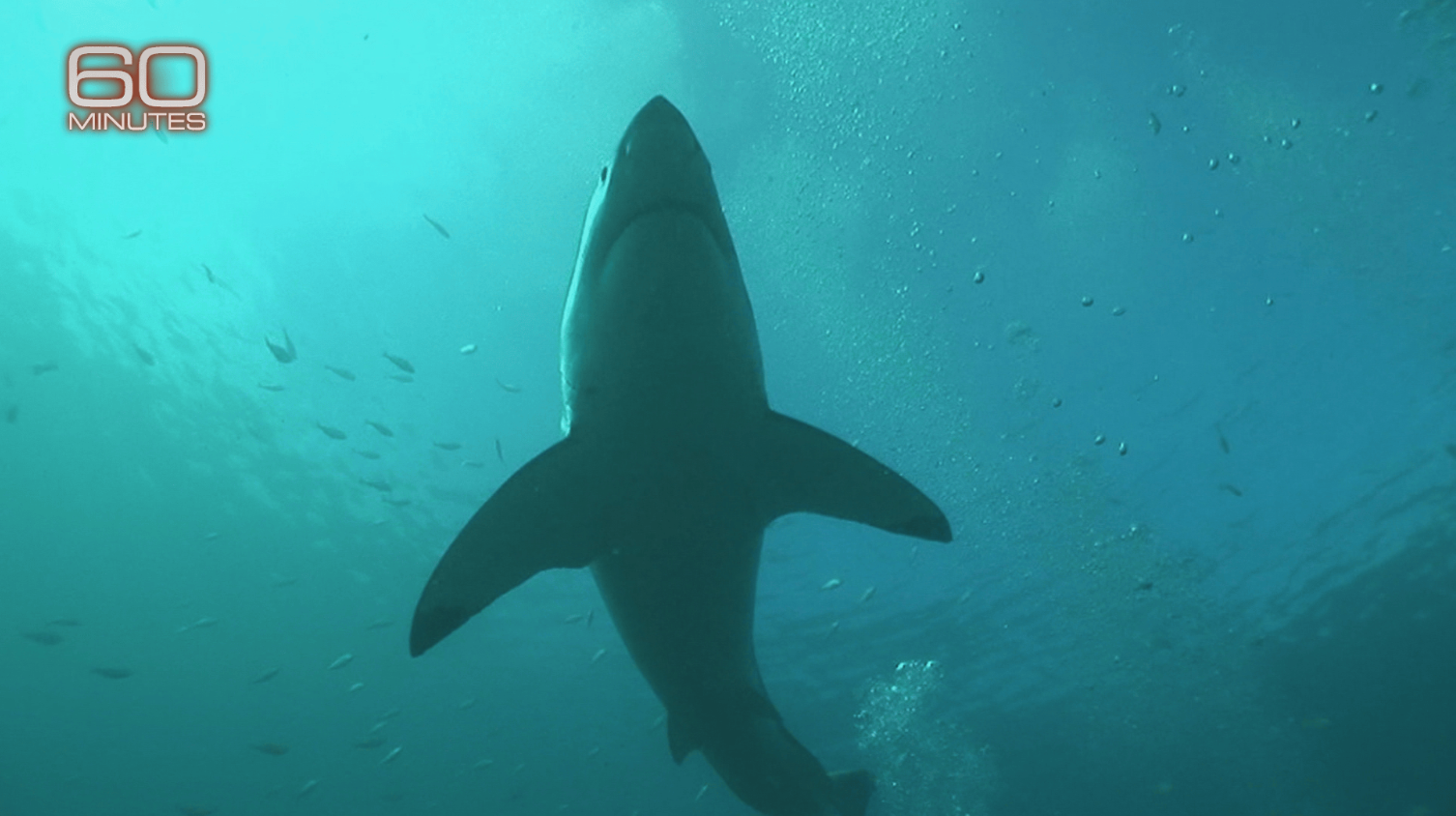
For decades, the waters surrounding Cape Town, South Africa, were considered one of the best places in the world to observe great white sharks. Tourists traveled thousands of miles for the chance to see these iconic predators breach the ocean’s surface, while marine biologists studied their behavior in an ecosystem long regarded as one of the species’ most important habitats.
But in recent years, something changed. Great white sharks began disappearing from areas where they had once been abundant. Even more disturbing, some sharks were found washed ashore with a crucial organ missing: their liver. On this week’s encore edition of 60 Minutes, correspondent Anderson Cooper investigates the mystery that has divided scientists, conservationists, and wildlife experts for nearly a decade.
The story combines marine science, conservation, and a real-life wildlife whodunnit that remains one of the most fascinating ocean mysteries of the 21st century.
Cape Town Was Once a Global Great White Shark Capital
South Africa’s coastline has long been synonymous with great white sharks. Locations such as False Bay and Gansbaai became world-famous for shark tourism and scientific research.
The area’s rich marine ecosystem provided an ideal hunting ground for great whites. Large populations of seals attracted the apex predators, creating one of nature’s most dramatic spectacles. Researchers spent years documenting shark movements, hunting strategies, and population dynamics, while filmmakers captured footage that introduced millions of viewers to these powerful animals.
The tourism industry also benefited significantly from the sharks’ presence. Cage-diving excursions attracted visitors from around the world, generating income for local communities and helping foster appreciation for shark conservation.
For many years, the ecosystem appeared relatively stable. Then reports began emerging that some of the region’s most famous sharks had vanished.
The Discovery That Shocked Scientists
The mystery deepened when dead great white sharks started appearing on beaches along South Africa’s coast.
Examinations of the carcasses revealed something extraordinary. In several cases, the sharks’ livers had been removed with remarkable precision. Other internal organs were often left untouched, raising immediate questions about what predator could be responsible.
The liver is one of the most energy-rich organs in a shark’s body. Because sharks rely on large oil-filled livers for buoyancy and energy storage, the organ represents a valuable food source for predators capable of accessing it.
The unusual wounds found on the carcasses suggested that whoever or whatever was responsible possessed both strength and surprising efficiency. Scientists quickly began searching for answers, but agreement proved difficult to achieve.
The Orca Theory
One of the leading explanations centers on killer whales, also known as orcas.
Researchers observed a pair of male orcas that appeared frequently in the region around the time the shark deaths began receiving attention. Nicknamed “Port” and “Starboard” because of their distinctive collapsed dorsal fins, the whales were suspected of hunting great white sharks and removing their livers.
Orcas are among the ocean’s most intelligent and adaptable predators. Around the world, different populations have developed specialized hunting techniques to target specific prey. Some hunt seals, others focus on fish, and some have even been documented attacking large whales.
Evidence gathered over the years suggested that these particular orcas may have learned how to disable sharks and extract their nutrient-rich livers. The theory gained traction after observations indicated that great white sharks often left areas shortly after the killer whales appeared.
A Scientific Debate Continues
Despite widespread attention given to the orca theory, not all researchers agree on the full explanation.
Some scientists argue that while killer whales may be responsible for certain shark deaths, broader environmental factors could also be contributing to the disappearance of great whites from the region. Changes in prey availability, fishing pressure, climate shifts, and other ecological influences have all been discussed as possible factors affecting shark populations.
The debate has at times become heated, with researchers disagreeing over data interpretation and the relative importance of various causes. Determining what is happening beneath the ocean’s surface is inherently challenging, especially when dealing with highly mobile predators that can travel vast distances.
The uncertainty has fueled ongoing research and made the South African shark mystery one of the most closely watched stories in marine conservation.
Why Great White Sharks Matter
Great white sharks play a critical role as apex predators. By influencing the behavior and distribution of prey species, they help maintain balance within marine ecosystems.
When apex predators disappear, ecological consequences can ripple through the food chain. Scientists often study such changes carefully because they can reveal broader shifts occurring within an environment.
The disappearance of great whites from historically important habitats raises important questions about ocean health and the future of marine biodiversity. Understanding what happened in South Africa could provide valuable insights into how predator populations respond to environmental change and emerging threats.
The issue also highlights the challenges of wildlife conservation in a rapidly changing world. Even species that once seemed dominant can face unexpected pressures that alter ecosystems in profound ways.
Anderson Cooper Explores a Modern Ocean Mystery
In this 60 Minutes report, Anderson Cooper travels to South Africa to speak directly with researchers, conservationists, and others involved in the ongoing investigation.
The segment examines competing theories while showcasing the dramatic landscape where the mystery unfolded. Viewers gain insight into both the scientific process and the passionate disagreements that can emerge when evidence remains incomplete.
What makes the story particularly compelling is that many questions remain unanswered. While researchers have gathered significant clues, the full picture of what happened to South Africa’s great white sharks continues to evolve.
For viewers interested in wildlife, conservation, and scientific discovery, the report offers a fascinating look at an environmental mystery that is still unfolding. It serves as a reminder that even in an age of advanced technology and research, the ocean continues to hold secrets that challenge our understanding of the natural world.
More 60 Minutes June 21 2026
- 60 Minutes Reports on “Youngest Survivors” & “What Happened to the Great White Sharks?” on June 21 2026
- Youngest Survivors: 60 Minutes Tells the Extraordinary Story of Three Holocaust Babies Who Beat Impossible Odds on June 21 2026
- What Happened to the Great White Sharks?: 60 Minutes Investigates South Africa’s Unsolved Ocean Mystery on June 21 2026
More Feature Articles
- “Her Last Call”: 20/20 Reports on Denise Amber Lee Homicide June 19 2026
- “Secrets Unmasked”: Dateline NBC Explores Homicide of Regina Rowe-Hicks June 19 2026
- “Dead Girls Don’t Talk”: 48 Hours Examines Examines the Homicides of Christy Giles & Hilda Marcela Cabrales-Arzola June 20 2026
- 60 Minutes Reports on “Youngest Survivors” & “What Happened to the Great White Sharks?” on June 21 2026