


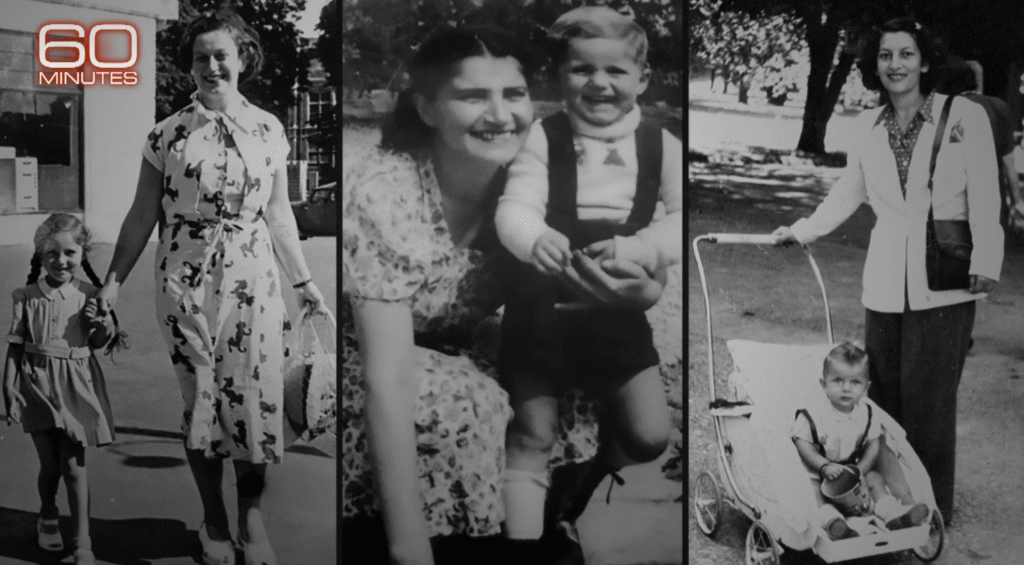
On this week’s encore edition of 60 Minutes, correspondent Lesley Stahl revisits one of the most remarkable survival stories to emerge from the Holocaust. Titled Youngest Survivors, the double-length segment tells the story of three people who entered the world under circumstances almost impossible to imagine. Born inside Nazi concentration and slave labor camps during the final months of World War II, they survived despite overwhelming odds that suggested they never should have lived.
As the world marks 80 years since the liberation of Auschwitz and other Nazi camps, the report serves as both a historical document and a deeply personal account of resilience. Through interviews with the survivors, their families, historians, and witnesses, Stahl examines how three mothers managed to hide their pregnancies from Nazi guards and ultimately give birth while imprisoned in some of the most brutal places on earth.

- 60 Minutes Reports on “Youngest Survivors” & “What Happened to the Great White Sharks?” on June 21 2026
- What Happened to the Great White Sharks?: 60 Minutes Investigates South Africa’s Unsolved Ocean Mystery on June 21 2026
Pregnancy in Nazi Concentration Camps Was Often a Death Sentence
The Nazi concentration camp system was designed for exploitation, imprisonment, and extermination. For pregnant women, survival was especially difficult. Nazi racial policies viewed many prisoners as unworthy of life, and pregnant inmates were often selected for execution or subjected to forced abortions.
At Auschwitz and other camps, women endured starvation diets, disease, physical abuse, and grueling labor. Under such conditions, carrying a child to term was extraordinarily rare. Many women lost their pregnancies due to malnutrition and illness. Those who managed to conceal their condition faced the constant threat of discovery.
Historians estimate that very few infants born within the camp system survived. The mothers featured in Youngest Survivors displayed extraordinary courage by keeping their pregnancies secret from camp authorities. Their determination ultimately saved the lives of their children and created a legacy that continues eight decades later.
Born During Humanity’s Darkest Chapter
The three individuals featured in the report were all born near the end of World War II as Nazi Germany began collapsing under Allied advances. Their births occurred amid chaos, uncertainty, and unimaginable suffering.
Each survivor’s story is unique, yet they share striking similarities. Their mothers endured months of deprivation while carrying them. In some cases, fellow prisoners provided assistance, helping conceal pregnancies or protect newborns from guards. Small acts of kindness and solidarity among prisoners often made the difference between life and death.
The fact that these babies survived infancy is remarkable on its own. That they lived long enough to tell their stories more than 80 years later makes their survival all the more extraordinary. Their lives stand as living evidence of resistance against a system built on destruction.
The Liberation of the Camps
By early 1945, Allied forces were pushing into Nazi-held territory from multiple directions. As Soviet troops advanced toward Auschwitz and American forces liberated camps across Germany and Austria, thousands of prisoners who had survived years of captivity finally saw hope.
The liberation of concentration camps revealed horrors that shocked even experienced soldiers. Emaciated survivors, mass graves, and evidence of systematic murder confronted liberators with scenes unlike anything they had encountered before.
One of the most moving elements of Stahl’s report focuses on an American medic who participated in the liberation effort. Amid the devastation, he encountered one of the newborn survivors and helped ensure the child’s survival. His actions became part of a story that would connect generations and continents long after the war ended.
A Reunion Decades in the Making
Perhaps the most astonishing aspect of Youngest Survivors is what happened decades later. For most of their lives, the three survivors had no idea others shared such similar beginnings.
It was not until roughly 65 years after the war that they discovered one another. Through research, family histories, survivor networks, and a series of remarkable coincidences, their paths finally crossed. The reunion revealed not only common experiences but also shared emotional challenges associated with carrying the legacy of the Holocaust.
For descendants of survivors, preserving these stories has become increasingly important. As the survivor generation ages, firsthand testimony serves as a critical tool in educating future generations about the realities of the Holocaust and the dangers of hatred, antisemitism, and intolerance.
Why Holocaust Stories Matter Eighty Years Later
The passage of time has made Holocaust remembrance both more challenging and more important. Fewer survivors remain alive to tell their stories directly, placing greater responsibility on historians, educators, journalists, and family members to preserve the historical record.
Programs like Youngest Survivors help bridge that gap by introducing personal stories that resonate with modern audiences. Statistics can convey the scale of tragedy, but individual experiences often provide the emotional connection necessary to understand history’s human impact.
The three survivors profiled by 60 Minutes represent more than remarkable personal stories. They symbolize hope in the face of despair and demonstrate how acts of courage can echo across generations. Their existence serves as a reminder that even during one of humanity’s darkest periods, resilience and determination endured.
A Powerful 60 Minutes Encore
Although this week’s broadcast is an encore presentation, the story remains as powerful and relevant as ever. The anniversary of the camps’ liberation provides an opportunity to reflect on the lives affected by the Holocaust and the importance of preserving survivor testimony.
Lesley Stahl’s report combines historical context with deeply personal storytelling, creating a moving portrait of survival against impossible odds. As viewers meet these three individuals, now in their 80s, they are witnessing living history and a story that continues to inspire decades after the end of World War II.
For anyone interested in history, human resilience, or the enduring impact of the Holocaust, Youngest Survivors stands as one of the most compelling segments featured on 60 Minutes this season.
More 60 Minutes June 21 2026
- 60 Minutes Reports on “Youngest Survivors” & “What Happened to the Great White Sharks?” on June 21 2026
- Youngest Survivors: 60 Minutes Tells the Extraordinary Story of Three Holocaust Babies Who Beat Impossible Odds on June 21 2026
- What Happened to the Great White Sharks?: 60 Minutes Investigates South Africa’s Unsolved Ocean Mystery on June 21 2026
More Feature Articles
- “Her Last Call”: 20/20 Reports on Denise Amber Lee Homicide June 19 2026
- “Secrets Unmasked”: Dateline NBC Explores Homicide of Regina Rowe-Hicks June 19 2026
- “Dead Girls Don’t Talk”: 48 Hours Examines Examines the Homicides of Christy Giles & Hilda Marcela Cabrales-Arzola June 20 2026
- 60 Minutes Reports on “Youngest Survivors” & “What Happened to the Great White Sharks?” on June 21 2026