AI Data Centers: 60 Minutes Investigates the Backlash Against America’s AI Boom
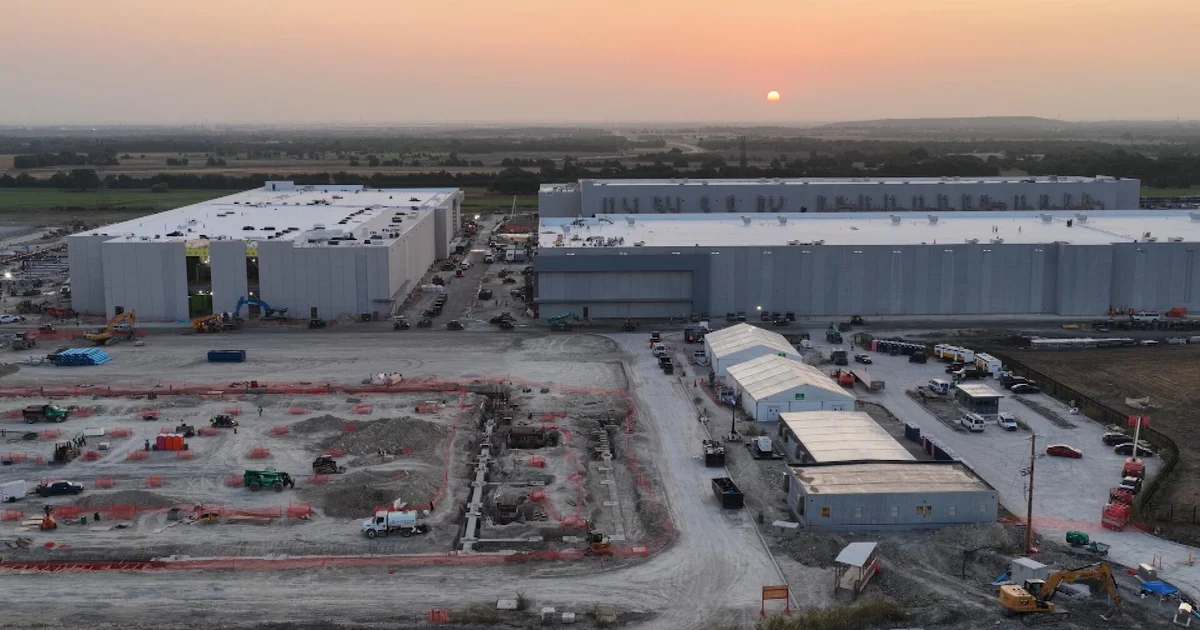
The artificial intelligence boom may seem largely digital, but behind ChatGPT, cloud computing and increasingly powerful AI models is an enormous and rapidly expanding physical infrastructure.
On 60 Minutes, correspondent Norah O’Donnell travels to Texas to investigate the increasingly contentious battle over the data centers needed to power that technology — sprawling facilities filled with servers and advanced computer chips that can require enormous amounts of electricity, land and, depending on their cooling systems, water.
The issue has become particularly heated in rural Texas, where communities accustomed to farms, ranches and relatively little industrial development are confronting proposals for massive data center campuses.
And the political consequences are becoming difficult to ignore.
CBS reports there are now more than 3,000 data centers operating across the United States, with another 1,500 proposed. Around two-thirds of the proposed facilities would be located in rural areas.
The resulting backlash has created some unusual political alliances and turned data centers into an issue in the 2026 midterm elections.
- 60 Minutes Reports on “Patrick Clancy”, “AI Data Centers” & “Shergar, Where Are You?” on September 20 2026
- Patrick Clancy Gives First TV Interview After Lindsay Clancy Mistrial
- Shergar, Where Are You?: 60 Minutes Investigates Horse Racing’s Greatest Unsolved Mystery
Why Artificial Intelligence Needs So Many Data Centers
AI exists online, but the computations behind it have to happen somewhere.
Data centers are essentially enormous industrial buildings containing thousands of servers. Those machines store and process data, run cloud services and increasingly provide the computing power required to train and operate artificial intelligence systems.
Generative AI has intensified that demand.
Unlike many traditional internet services, sophisticated AI systems can require huge numbers of specialised computer chips performing calculations simultaneously. Those processors consume electricity and generate substantial amounts of heat, which means operators also need sophisticated cooling infrastructure.
As AI companies race to expand their computing capacity, developers are searching for locations where enormous new facilities can be constructed.
Texas has emerged as one of the centres of that expansion.
A Texas Tribune analysis published in August counted 335 existing data centers in Texas and more than 248 additional facilities in development.
That means decisions once regarded as obscure questions about industrial zoning have become major disputes over energy, water, taxes and the future of rural communities.
60 Minutes Visits the Front Line of the Texas Data Center Fight
O’Donnell’s report takes viewers outside Dallas, where Jazmin Villegas, a mother of five and Marine veteran, lives on a quiet farm.
A huge data center campus is planned next door.
Villegas shows O’Donnell the agricultural land that could eventually be transformed into buildings and concrete as part of the development.
She has since become a prominent local opponent of the project and tells 60 Minutes that she sees protecting her community as an extension of the service she began when she enlisted in the military.
Her concerns reflect a much larger movement developing across Texas.
Residents aren’t necessarily opposing artificial intelligence itself. Instead, many are questioning whether the infrastructure supporting it should be placed beside homes, farms and communities — and who should bear the costs of providing the resources it requires.
Why Rural Texas Is Attractive to Data Center Developers
There are practical reasons developers are looking beyond established technology hubs.
A giant data center requires land, access to electricity and connections to major telecommunications infrastructure. Rural locations can offer significantly more space for the enormous campuses developers increasingly want to construct.
Texas also has an enormous energy industry, extensive land and a business environment that has historically encouraged large-scale development.
But those same advantages are producing conflict.
According to CBS, 67% of proposed American data centers are planned for rural areas, potentially transforming communities that have never previously dealt with industrial developments of this scale.
For landowners living beside proposed sites, the debate therefore isn’t an abstract argument about AI.
It can involve potentially having an enormous industrial complex as a new neighbour.
The Electricity Question Is Enormous
One of the biggest issues is power.
Data centers can consume extraordinary amounts of electricity because their servers operate continuously. The expansion of AI makes that issue particularly significant because advanced computing hardware can be exceptionally energy intensive.
Texas already has a complicated relationship with electricity reliability following the catastrophic grid failures associated with Winter Storm Uri in 2021.
Now the state must determine how to accommodate potentially enormous new industrial electricity loads while continuing to provide reliable and affordable power to existing consumers.
Residents opposing developments have argued that ordinary Texans shouldn’t be forced to subsidise the infrastructure necessary to connect giant technology projects to the grid or bear higher electricity costs resulting from their arrival.
Industry representatives counter that simply halting projects could create its own problems.
The Texas Tribune reported in August that energy and industry groups warned that abrupt pauses affecting data centers and new transmission infrastructure could increase uncertainty and potentially contribute to congestion and higher electricity costs.
That makes the debate considerably more complicated than simply deciding whether data centers should be built.
Texas must also decide who pays for the electricity generation and transmission infrastructure required to support them.
Water Has Become Another Major Concern
Electricity isn’t the only resource attracting attention.
Some data centers use significant quantities of water to cool servers, an especially sensitive subject in parts of Texas where drought and long-term water availability are already serious concerns.
The precise statewide impact can be difficult to determine because facilities use different cooling technologies.
According to the Texas Tribune, data centers consumed an estimated 25 billion gallons of water in Texas during 2025, although that represented less than 1% of total statewide water consumption.
The statewide percentage doesn’t necessarily resolve local concerns.
A large facility drawing water from one particular aquifer, lake or municipal system could have a much more noticeable local impact than the statewide figure suggests.
And Texas officials have encountered another problem: they don’t necessarily know how much water every operator is using.
A state survey seeking information from data center companies received responses from less than one-third of those surveyed, according to testimony presented to Texas lawmakers in June.
Not Every Data Center Uses Water the Same Way
There is also substantial variation between projects.
Some newer developments are proposing cooling systems designed to dramatically reduce ongoing water consumption.
A proposed East Texas facility near Lufkin, for example, told officials that it intended to use a closed-loop cooling system requiring approximately 30,000 gallons initially, after which the water could be reused for as long as a decade.
The developer also proposed using portions of its roughly 1,000-acre property as sound buffers between the facility and neighbouring communities.
Those distinctions are important.
A facility relying heavily on evaporative cooling may have a very different local environmental footprint from one using a closed-loop system.
As a result, simply describing every data center as having the same water impact can obscure significant differences between individual projects.
Residents Are Also Worried About Noise
Then there is an issue that can be difficult to appreciate until a data center becomes a neighbour: noise.
Servers themselves require cooling, while facilities can contain industrial-scale fans, chillers and other equipment operating around the clock.
Residents near some proposed developments have expressed concerns about the persistent hum generated by these facilities.
In East Texas, residents living near proposed projects have raised fears about noise alongside concerns about water, electricity and the industrialisation of previously rural landscapes.
Developers argue that setbacks, sound barriers and modern engineering can mitigate those effects.
The argument therefore frequently comes down to another question: how close should facilities of this scale be allowed to operate to existing homes?
The Tax Incentives Are Becoming Controversial
The economic argument for data centers is substantial.
Developers can invest billions of dollars in a single campus, generating construction work and potentially creating a valuable new source of local tax revenue.
But communities are increasingly examining exactly how much of that tax revenue they will actually receive.
In Hood County, southwest of Fort Worth, county commissioner Dave Eagle told 60 Minutes that one developer initially approached officials promising jobs and economic benefits without providing enough detail about exactly what it intended to build.
The company was ultimately revealed to be Amazon Web Services.
According to documents obtained by 60 Minutes, AWS sought property-tax rebates of as much as 90% for 30 years.
Eagle opposed the proposal. Amazon ultimately decided not to build in Hood County, although a project proceeded in a neighbouring county where the company received the tax arrangement it sought. Amazon told CBS that where it invests, it works with local leaders to create employment and generate revenue for public services.
The example illustrates one of the central tensions surrounding data center development.
Communities may be told that a multibillion-dollar development will dramatically expand their tax base, but residents increasingly want to know how much tax the company will actually pay after incentives are included.
Texas Communities Have Started Fighting Back
Opposition is no longer limited to individual homeowners.
Some Texas communities have begun attempting to halt or restrict data center development altogether.
In June, San Marcos became the first Texas city to ban data centers within its city limits, with the City Council voting 4-3 to change its zoning rules.
Officials cited concerns about electricity and water resources.
Elsewhere, organised community opposition has influenced individual projects.
A proposed East Texas data center near Cedar Creek Reservoir was abandoned in July after substantial opposition. Residents had raised concerns about its proposed water consumption and location near existing homes.
The disputes demonstrate how rapidly attitudes have changed.
Only a short time ago, attracting a major technology investment might have been regarded almost automatically as an economic-development victory.
Now some communities are asking whether the infrastructure costs and environmental consequences outweigh those benefits.
Greg Abbott Has Changed His Approach to Data Centers
The political shift has reached the highest levels of Texas government.
Republican Governor Greg Abbott, whose state has aggressively pursued technology investment, has called for much tougher conditions on new developments.
In June, Abbott proposed requiring data centers to bring additional electricity generation, pay their own infrastructure costs, reuse water and comply with measures intended to reduce their effects on neighbouring communities.
He subsequently went further, calling for Texas to prohibit AI data centers from being built in rural residential neighbourhoods.
The change illustrates the political pressure created by the expansion.
Data centers can simultaneously represent billions of dollars in investment and a source of intense opposition among the voters living beside them.
Opposition Is Crossing Party Lines
Perhaps the most politically significant element of the controversy is that resistance doesn’t fit neatly into the usual partisan divide.
Texas Tribune reporting has documented environmental activists, conservative rural residents and politicians from both parties expressing concerns about data center development.
A June Texas Politics Project poll found opposition among both Democratic and Republican registered voters, although the level differed between the two groups.
The reasons can differ.
Environmental groups may focus heavily on electricity generation, emissions and water consumption.
Rural conservatives may emphasise property rights, industrial development near homes and protecting agricultural communities.
Others are primarily concerned about electricity prices or whether technology companies are receiving excessive tax incentives.
Those interests can converge around the same proposed development even when the people involved disagree strongly on other political issues.
There Is Also a Powerful Economic Case for Building Them
The 60 Minutes controversy isn’t simply a story about communities versus technology companies.
There are substantial arguments in favour of data center investment as well.
The facilities require enormous upfront capital expenditure. Construction can employ large numbers of workers, and operating facilities create permanent technical and maintenance positions.
Even when companies receive tax incentives, large campuses can still contribute substantial amounts of local and state revenue.
Industry advocates also argue that computing infrastructure is becoming economically essential.
If artificial intelligence becomes as important to future industries as its proponents expect, regions with access to enormous computing resources could have a significant advantage in attracting investment.
Texas therefore faces a difficult balancing act.
Turning away too much infrastructure could mean losing technology investment to competing states.
Accepting projects without sufficient planning could leave communities facing infrastructure demands they never agreed to shoulder.
The AI Revolution Has Become a Local Land-Use Battle
That contradiction is at the centre of the 60 Minutes investigation.
Artificial intelligence is usually discussed in terms of software: chatbots, automation, algorithms and increasingly capable computer models.
But the AI revolution also requires land, electricity, transmission lines, cooling equipment, water and enormous industrial buildings.
Those physical requirements mean decisions about the future of AI aren’t being made exclusively in Silicon Valley boardrooms or Washington.
They’re increasingly being made at county commission meetings and city halls in Texas.
For families who discover that hundreds of acres beside their property could become a data center campus, the enormous promises surrounding artificial intelligence suddenly become much more tangible.
The question explored by 60 Minutes is therefore not simply whether America needs more data centers.
It’s where they should be built, how their infrastructure should be paid for, how much control communities should have and what obligations technology companies should assume when they move into those communities.
With hundreds more facilities proposed in Texas alone and AI computing demand continuing to expand, those questions are unlikely to disappear when the current election cycle ends.
The “AI Data Centers” report aired on 60 Minutes on Sunday, September 20, 2026, on CBS, with Norah O’Donnell reporting and Roxanne Feitel producing.
More 60 Minutes September 20 2026
- 60 Minutes Reports on “Patrick Clancy”, “AI Data Centers” & “Shergar, Where Are You?” on September 20 2026
- Patrick Clancy Gives First TV Interview After Lindsay Clancy Mistrial
- AI Data Centers: 60 Minutes Investigates the Backlash Against America’s AI Boom
- Shergar, Where Are You?: 60 Minutes Investigates Horse Racing’s Greatest Unsolved Mystery
More Feature Articles
- “The Man Who Loved Christmas”: Dateline NBC Reports on Harold Allen Homicide September 18 2026
- “Mr & Mrs Murder”: 20/20 Reports on Mike Williams Homicide September 18 2026
- 48 Hours Pre-Empted September 19 2026 for College Football
- 60 Minutes Reports on “Patrick Clancy”, “AI Data Centers” & “Shergar, Where Are You?” on September 20 2026