
Battleground: 60 Minutes Investigates the Michigan Senate Race That Could Decide Control of Congress
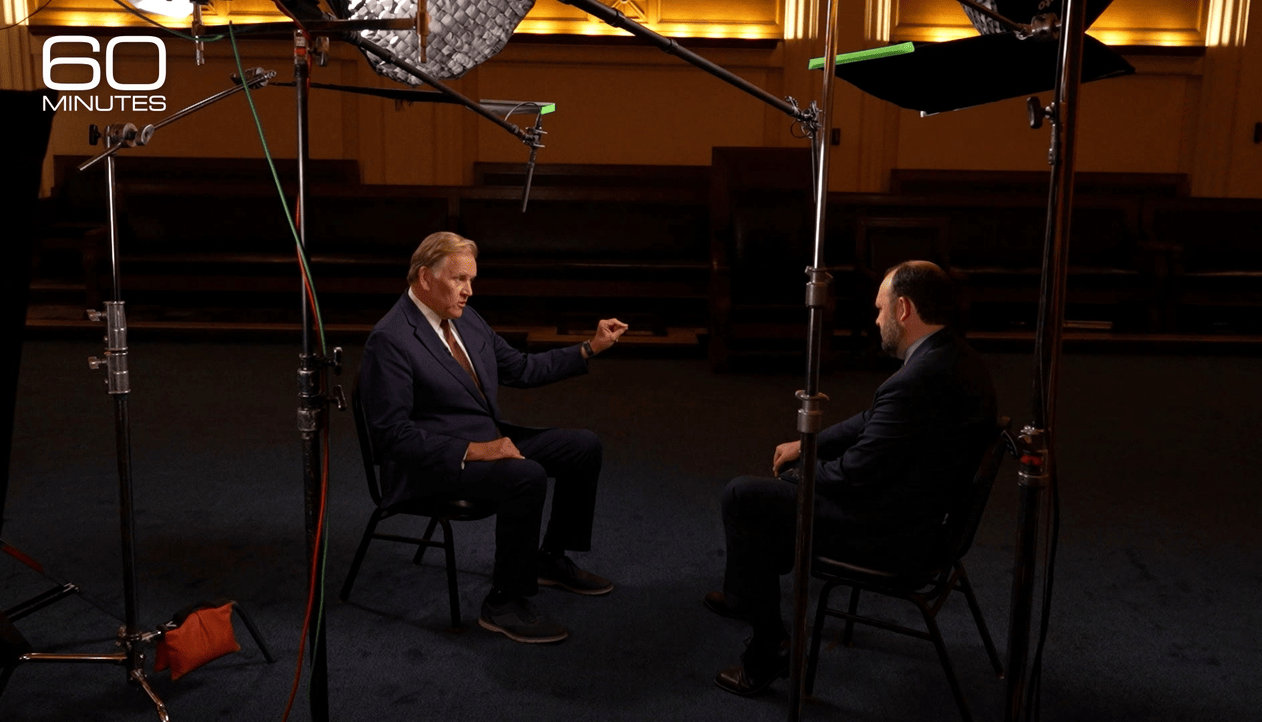
60 Minutes investigates one of America’s most consequential midterm election battles, as Republican Mike Rogers and Democrat Abdul El-Sayed compete for a Michigan Senate seat that could help determine which party controls Washington.
In a report titled “Battleground,” correspondent Ross Douthat travels to Michigan to interview both candidates during the final days of a closely contested campaign, examining their political differences, competing economic proposals and visions for representing the state in the United States Senate.
The November 1 report comes just two days before Election Day, with the race attracting national attention because of its potential impact on President Donald Trump’s remaining two years in office.
The contest has also taken an extraordinary last-minute turn. Democratic Representative Haley Stevens, who narrowly lost the party’s Senate primary to El-Sayed, endorsed Republican Mike Rogers on Sunday, exposing divisions within the Democratic Party at a critical moment.
The interviews offer voters a closer look at two politicians with sharply different backgrounds and approaches to government, competing for a seat that has remained in Democratic hands for decades.
- 60 Minutes Reports on “Battleground”, “Cuba in Crisis” & “Wemby” November 1 2026
- Cuba in Crisis: 60 Minutes Investigates a Nation in Freefall as US Sanctions Tighten
- Wemby: 60 Minutes Reveals Victor Wembanyama’s Unusual Training Secrets and NBA Ambitions
Why Michigan Could Decide Control of the US Senate
Michigan has become one of the most important battlegrounds in the 2026 midterm elections, with Republicans hoping to capture a Senate seat currently held by retiring Democrat Gary Peters.
The state’s political significance extends well beyond this individual contest. Michigan has played a pivotal role in recent presidential elections, with its combination of industrial communities, major cities, suburbs and rural regions making it a frequent target for both parties.
Republicans currently hold a 53-47 advantage in the Senate, meaning Democrats must achieve substantial gains to take control of the chamber.
A Republican victory in Michigan would strengthen the party’s position and make the Democratic path to a Senate majority more difficult. A Democratic victory would protect a crucial seat and help keep the party’s hopes of regaining control alive.
The stakes are particularly high because the Senate plays an important role in confirming federal judges and senior administration officials, approving legislation and exercising oversight of the executive branch.
Control of the chamber would therefore influence how effectively President Trump can advance his agenda during the second half of his presidency.
Michigan has not elected a Republican to the U.S. Senate since Spencer Abraham’s victory in 1994, making the contest an opportunity for Rogers to end a longstanding Democratic winning streak.
For El-Sayed, retaining the seat would represent both a major Democratic victory and a breakthrough for the progressive movement within his party.
Who Is Mike Rogers? The Republican Seeking a Political Comeback
Mike Rogers, 63, is a former U.S. congressman, FBI agent and Army officer whose political career has been closely associated with national security and intelligence issues.
Rogers represented Michigan’s 8th Congressional District in the House of Representatives from 2001 until 2015, serving as chairman of the House Intelligence Committee during part of his tenure.
His experience in Washington has become an important part of his campaign, allowing him to emphasize his background in government, law enforcement and national security.
Rogers previously ran for the U.S. Senate in 2024 but narrowly lost to Democrat Elissa Slotkin. His 2026 campaign represents another attempt to return to Congress, this time in a political environment shaped by Trump’s second presidency.
During his interview with Douthat, Rogers emphasizes the importance of addressing problems affecting Michigan residents rather than becoming consumed by national political disputes.
One of his priorities is improving literacy and education, which he connects to workforce development, military readiness and the future economic prospects of young Americans.
Rogers has also focused on manufacturing, employment and the difficulties facing Michigan’s industrial economy.
His campaign has attempted to broaden Republican support by reaching into communities that traditionally vote Democratic, including predominantly Black neighborhoods.
The strategy reflects his belief that Republicans can compete for voters who may be dissatisfied with economic conditions or feel that their concerns have been overlooked.
However, Rogers faces a significant political challenge: persuading Michigan voters that he can represent their interests independently while remaining aligned with a Republican president whose policies have generated controversy in the state.
Who Is Abdul El-Sayed? The Progressive Democrat Seeking to Make History
Abdul El-Sayed, 42, is a physician, former public health official and progressive political figure who has built his campaign around economic reform, healthcare and challenging the influence of wealthy interests.
The son of Egyptian immigrants, El-Sayed studied medicine at Columbia University and was a Rhodes Scholar before entering public health administration and politics.
He previously served as Detroit’s health director and later pursued elected office, including an unsuccessful campaign for Michigan governor in 2018.
His Senate candidacy has attracted national attention because of his progressive platform and his potential to become the first Muslim elected to the United States Senate.
El-Sayed narrowly won the Democratic primary against Representative Haley Stevens, defeating a more centrist opponent and demonstrating the influence of progressive voters within the party.
His campaign supports expanding healthcare access, confronting monopolies and reducing the economic influence of billionaires.
He has advocated a version of Medicare for All that he says would preserve private insurance options, alongside proposals to finance expanded public services through increased taxes on extreme wealth.
In his 60 Minutes interview, El-Sayed describes himself as a capitalist who believes that concentrated corporate power threatens competition and economic opportunity.
His campaign also places considerable emphasis on artificial intelligence and the risks associated with rapid technological development.
El-Sayed argues that workers, students and communities are increasingly concerned about AI replacing jobs, increasing energy demand and placing pressure on local resources.
He supports creating a Cabinet-level federal agency to regulate artificial intelligence and has called for a pause in certain frontier AI research.
These proposals distinguish him from more moderate Democrats and raise a central question in the election: whether an ambitious progressive platform can attract enough support in a politically competitive state.
Trump’s Tariffs and Michigan’s Manufacturing Economy
One of the most significant economic issues in the Michigan Senate race is the effect of President Trump’s trade policies on the state’s manufacturing sector.
Michigan’s economy has longstanding connections to the automotive industry, with major manufacturers and suppliers operating across the state.
The industry also depends heavily on cross-border trade with Canada, where vehicle components and other manufactured goods frequently move between factories as part of integrated North American supply chains.
Trump’s tariffs on Canadian imports have created additional challenges for businesses dependent on that trade.
According to an estimate cited by CBS News from the National Taxpayers Union Foundation, the president’s trade policies involving Canada have cost Michigan approximately $23 billion since January 2025.
Rogers has acknowledged concerns about the Canadian tariffs and told 60 Minutes that he raised the issue with Commerce Secretary Howard Lutnick.
He also indicated that he would consider supporting congressional action to override tariffs imposed by the president if other efforts to resolve the dispute were unsuccessful.
The position highlights the political balancing act facing Rogers.
He needs support from Trump-aligned Republican voters while also appealing to Michigan residents who may be concerned about the economic consequences of the administration’s policies.
El-Sayed has sought to connect Rogers to the president, arguing that electing another Republican senator would strengthen Trump’s influence in Washington.
The dispute demonstrates how national economic decisions can become intensely local political issues in states where manufacturing remains a major source of employment.
Healthcare, Education and Artificial Intelligence Divide the Candidates
Beyond the national political arguments, Rogers and El-Sayed offer different priorities for what they would pursue in the Senate.
El-Sayed has made healthcare reform a central element of his political identity, arguing that access to medical treatment should not depend on a person’s financial circumstances.
His proposals include expanding public healthcare coverage while retaining some role for private insurance.
He also advocates stronger government action against monopolies and concentrated corporate power.
Rogers has placed greater emphasis on education, economic development and improving opportunities for Michigan families.
During his interview, he identifies literacy as a priority that he believes could attract bipartisan support.
The contrast becomes particularly striking when the candidates discuss artificial intelligence.
El-Sayed says concerns about AI have become increasingly prominent among voters, particularly students worried about future employment and residents concerned about the construction of energy-intensive data centers.
His proposals include stronger federal regulation and restrictions on certain advanced AI research.
The debate reflects a broader national challenge as lawmakers consider how to encourage technological development while protecting workers, communities and consumers.
For Michigan voters, the choice involves not only competing personalities but also different views about the appropriate role of government in addressing economic and technological change.
Israel, Gaza and Michigan’s Arab American and Jewish Voters
Foreign policy has become an unusually prominent issue in the Michigan contest because of the state’s significant Arab American and Jewish communities.
Michigan is home to one of the country’s largest Arab American populations, particularly in and around the Detroit metropolitan area.
The war in Gaza, American support for Israel and broader Middle Eastern conflicts have generated intense debate among voters.
El-Sayed has strongly criticized U.S. military assistance to Israel and supports an arms embargo.
He has accused Israel of committing genocide in Gaza, an allegation the Israeli government rejects.
Rogers has defended Israel’s right to exist and protect itself, criticizing El-Sayed’s rhetoric and questioning whether his positions adequately address the concerns of Jewish Americans.
The disagreement has become one of the most contentious elements of the campaign.
President Trump has also attacked El-Sayed over his religion and alleged associations with the Muslim Brotherhood. El-Sayed has rejected the suggestion that he supports the organization and argues that his Islamic faith is being used against him politically.
Rogers has raised questions about a 2012 letter El-Sayed signed supporting Egypt’s democratically elected government following the Arab Spring. El-Sayed has disavowed the Muslim Brotherhood.
The debate has created competing pressures for both candidates.
El-Sayed is seeking strong support from Arab American voters while also reassuring Jewish residents concerned about antisemitism and Middle East policy.
Rogers hopes to attract Jewish voters who have traditionally supported Democrats while maintaining support from the Republican base.
The outcome could depend partly on how these communities respond to the candidates’ positions and whether foreign policy influences their voting decisions.
Haley Stevens’ Shock Endorsement of Mike Rogers
The campaign took an extraordinary turn on Sunday, November 1, when Democratic Representative Haley Stevens endorsed Republican Mike Rogers, just two days before the election.
Stevens had narrowly lost the Democratic Senate primary to El-Sayed and was previously expected to support her party’s nominee.
Instead, she appeared with Rogers at a Detroit-area church service, delivering a significant political boost to the Republican campaign.
The decision stunned Democratic leaders and exposed tensions that had persisted since the primary.
Stevens and El-Sayed had disagreed over several issues, particularly Israel policy, and their primary contest had been bitterly fought.
Democratic Senate leader Chuck Schumer condemned Stevens’ endorsement, while other party figures expressed frustration over the last-minute division.
The development is especially significant because Democrats are attempting to defend a Senate seat that could be essential to their hopes of regaining control of Congress.
Rogers welcomed the support as evidence that his campaign could attract voters beyond the traditional Republican coalition.
For El-Sayed, the challenge is maintaining Democratic unity while appealing to independent voters and supporters of his former primary opponent.
The endorsement adds another unpredictable element to a contest already shaped by sharp ideological differences and intense national attention.
What the Latest Michigan Senate Polls Show
Polling in the final days of the campaign has indicated a competitive race, although some recent surveys have shown El-Sayed holding an advantage.
A Mitchell Research & Communications poll conducted October 26-27 for CBS Detroit and other Michigan television stations found El-Sayed leading Rogers by 51% to 44% among likely voters.
The survey included 636 likely voters and had a reported margin of error of approximately 3.9 percentage points.
The result represented an improvement for El-Sayed compared with an earlier October survey from the same polling organization.
The late October poll also found that El-Sayed had stronger support among younger voters and women, while Rogers performed better among older voters.
Independent voters favored El-Sayed in that survey, although the final result will depend on turnout and how undecided voters make their decisions.
The poll was conducted before Stevens’ November 1 endorsement of Rogers, meaning it does not capture any potential response to that development.
Polling offers a snapshot of voter preferences rather than a guaranteed election outcome.
In a closely contested state, turnout among suburban voters, working-class communities, younger residents and other important groups could determine the final result.
Why the Election Matters Beyond Michigan
Although the candidates are competing to represent one state, the result will have consequences for national politics.
A Rogers victory would give Republicans an additional Senate seat and strengthen their ability to support the Trump administration’s legislative priorities and appointments.
An El-Sayed victory would preserve an important Democratic seat and could encourage progressives who believe their policy proposals can succeed in competitive general elections.
The contest is also testing two different approaches to political campaigning.
Rogers is emphasizing his experience, Michigan-focused priorities and willingness to challenge certain administration policies while retaining Republican support.
El-Sayed is campaigning on a broader vision of economic and political change, arguing that voters are ready for more ambitious reforms.
Both candidates face questions about whether their messages can appeal beyond their parties’ most committed supporters.
Michigan’s history of competitive elections means neither side can rely exclusively on traditional partisan loyalties.
The final result could influence how both major parties approach future elections, particularly in industrial states where economic concerns and cultural divisions frequently overlap.
When to Watch Battleground on 60 Minutes
“Battleground” aired Sunday, November 1, 2026, as part of a new edition of 60 Minutes on CBS.
Correspondent Ross Douthat interviews Republican Mike Rogers and Democrat Abdul El-Sayed during the final days of Michigan’s closely watched Senate race.
The report examines their political platforms, competing visions for Michigan and the implications of an election that could help determine control of the United States Senate.
Keith Sharman is the producer.
The episode aired at 7:30 PM ET and 7:00 PM PT, following NFL football on CBS, and is also available on Paramount+.
The November 1 broadcast also features Matt Gutman’s investigation into Cuba’s worsening humanitarian crisis and Jon Wertheim’s profile of San Antonio Spurs star Victor Wembanyama.
With Election Day scheduled for Tuesday, November 3, the Michigan Senate contest remains one of the most consequential political battles of the 2026 midterms, offering voters a choice between two candidates whose priorities, backgrounds and approaches to Washington differ substantially.
More 60 Minutes November 1 2026
- 60 Minutes Reports on “Battleground”, “Cuba in Crisis” & “Wemby” November 1 2026
- Battleground: 60 Minutes Investigates the Michigan Senate Race That Could Decide Control of Congress
- Cuba in Crisis: 60 Minutes Investigates a Nation in Freefall as US Sanctions Tighten
- Wemby: 60 Minutes Reveals Victor Wembanyama’s Unusual Training Secrets and NBA Ambitions
More Feature Articles
- “Justice for Faith”: 20/20 Reports on Faith Hedgepeth Homicide October 30 2026
- “The Orchard”: Dateline Reports on The Disappearance of Tara Grinstead October 30 2026
- “Jade Benning’s Final Call”: 48 Hours Reports October 31 2026
- 60 Minutes Reports on “Battleground”, “Cuba in Crisis” & “Wemby” November 1 2026