Cuba in Crisis: 60 Minutes Investigates a Nation in Freefall as US Sanctions Tighten
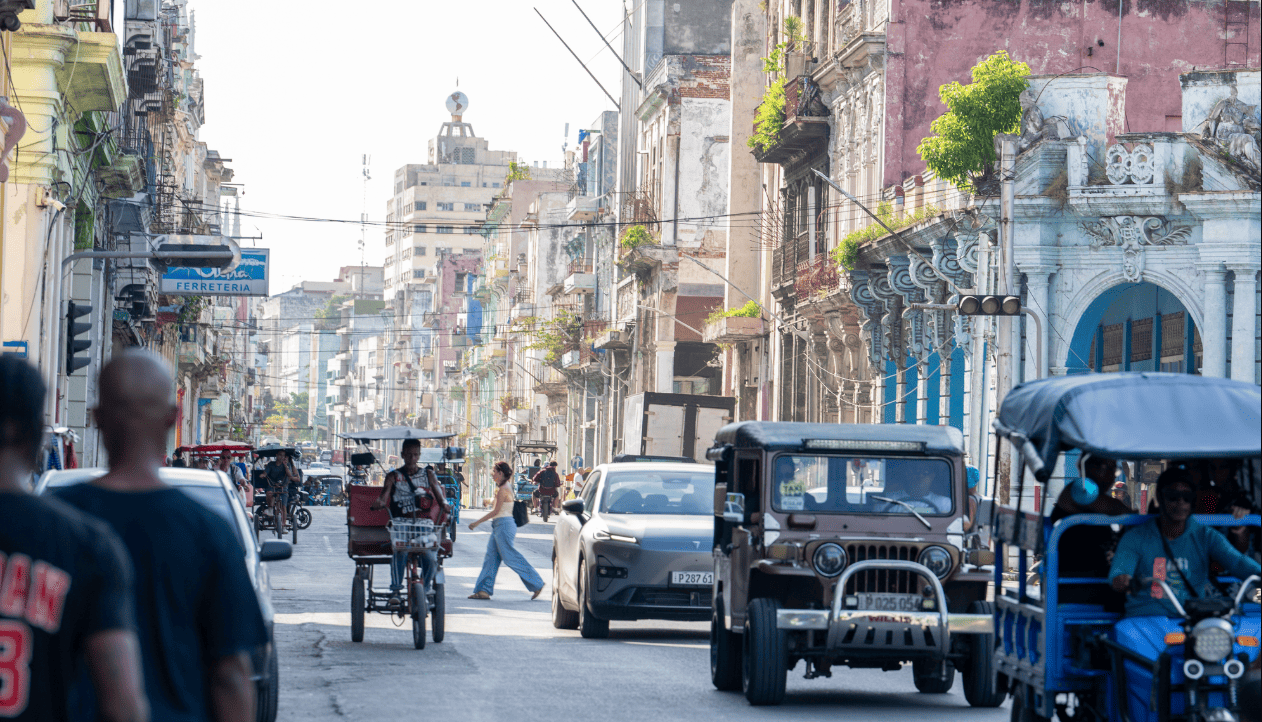
60 Minutes travels to Cuba to examine a worsening humanitarian crisis, as new sanctions imposed by the Trump administration add to the economic pressures facing millions of people on the communist-governed island.
In a report titled “Cuba in Crisis,” correspondent Matt Gutman visits Havana to investigate how fuel shortages, economic hardship and decades of political confrontation between Cuba and the United States are affecting everyday life.
The November 1, 2026, report comes as the Cuban government and the Trump administration blame each other for the country’s deteriorating conditions. Washington argues that its economic restrictions are intended to pressure Cuba’s communist leadership, while Havana maintains that American sanctions are worsening the suffering of ordinary citizens.
Caught between the two governments are more than nine million Cubans, many of whom are struggling with unreliable electricity, limited economic opportunities and difficulties obtaining essential goods.
Gutman’s investigation explores the human consequences of the crisis while examining how Cuba reached this point and why the island’s economic problems have proved so difficult to resolve.
- 60 Minutes Reports on “Battleground”, “Cuba in Crisis” & “Wemby” November 1 2026
- Battleground: 60 Minutes Investigates the Michigan Senate Race That Could Decide Control of Congress
- Wemby: 60 Minutes Reveals Victor Wembanyama’s Unusual Training Secrets and NBA Ambitions
Cuba Faces One of Its Most Serious Economic Crises in Decades
Cuba’s economic difficulties have developed over many years, but the combination of domestic structural problems, international restrictions and energy shortages has placed increasing pressure on the country’s population.
The island’s economy depends on a combination of tourism, government-controlled enterprises, imported goods and overseas remittances. Disruptions to any of these sources can have widespread consequences.
Tourism, historically an important source of foreign currency, suffered a major setback during the COVID-19 pandemic. Its recovery has been constrained by infrastructure problems, economic uncertainty and restrictions affecting travel and financial transactions.
Cuba also relies heavily on imports for fuel, food and other essential supplies. Limited access to foreign currency makes it difficult to purchase sufficient quantities of these goods on international markets.
The resulting shortages have affected businesses, public services and households, leaving many residents struggling to obtain products that are readily available in other countries.
Inflation and currency instability have further reduced purchasing power, particularly for workers and pensioners whose incomes have failed to keep pace with the cost of living.
These difficulties have contributed to growing frustration and prompted many Cubans to consider leaving the country in search of more stable economic opportunities.
In Havana, Gutman examines how these overlapping pressures have shaped daily life and why the crisis has become increasingly difficult for ordinary families to escape.
How Trump’s 2026 Sanctions Have Increased Pressure on Cuba
The Trump administration has intensified economic restrictions against Cuba in 2026, arguing that stronger measures are necessary to pressure the country’s communist government.
According to CBS, the new sanctions have restricted Cuba’s oil supplies and access to international trade, adding to an existing framework of American economic measures.
Washington maintains that its policies target the Cuban leadership and a political system it accuses of corruption and repression.
The administration’s approach reflects a longstanding American strategy of using economic pressure to encourage political change in Cuba.
However, sanctions affecting international financial transactions, energy supplies and commercial relationships can also have consequences for businesses and households that are not directly involved in government decision-making.
Cuba’s dependence on imported fuel makes restrictions on oil supplies particularly significant.
Without sufficient fuel, electricity generation, public transportation, agricultural production and the distribution of essential goods become more difficult.
The Cuban government argues that American sanctions are a major cause of these shortages, while Washington contends that Cuba’s economic model and government policies are responsible for the country’s underlying problems.
Both factors are relevant to understanding the crisis. International restrictions can limit access to resources, while domestic economic policies and infrastructure weaknesses affect how efficiently those resources are produced, distributed and used.
The 60 Minutes investigation examines the consequences of this confrontation for the people living under its effects.
Why Cuba’s Electricity Shortages Are So Devastating
One of the most serious challenges facing Cuba is the reliability of its electricity supply.
The country’s power system depends on aging generating facilities, imported fuel and infrastructure that requires substantial maintenance and investment.
When fuel supplies are insufficient or major generating units experience mechanical failures, the system can struggle to meet demand.
Electricity shortages have led to widespread power cuts, affecting homes, workplaces and essential services.
For residents, blackouts can make routine activities significantly more difficult. Refrigerators cannot reliably preserve food, electric cooking equipment becomes unusable, and fans or air-conditioning systems cannot provide relief from the Caribbean heat.
Small businesses can lose income when they are unable to operate machinery, refrigeration or electronic payment systems.
Healthcare facilities face additional challenges because medical equipment, lighting, sterilization systems and the storage of temperature-sensitive medicines all depend on reliable power.
Hospitals may use backup generators, but those systems also require fuel and maintenance.
Electricity shortages can also affect water supplies where pumping and treatment systems depend on electrical equipment.
The consequences therefore extend beyond inconvenience, influencing public health, food security and economic activity.
Cuba’s energy problems illustrate how a shortage of one essential resource can create difficulties throughout an entire economy.
The US Embargo and Six Decades of Political Conflict
The confrontation between Cuba and the United States dates back to the Cuban Revolution and the political changes that followed Fidel Castro’s rise to power in 1959.
After Cuba nationalized American-owned assets and developed closer relations with the Soviet Union, Washington introduced trade restrictions that evolved into a broad economic embargo.
The embargo became a defining feature of the Cold War relationship between the two countries and has remained a central issue in American foreign policy.
Although the restrictions have changed under different presidential administrations, most of the broader embargo framework remains in place.
The United States has maintained certain exemptions and authorization pathways, including for some agricultural products, medicines and humanitarian transactions. Nevertheless, financial restrictions and compliance requirements can complicate trade even where particular goods are legally permitted.
Supporters of the embargo argue that economic pressure is necessary to challenge the Cuban government’s human rights record and political restrictions.
Critics argue that the measures have failed to produce democratic change while making economic conditions more difficult for ordinary Cubans.
The relationship briefly improved during President Barack Obama’s administration, when the two governments restored diplomatic relations and expanded some opportunities for travel and commercial engagement.
However, many restrictions remained, and subsequent policy changes reversed portions of that opening.
The latest measures under President Trump’s second administration represent another period of intensified confrontation.
For Cubans who have lived through decades of political tension, the dispute has become a persistent feature of economic life.
How Cuba’s Communist Economic System Contributes to the Crisis
American sanctions are only part of the explanation for Cuba’s economic difficulties.
The country’s state-dominated economic system has also faced longstanding challenges involving productivity, investment, bureaucracy and incentives for private enterprise.
Following the revolution, the government established extensive control over major industries and economic activity.
Although the state provides public services and has historically emphasized healthcare and education, its economic model has struggled to generate sufficient growth and foreign currency.
Many state enterprises operate with limited resources and aging equipment, while administrative controls can restrict business activity and complicate production.
Cuba has introduced reforms allowing greater private-sector participation, including the expansion of small and medium-sized businesses.
These enterprises have created new opportunities for some residents, particularly in retail, food services and other consumer-facing industries.
However, private businesses also face difficulties obtaining imported goods, securing financing and operating within a changing regulatory environment.
Currency reforms and inflation have further complicated economic planning.
The resulting system combines state controls, a growing but constrained private sector and significant dependence on imported supplies.
Understanding these domestic challenges is essential to explaining why Cuba’s economy has remained vulnerable even during periods when American restrictions were eased.
Food Shortages and the Rising Cost of Everyday Life
Food security has become another major concern for Cuban households.
Cuba imports a substantial share of the food it consumes, making access to foreign currency and reliable shipping arrangements particularly important.
Domestic agricultural production has also been affected by shortages of fuel, fertilizer, machinery and other resources.
When imports decline or local production falls short, supplies become more limited and prices can rise.
For families dependent on government wages or pensions, purchasing food can consume a large proportion of household income.
The government has traditionally operated a rationing system intended to provide basic products at subsidized prices.
However, the availability and quantities of rationed goods have come under pressure as the country’s economic difficulties have intensified.
Residents may need to supplement these supplies through private markets, where prices can be considerably higher.
The difference between official incomes and market prices has created significant inequalities.
Households receiving financial assistance from relatives overseas may have greater purchasing power than those relying entirely on local wages.
These differences are especially visible in urban areas, where private businesses and imported products can exist alongside households struggling to afford basic necessities.
The crisis has therefore affected not only the availability of goods but also who can afford to obtain them.
Why So Many Cubans Have Left the Island
Cuba’s economic and political difficulties have contributed to substantial emigration in recent years.
Many people have left in search of employment, higher incomes, family reunification and greater personal opportunities.
The United States has historically been a major destination, although Cubans have also migrated to countries throughout Latin America, Europe and elsewhere.
Migration has become a significant demographic challenge for the island.
When younger working-age residents leave, the remaining population includes a greater proportion of older people, increasing pressure on healthcare services, pensions and the available workforce.
The departure of skilled professionals can also affect sectors such as medicine, engineering and education.
At the same time, money sent home by Cubans living abroad remains an important source of financial support for many families.
Restrictions affecting financial transactions and remittance services can therefore have direct consequences for household incomes.
The scale of migration reflects the depth of uncertainty facing many residents, who must decide whether to remain in their home country or seek opportunities elsewhere.
For those who stay, the departure of relatives can bring emotional and practical difficulties even when financial assistance continues from abroad.
Why Washington and Havana Blame Each Other
The humanitarian crisis has become the subject of competing political narratives.
The Cuban government argues that American economic sanctions restrict its ability to import essential goods, obtain financing and maintain normal commercial relationships.
Cuban officials have repeatedly described the embargo as a major obstacle to economic development.
The Trump administration takes a different position, blaming Cuba’s communist leadership for economic mismanagement, political repression and restrictions on individual freedom.
Washington argues that pressure on the government is necessary to encourage reform and hold officials accountable.
The disagreement is not simply about economic statistics. It also reflects competing views about political rights, national sovereignty and the appropriate use of sanctions in international relations.
Humanitarian organizations have raised concerns about the consequences of shortages for vulnerable populations, particularly older residents, children and people requiring medical treatment.
The challenge for policymakers is determining how to address political and human rights concerns without worsening the living conditions of people who have little influence over government decisions.
Gutman’s reporting from Havana places the experiences of ordinary Cubans at the center of that debate.
What Cuba’s Crisis Means for Its Future
Cuba faces difficult decisions about how to stabilize its economy while managing its strained relationship with the United States.
Improving electricity generation, expanding domestic food production and restoring reliable access to imports would help address some of the most immediate pressures.
However, these changes require financing, equipment, infrastructure investment and policies capable of supporting sustainable economic activity.
The government must also confront the consequences of emigration and an aging population.
Expanding private enterprise could create additional opportunities, although the effectiveness of such reforms depends on the regulatory environment and access to resources.
Relations with Washington remain another major uncertainty.
An easing of economic restrictions could improve some trade and financial conditions, but would not automatically resolve Cuba’s structural economic problems.
Likewise, domestic reforms may struggle to deliver their full benefits while international commercial restrictions remain extensive.
The country’s future will depend on decisions made both inside and outside Cuba, as well as its ability to rebuild economic confidence.
For the millions of people experiencing the crisis, however, the most immediate priorities are far more practical: dependable electricity, affordable food, access to healthcare and opportunities to earn a living.
When to Watch Cuba in Crisis on 60 Minutes
“Cuba in Crisis” aired Sunday, November 1, 2026, as part of a new edition of 60 Minutes on CBS.
Correspondent Matt Gutman travels to Havana to examine the worsening humanitarian situation, the impact of American sanctions and the economic challenges facing more than nine million Cubans.
Gabrielle Schonder, Ayesha Siddiqi and Christine Romo are the producers.
The episode aired from 7:30-8:30 PM ET and 7:00-8:00 PM PT, following NFL football on CBS, and is also available on Paramount+.
The November 1 broadcast also features Ross Douthat’s coverage of the Michigan Senate election between Mike Rogers and Abdul El-Sayed, and Jon Wertheim’s profile of San Antonio Spurs star Victor Wembanyama.
Through its reporting from Havana, 60 Minutes examines how decades of political conflict, economic weaknesses and new international restrictions have converged to create a humanitarian emergency whose consequences are being felt by millions of ordinary Cubans.
More 60 Minutes November 1 2026
- 60 Minutes Reports on “Battleground”, “Cuba in Crisis” & “Wemby” November 1 2026
- Battleground: 60 Minutes Investigates the Michigan Senate Race That Could Decide Control of Congress
- Cuba in Crisis: 60 Minutes Investigates a Nation in Freefall as US Sanctions Tighten
- Wemby: 60 Minutes Reveals Victor Wembanyama’s Unusual Training Secrets and NBA Ambitions
More Feature Articles
- “Justice for Faith”: 20/20 Reports on Faith Hedgepeth Homicide October 30 2026
- “The Orchard”: Dateline Reports on The Disappearance of Tara Grinstead October 30 2026
- “Jade Benning’s Final Call”: 48 Hours Reports October 31 2026
- 60 Minutes Reports on “Battleground”, “Cuba in Crisis” & “Wemby” November 1 2026