In the Line of Fire: 60 Minutes Investigates the Growing Threats Against President Trump
The United States Secret Service is confronting one of the most challenging security environments in its history, with threats against the president, senior government officials and other protected individuals becoming increasingly complex. From assassination attempts and politically motivated violence to emerging risks involving drones, the agency is under intense pressure to adapt its methods of protecting America’s most prominent leaders.
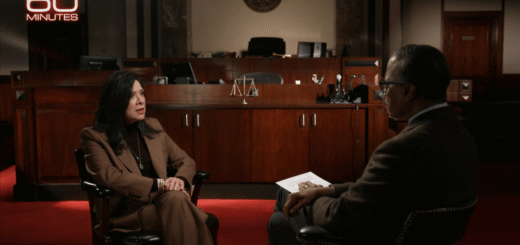
In a special 60 Minutes investigation titled “In the Line of Fire,” correspondent Norah O’Donnell goes behind the scenes at the Secret Service to examine how the agency is responding to these threats and what new technologies are being introduced to strengthen presidential security.
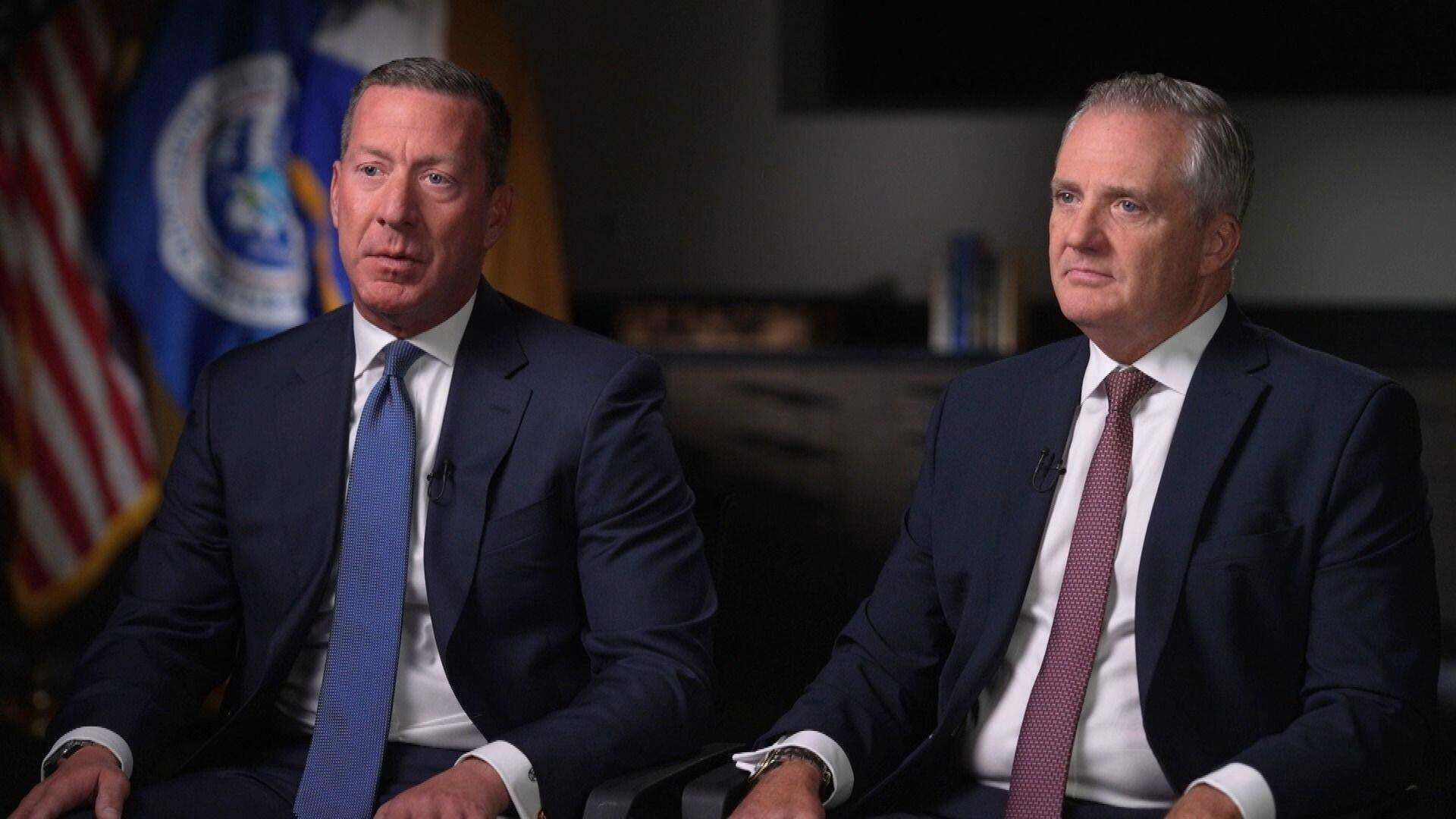
The report, broadcast on Sunday, October 11, 2026, on CBS, features the first joint television interview with Secret Service Director Sean Curran and Deputy Director Matt Quinn, who discuss the unprecedented number of threats facing the agency and the challenges of protecting the president in an increasingly unpredictable environment.
- 60 Minutes Reports on “In the Line of Fire”, “Lost Sheep” & Jon Batiste” October 11 2026
- Lost Sheep: 60 Minutes Investigates Violent Israeli Settlers Driving Palestinians From Their Land
- Jon Batiste: 60 Minutes Profiles the Grammy-Winning Musician Bringing People Together Through Music
Sean Curran and Matt Quinn Discuss the Future of Presidential Protection
As Director of the United States Secret Service, Sean Curran oversees an agency responsible for protecting the president, vice president, their families and numerous other designated individuals, while also carrying out federal criminal investigations.
Curran’s appointment followed a period of extraordinary scrutiny for the Secret Service, particularly after the assassination attempt against Donald Trump during a campaign rally in Butler, Pennsylvania, in July 2024.
The incident raised serious questions about security planning, communication between law enforcement agencies and the ability of protective teams to identify potential threats before an attacker can act.
Curran was among the Secret Service personnel assigned to Trump’s protection during the 2024 campaign, giving him firsthand experience of the security challenges that have shaped public debate about the agency.
Deputy Director Matt Quinn joins Curran in the 60 Minutes interview, providing an additional perspective on how the organization is managing its protective responsibilities.
Together, the two senior officials discuss the threats facing the president and other protectees, while offering insight into how the agency is attempting to improve its capabilities.
The 2024 Assassination Attempts That Changed the Secret Service
The Secret Service faced a defining crisis on July 13, 2024, when a gunman opened fire during Donald Trump’s campaign rally in Butler, Pennsylvania.
Trump was wounded in the ear, one rally attendee was killed and two others were seriously injured. Secret Service personnel rushed to protect Trump, while a counter-sniper killed the attacker.
The shooting triggered investigations into how the gunman had been able to reach an elevated firing position with a direct line of sight toward the rally stage.
Subsequent reviews identified serious problems involving advance planning, coordination, communications and the management of security responsibilities between the Secret Service and local law enforcement.
The incident became one of the most consequential failures of presidential security in recent American history and prompted demands for major changes within the agency.
Less than two months later, on September 15, 2024, another security incident occurred at Trump’s golf club in West Palm Beach, Florida.
A Secret Service agent spotted an armed individual near the course while Trump was playing golf. The agent fired toward the suspect, who fled before being apprehended by authorities. Trump was not injured.
The two incidents, occurring during the same presidential campaign, intensified concerns about the threat environment surrounding political leaders and reinforced the importance of effective advance security operations.
For the Secret Service, the events demonstrated how quickly protective situations can develop and how even apparently routine public appearances or private activities can present serious security challenges.
How the Secret Service Handles Foreign and Domestic Threats
The threats facing the Secret Service extend well beyond the possibility of an individual attempting to attack a president during a public appearance.
Protective intelligence teams must evaluate potential threats from domestic extremists, individuals motivated by personal grievances, organized criminal actors and foreign adversaries.
Some threats involve direct statements or identifiable plans, while others emerge through suspicious behavior, online communications or intelligence gathered by federal and local law enforcement agencies.
The challenge is determining which situations require immediate intervention and which represent less credible risks, without overlooking individuals capable of carrying out violence.
The Secret Service works alongside agencies including the FBI, the Department of Homeland Security and local police departments to identify potential threats and coordinate security responses.
This cooperation becomes particularly important during large public events, political rallies and international gatherings where multiple agencies may share responsibility for different aspects of security.
The 60 Minutes investigation examines how officials are responding to the increasing complexity of these threats and the pressures associated with protecting individuals whose movements and public appearances are frequently highly visible.
Drones and the New Technology Changing Presidential Security
One of the most significant developments in modern protective security is the increasing availability of unmanned aerial systems, commonly known as drones.
Commercial drones have become cheaper, smaller and more capable, allowing them to travel significant distances while carrying sophisticated cameras and other equipment.
Although the technology has many legitimate uses, drones also introduce security concerns for agencies responsible for protecting government officials and securing major public events.
An unauthorized drone operating near a presidential appearance can create uncertainty about its operator, purpose and potential capabilities.
Security personnel must be able to distinguish between harmless activity and potentially dangerous situations, often within a limited amount of time.
Counter-drone operations can involve detecting aircraft, tracking their movements, identifying potential operators and determining whether a device poses a genuine threat.
However, responding to an unidentified drone is not always straightforward. Restrictions on airspace, communications interference and the risks associated with disabling an aircraft can complicate protective decisions.
The Secret Service has increasingly incorporated drone-related capabilities into its security planning, reflecting the growing importance of controlling and monitoring the airspace around protected individuals.
In “In the Line of Fire,” Norah O’Donnell examines how the agency is deploying new technology, including drones, to strengthen its operations.
The report offers viewers a look at how presidential protection is evolving beyond traditional physical security measures to incorporate new forms of surveillance, detection and technological coordination.
Secret Service Reports a 40% Increase in Threats
One of the most significant revelations from the October 11 60 Minutes interview is the scale of the increase in threats against individuals protected by the Secret Service.
Curran and Quinn report that threats against the agency’s full-time protectees have risen by more than 40% compared with the previous year. Curran also reveals that the agency has handled approximately 10,000 threat cases since January 2026.
The figures illustrate the pressure facing an organization responsible for protecting national leaders while responding to an expanding range of potential dangers.
Curran identifies the internet as one factor contributing to the changing threat environment, while Quinn points to mental health concerns as another issue encountered in protective investigations.
Both officials emphasize the nonpartisan nature of the agency’s mission. Regardless of political affiliation, the Secret Service is responsible for protecting designated individuals against threats to their safety.
What Investigations Revealed About the Secret Service’s Security Failures
The Butler assassination attempt prompted several independent investigations and congressional reviews that identified problems extending beyond the actions of individual agents.
An independent review panel commissioned by the Department of Homeland Security identified deficiencies involving communications, leadership, security planning and coordination with other law enforcement agencies.
One particularly serious issue concerned the failure to adequately secure a building overlooking the rally site. Investigators found that the location presented an obvious line-of-sight risk but had not been properly protected.
The review also identified shortcomings in the agency’s ability to share information about suspicious individuals and communicate developing threats to personnel responsible for the former president’s immediate protection.
In December 2024, a bipartisan congressional task force released findings and recommendations addressing failures in planning, execution and leadership. Its proposals included changes intended to improve security procedures and reduce the possibility of similar incidents.
These investigations provide important background to the 60 Minutes interview because they demonstrate why the agency’s leadership has faced such intense pressure to implement reforms.
The challenge for Curran and Quinn is not simply introducing new equipment or increasing staffing. It also involves ensuring that personnel communicate effectively, responsibilities are clearly assigned and potential vulnerabilities are addressed before a protected individual arrives at a location.
Why Presidential Security Is Becoming More Difficult
Protecting a president requires balancing competing demands that are not always easy to reconcile.
Presidents must travel, meet foreign leaders, attend public events and maintain contact with the people they represent. Each appearance creates security considerations that can change depending on the location, crowd size and available intelligence.
Modern technology adds another layer of complexity. Social media allows information about political appearances to circulate rapidly, while digital platforms can also be used to communicate threats or encourage politically motivated violence.
At the same time, technological advances are giving protective agencies additional tools to monitor environments, assess risks and coordinate responses.
The Secret Service must therefore adapt to a world in which both potential attackers and security personnel have access to increasingly sophisticated technology.
The October 11 60 Minutes investigation highlights the central challenge facing the agency: preventing another major security failure while responding to a threat environment that its own leadership describes as unprecedented.
For Curran and Quinn, the stakes are particularly high. The effectiveness of their reforms will ultimately be measured by the agency’s ability to identify dangers, prevent attacks and protect the individuals entrusted to its care.
Where to Watch 60 Minutes: In the Line of Fire
“In the Line of Fire” aired as part of the Sunday, October 11, 2026 episode of 60 Minutes on CBS.
The investigation features Norah O’Donnell’s exclusive joint interview with Secret Service Director Sean Curran and Deputy Director Matt Quinn, alongside an examination of the agency’s protective operations and emerging security technologies.
The episode is also available through CBS News and Paramount+.
Michael Rey, Pat Milton and Julie Morse Goff produced the report.
More 60 Minutes October 11 2026
- 60 Minutes Reports on “In the Line of Fire”, “Lost Sheep” & Jon Batiste” October 11 2026
- In the Line of Fire: 60 Minutes Investigates the Growing Threats Against President Trump
- Lost Sheep: 60 Minutes Investigates Violent Israeli Settlers Driving Palestinians From Their Land
- Jon Batiste: 60 Minutes Profiles the Grammy-Winning Musician Bringing People Together Through Music