


The segment arrives at a moment when the Catholic Church finds itself navigating complex global issues, from geopolitical conflict to domestic political divisions. Through firsthand accounts and on-the-ground reporting, 60 Minutes provides a closer look at how Pope Leo XIV is positioning the church as a moral voice in an increasingly fractured world.

- 60 Minutes Reports on “Pope Leo’s Church”, “Risk on the Road” & “What Happened to the Great White Sharks?” on April 12 2026
- Risk on the Road: 60 Minutes Investigates the Hidden Dangers of Chameleon Carriers
- What Happened to the Great White Sharks?: 60 Minutes Explores a Coastal Mystery and a Battle Within Science
A Historic Papacy with American Roots
The election of Pope Leo XIV marked a significant turning point for the Catholic Church, as it was the first time a pope from the United States ascended to the papacy. Born in Chicago, his rise reflects both the growing influence of the American church and the broader shift toward a more globalized leadership within Catholicism. His background has shaped expectations about how he might approach issues that resonate strongly in the United States and beyond.
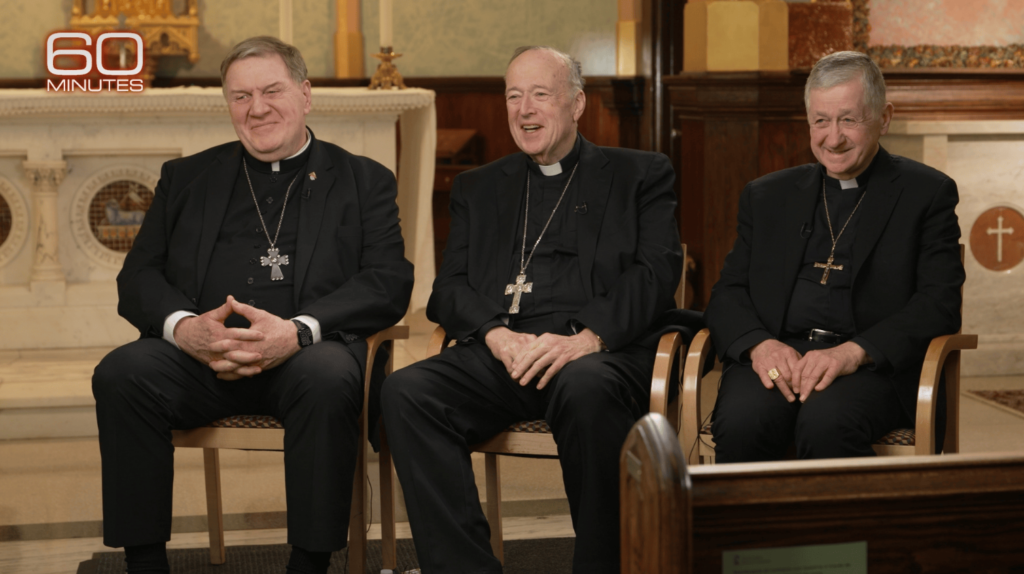
In the segment, Cardinals Blase Cupich, Robert McElroy, and Joseph Tobin offer insight into how Pope Leo’s upbringing and pastoral experience inform his leadership style. They describe a pope who blends intellectual rigor with a pastoral focus, emphasizing outreach and inclusion. Their perspectives highlight the balance Pope Leo appears to be striking between tradition and reform, a dynamic that has defined much of the church’s recent history.
Continuing and Expanding Pope Francis’ Legacy
One of the central themes explored in the report is the continuity between Pope Leo XIV and his predecessor, Pope Francis. Both leaders have emphasized social justice, care for the marginalized, and a more outward-facing church. However, Pope Leo’s approach is also shaped by his own experiences and the unique challenges of his papacy.
The cardinals discuss how Pope Leo is building on Francis’ priorities while also responding to new global realities. His stance on issues such as war and migration reflects a consistent moral framework, yet the tone and emphasis of his leadership suggest a desire to further institutionalize these values within the church. This evolution points to a broader effort to ensure that the church’s social teachings remain relevant and impactful.
A Moral Voice in Times of Conflict
The segment places particular emphasis on the church’s response to the war with Iran and immigration policies in the United States. Under Pope Leo XIV, the Vatican has taken a clear stance, positioning itself as a critic of both military escalation and restrictive immigration measures. This approach underscores the church’s role as a global moral authority, even when its positions intersect with contentious political debates.
Through O’Donnell’s interview, the cardinals articulate how these positions are rooted in longstanding Catholic teachings on human dignity and the sanctity of life. Their comments provide context for the church’s engagement with modern political issues, illustrating how religious doctrine can influence public discourse. The segment also raises questions about how such stances are received within a diverse and often divided Catholic population.
Castel Gandolfo and a New Vision of Accessibility
A key part of the report takes viewers to Castel Gandolfo, the historic papal summer residence located outside Rome. Traditionally a private retreat for popes, the property is being reimagined under Pope Leo XIV as a space for public engagement and social outreach. This transformation reflects a broader commitment to accessibility and service.
The decision to open Castel Gandolfo to migrants and underserved communities carries both symbolic and practical significance. It represents a shift away from exclusivity toward a more inclusive vision of the church’s role in society. By repurposing a centuries-old institution, Pope Leo is signaling a willingness to adapt tradition to meet contemporary needs, reinforcing the message that the church must remain connected to the people it serves.
The Future of the Catholic Church Under Pope Leo XIV
As the segment makes clear, Pope Leo XIV’s papacy is still in its early stages, yet it is already shaping conversations about the future of the Catholic Church. His leadership style, policy priorities, and public statements suggest a continued emphasis on engagement with global issues and a focus on moral clarity in uncertain times.
The insights provided by Cardinals Cupich, McElroy, and Tobin offer a valuable window into how the church’s leadership views this moment of transition. Their reflections point to both opportunities and challenges ahead, as the church seeks to maintain its relevance while staying true to its core principles. Through this in-depth report, 60 Minutes captures a pivotal moment in the life of one of the world’s most influential institutions.
More 60 Minutes April 12 2026
- 60 Minutes Reports on “Pope Leo’s Church”, “Risk on the Road” & “What Happened to the Great White Sharks?” on April 12 2026
- Pope Leo’s Church: 60 Minutes Explores a New American Papacy and Its Global Impact
- Risk on the Road: 60 Minutes Investigates the Hidden Dangers of Chameleon Carriers
- What Happened to the Great White Sharks?: 60 Minutes Explores a Coastal Mystery and a Battle Within Science
More Feature Articles
- “One Last Call”: 20/20 Reports on Robbie Doerr Homicide April 10 2026
- “The Gorge”: Dateline Examines the Alice Ku Herchen Disappearance April 10 2026
- “The Pin at Apartment 210”: Dateline Investigates Jasmine “Jazzy” Pace Homicide April 11 2026
- “Kimberly Langwell’s Hidden Grave”: 48 Hours Reports April 11 2026
- 60 Minutes Reports on “Pope Leo’s Church”, “Risk on the Road” & “What Happened to the Great White Sharks?” on April 12 2026