


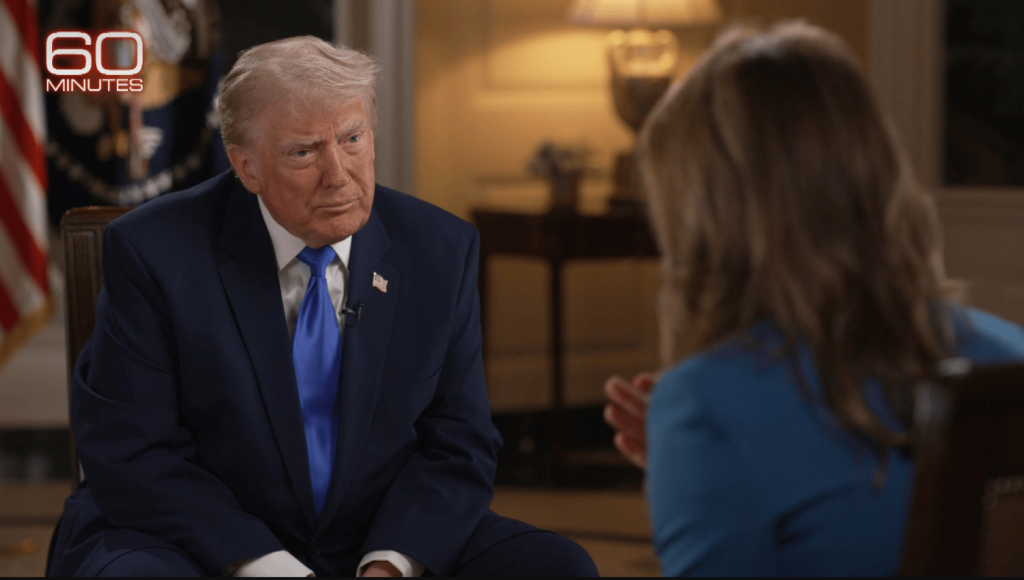
The opening segment of 60 Minutes examines one of the most serious security incidents to unfold at a major U.S. political gathering in recent years. The White House Correspondents’ Dinner, traditionally a formal and often light-hearted celebration of press freedom, became the scene of chaos when gunfire erupted inside the Washington Hilton on April 25, 2026.
Shortly after 8:30 p.m., guests inside the ballroom heard what many initially believed were routine noises. Within moments, it became clear that a gunman had breached a security checkpoint in the hotel and was moving toward the area where President Donald J. Trump and other senior officials were gathered. Secret Service agents immediately moved to evacuate the president and secure the room, while attendees were instructed to take cover.
The speed of the response became a defining element of the incident. Armed with multiple weapons, including firearms and knives, the suspect charged toward the ballroom but was intercepted before reaching the president. One law enforcement officer was injured during the confrontation, and the suspect was ultimately subdued and taken into custody. Authorities later confirmed the individual was acting alone, though the investigation into motive and planning remains ongoing.
- 60 Minutes Reports on “Shots Fired”, “Ben Sasse” & “The Pigeon Mafia” on April 26 2026
- Shots Fired: 60 Minutes Investigates the Correspondents’ Dinner Scare & Interviews Trump
- Ben Sasse: 60 Minutes Reports a Final Conversation on Faith, Family, and Facing Mortality
- The Pigeon Mafia: 60 Minutes Investigates High-Stakes Theft in Elite Racing
A Historic Venue and Heightened Stakes
The setting of the incident adds another layer of significance. The Washington Hilton has long hosted the correspondents’ dinner, an event attended by presidents, lawmakers, journalists, and public figures. It is also the same hotel where President Ronald Reagan was shot in 1981, making security at the venue a matter of historical sensitivity as well as modern necessity.
On this particular night, the concentration of power inside a single room was unusually high. In addition to the president, multiple cabinet members and congressional leaders were present, creating a rare scenario where a large portion of the U.S. leadership was gathered in one place. Despite this, the event did not receive the highest federal security designation typically assigned to high-risk gatherings, raising immediate concerns after the incident.
Reports indicate that while the ballroom itself was secured, broader areas of the hotel were less tightly controlled. The suspect was able to move within the building and approach a checkpoint, highlighting potential gaps between different layers of security responsibility. These details have prompted calls for a review of how such events are protected in the future.
Political Violence and a Changing Security Landscape
The incident also reflects a broader pattern of rising concern around political violence in the United States. The correspondents’ dinner, once known for satire and bipartisan mingling, has increasingly become a high-security event due to the risks associated with public appearances by national leaders.
In the aftermath, officials acknowledged that the suspect may have intended to target senior government figures, underscoring the seriousness of the threat. The event was ultimately halted and is expected to be rescheduled, marking a rare disruption to a long-standing tradition.
For 60 Minutes, the interview with President Trump provides an opportunity to explore not only the immediate experience of the incident but also the wider implications. The segment is expected to examine how leaders interpret such threats, how security protocols evolve in response, and what the event reveals about the current national climate.
A Defining Moment for Leadership and Public Safety
In speaking with Norah O’Donnell, President Trump reflects on both the personal and national dimensions of the event. Early remarks from the president described the response by law enforcement as swift and effective, emphasizing the role of the Secret Service in preventing a potentially catastrophic outcome.
The conversation also places the incident within a larger context. Public events involving political figures now operate under constant scrutiny, with security measures balancing accessibility and protection. What unfolded at the correspondents’ dinner illustrates how quickly that balance can be tested.
As 60 Minutes revisits the events of that night, the segment offers more than a recounting of a security breach. It presents a moment that captures the intersection of politics, public life, and safety, raising questions that extend far beyond a single evening in Washington.
More 60 Minutes April 26 2026
- 60 Minutes Reports on “Ben Sasse” & “The Pigeon Mafia” on April 26 2026
- Ben Sasse: 60 Minutes Reports a Final Conversation on Faith, Family, and Facing Mortality
- The Pigeon Mafia: 60 Minutes Investigates High-Stakes Theft in Elite Racing
More Feature Articles
- “Book of Lies”: Dateline Reports on Kouri Richins Case April 24 2026
- 20/20 Pre-Empted April 24 2026 for NFL Draft Coverage on ABC
- “Down the Rabbit Hole”: Dateline Reports on Mary Ann Murphy Homicide April 25 2026
- “The Killing of Theresa Fusco”: 48 Hours Reports April 25 2026
- 60 Minutes Reports on “Ben Sasse” & “The Pigeon Mafia” on April 26 2026