


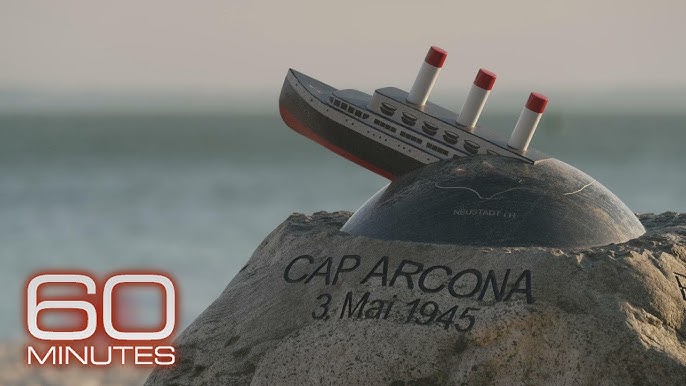
On Sunday, August 30, 2026, 60 Minutes revisits one of the most devastating and least widely understood disasters of the final days of World War II in Europe. In the double-length report “The Cap Arcona,” correspondent Bill Whitaker travels to Germany’s Baltic coast to investigate how thousands of concentration camp prisoners came to be trapped aboard a former luxury liner, only to be attacked by British aircraft days before the war ended.
The Cap Arcona disaster unfolded on May 3, 1945, in the Bay of Lübeck. Nazi Germany was collapsing, Allied armies were advancing across the country and the concentration camp system was being dismantled as the SS attempted to prevent prisoners from falling into Allied hands. Thousands of those prisoners ended up aboard ships in the Baltic.
British pilots attacked the vessels without knowing who was being held inside them. The Cap Arcona caught fire and capsized, while the nearby Thielbek sank. Thousands of prisoners who had survived years of Nazi persecution, forced labour, starvation and concentration camps were killed when liberation was within reach. The Neuengamme Concentration Camp Memorial estimates that approximately 6,600 prisoners died, while other historical estimates place the wider death toll at around 7,000.

- 60 Minutes Reports on “The Cap Arcona” & “Presenting the Kanneh-Masons” on August 30 2026
- Presenting the Kanneh-Masons: 60 Minutes Meets the Extraordinary Family of Seven Classical Musicians on August 30 2026
From Luxury Ocean Liner to Prison Ship
The final chapter of the Cap Arcona’s history was a stark contrast to the purpose for which the vessel had been built. Before the war, the German passenger ship represented luxury ocean travel. By the spring of 1945, it had become part of the Nazis’ desperate effort to dispose of thousands of concentration camp prisoners as Allied forces closed in.
The vessel was designed to carry a fraction of the number eventually forced aboard it. Historian Steven Niven told 60 Minutes that the ship was intended for approximately 1,500 people, yet more than 4,000 prisoners were packed onto it during the final days of the war.
Prisoners were confined in the holds under appalling conditions. Food and water were scarce, disease was widespread and many of the people arriving at the Baltic were already close to death after years of imprisonment.
The transformation of a passenger liner into what amounted to a floating concentration camp was the result of events unfolding around Neuengamme, the major concentration camp near Hamburg.
The Evacuation of Neuengamme
Neuengamme had become the centre of a vast network of camps and forced-labour sites in northern Germany. According to the United States Holocaust Memorial Museum, approximately 104,000 to 106,000 people were imprisoned within the Neuengamme system between 1938 and May 1945. More than 50,000 ultimately died.
Its prisoners came from across occupied Europe. They included Soviet, Polish, French, German, Dutch, Danish and Belgian prisoners, along with thousands of Jewish prisoners and people imprisoned for political resistance and other reasons.
Conditions deteriorated further during the final winter of the war. Around 1,700 prisoners were dying each month during the winter of 1944-45, with nearly 2,500 deaths recorded in February 1945 alone.
By April, British troops were approaching Hamburg. The SS began emptying Neuengamme and its satellite camps rather than allowing the prisoners to be liberated there.
On April 19, approximately 9,000 prisoners were evacuated toward Lübeck on the Baltic coast. Others were moved elsewhere or killed. Prisoners who remained at Neuengamme were forced to destroy evidence of what had happened there.
When British forces reached Neuengamme on May 4, they found the camp largely empty.
The people who had been imprisoned there had not simply disappeared. Thousands had been moved toward the Baltic.
Thousands of Prisoners Are Taken to the Baltic
The evacuation created another problem for Nazi officials: there were few places left to put the prisoners.
According to the Neuengamme Concentration Camp Memorial, Hamburg Nazi Party Gauleiter Karl Kaufmann requisitioned ships at Lübeck after other locations became unavailable. More than 9,000 prisoners were transported to the area and placed aboard vessels.
Among them were the Cap Arcona, Thielbek and Athen.
The Neuengamme Memorial records approximately 4,200 prisoners aboard the Cap Arcona, around 2,800 aboard the Thielbek and approximately 2,000 aboard the Athen around the time of the attack. Historical estimates vary, and the United States Holocaust Memorial Museum places the number aboard the Cap Arcona at more than 4,500.
They were packed into the ships’ holds.
For prisoners who had survived concentration camps and the evacuations that followed, the ships offered no real sanctuary. Hunger, thirst and disease continued aboard the vessels, and some prisoners died before the British aircraft ever appeared.
What Were the Nazis Planning to Do With the Prisoners?
One of the enduring questions surrounding the Cap Arcona is why the prisoners were placed aboard the ships and what Nazi officials ultimately intended to do with them.
There have long been claims that the SS intended to take the vessels into deeper water and sink them, killing the prisoners aboard. The theory fits the broader context of Nazi attempts to prevent prisoners and evidence from reaching Allied forces, but the precise intentions of the officials responsible remain disputed.
The Cap Arcona Museum notes that it is still not known what the SS ultimately planned for the prisoners aboard the ships.
That uncertainty is important. The fact that the ships became floating prisons is established. The conditions aboard them and the actions that placed thousands of prisoners there are documented. Exactly what would have happened had Allied aircraft not attacked is much harder to establish.
What is clear is how little time remained.
Hamburg surrendered on May 3. British troops were moving through northern Germany. Neuengamme itself was reached the following day. Nazi Germany’s unconditional surrender followed within days.
For the prisoners aboard the Cap Arcona, liberation was extraordinarily close.
Why the British Attacked the Ships
On May 3, British aircraft were conducting operations over the Baltic as the Allies attempted to prevent German forces from escaping across the sea.
The ships in Lübeck Bay were viewed within that military context.
British fighter-bombers attacked vessels believed to be connected to German military movements. The pilots did not know that thousands of concentration camp prisoners were aboard the Cap Arcona and Thielbek.
The Neuengamme Memorial describes the purpose of the British operation as preventing German troops from retreating across the Baltic Sea.
That intelligence failure produced catastrophic consequences.
The ships carrying prisoners were attacked on the afternoon of May 3.
The Attack on the Cap Arcona
British aircraft descended on the ships anchored near Neustadt.
The Cap Arcona and Thielbek were hit and caught fire. The Thielbek sank within minutes. The Cap Arcona burned before rolling onto its side in the shallow Baltic waters.
For thousands of prisoners confined below deck, escape was almost impossible.
Fire swept through the vessel while prisoners struggled to reach the upper decks. Those who managed to get outside faced another threat: the Baltic Sea.
The water was approximately 7 degrees Celsius, leaving severely weakened concentration camp prisoners with little chance of surviving for long.
Some drowned. Others burned inside the ships. Historical accounts also record prisoners being shot while attempting to escape. The Neuengamme Memorial concludes that thousands were burned, drowned or shot while trying to save themselves.
The scale of the deaths made the attack one of the worst maritime disasters of the war.
Thousands Die Within Sight of Liberation
The timing made the disaster particularly devastating.
According to the Neuengamme Memorial, the prisoners died only hours before they probably would have been liberated.
The precise death toll varies between historical sources because of incomplete records and uncertainty about exactly how many prisoners were aboard each vessel.
The United States Holocaust Memorial Museum estimates that approximately 7,000 people died in the British attack on the two ships, with only about 600 prisoners from the Cap Arcona and Thielbek surviving.
Neuengamme’s own chronology records approximately 7,100 victims in the May 3 disaster, including around 6,600 concentration camp prisoners.
Whatever figure is used, the scale was extraordinary.
Thousands of people who had survived the Nazi concentration camp system died not during the years when Germany appeared capable of winning the war, but during its final collapse.
The Survivors Who Help Tell the Story
The 60 Minutes report gives the disaster a human dimension by examining the experiences of people caught up in the events.
Among those whose stories CBS has documented is Willi Neurath, a political prisoner who opposed the Nazis and distributed anti-fascist leaflets. He was imprisoned at Buchenwald and later Neuengamme before being transported to Lübeck Bay and forced aboard the Cap Arcona.
CBS also traced the experiences of Manfred Goldberg, George Schwab and Goldberg’s mother, Rosa, Jewish prisoners who were transported toward Lübeck Bay from the Stutthof concentration camp system.
Goldberg had been only 11 when the Nazis deported him from Kassel, Germany. Schwab was nine when German forces entered his hometown of Liepāja, Latvia. His father, a physician, was killed after attempting to protect other Jews.
Their stories place the Cap Arcona within a much larger history. The people converging on Lübeck Bay in 1945 had arrived there through different parts of the Nazi camp system after years of persecution.
The ships represented one of the final stages of that ordeal.
The Disaster Was Larger Than the Cap Arcona
Although the Cap Arcona became the name most associated with the tragedy, it was not the only vessel carrying prisoners.
The Thielbek was also packed with concentration camp inmates. When it was struck, it sank with extraordinary speed.
The United States Holocaust Memorial Museum estimates that the Thielbek carried approximately 2,000 prisoners and the Cap Arcona more than 4,500. Only around 600 prisoners from the two vessels survived.
The Athen was another part of the concentration camp transport operation, while other vessels and prisoners were caught in the turmoil around Neustadt.
The violence was not confined to the ships. The Cap Arcona Museum records that vessels carrying more than 1,600 prisoners evacuated from Stutthof arrived around Neustadt on May 2. On the morning of May 3, SS and SD personnel killed approximately 200 Stutthof prisoners on the beach.
The wider events around Lübeck Bay therefore represented a convergence of Nazi killings, concentration camp evacuations, Allied military operations and the collapse of the German state.
Neuengamme Was Liberated the Following Day
One date demonstrates how close the prisoners had come to surviving the war.
May 3, 1945: the Cap Arcona and Thielbek were attacked.
May 4, 1945: British forces reached Neuengamme.
The camp they found was largely empty because the SS had evacuated its prisoners and attempted to erase evidence.
Within days, the war in Europe was over.
Germany’s unconditional military surrender was signed on May 7 and became effective on May 8, now commemorated as Victory in Europe Day.
For thousands of prisoners from Neuengamme, however, liberation had come one day too late.
Remembering the Victims of the Cap Arcona
The disaster left a physical legacy along Germany’s Baltic coast.
Bodies continued washing ashore after the attack, and victims were buried at locations around the Bay of Lübeck. Memorials and cemeteries now preserve their memory.
The Cap Arcona Memorial at Neustadt-Pelzerhaken was dedicated in July 1947, following an initiative by an international committee of survivors. Around 100 Jewish prisoners who died aboard the ship are buried in the Jewish cemetery at Neustadt.
Yet the Cap Arcona never became as widely recognised as other major maritime disasters or many of the defining events of the Holocaust.
Part of that can be explained by timing. The disaster occurred amid the collapse of the Third Reich, the liberation of concentration camps, the discovery of the scale of Nazi crimes and the final military operations of a six-year European war.
The identity of the attackers also complicated the story. These prisoners had been persecuted and imprisoned by Nazi Germany but died during an Allied attack intended to stop German forces from escaping.
There is no simple narrative of battlefield victory attached to the Cap Arcona.
Instead, it is a story of Nazi persecution, forced evacuation, intelligence failure and catastrophic wartime error.
Why the Cap Arcona Story Still Matters
More than eight decades after the disaster, the Cap Arcona remains an extraordinary illustration of how the chaos of war can continue killing people even when the outcome has effectively been decided.
The prisoners aboard the ships had survived concentration camps. Many had survived forced labour, starvation, disease, executions and the brutal evacuations of the final months of Nazi rule.
They reached May 1945.
Then, with Nazi Germany only days from surrender, thousands died in Lübeck Bay.
That is what gives Bill Whitaker’s 60 Minutes investigation its power. The Cap Arcona was not simply another ship sunk during World War II. It became the final prison for thousands of people who had already endured years of Nazi persecution and who were close enough to liberation to know that the regime responsible for their suffering was collapsing around them.
Their deaths on May 3, 1945, make the Cap Arcona disaster one of the darkest final chapters of the war in Europe and one whose victims are still fighting, through history and remembrance, not to be forgotten.
60 Minutes presents “The Cap Arcona” as a double-length report on Sunday, August 30, 2026, at 7:00 p.m. ET/PT on CBS and Paramount+. Bill Whitaker reports the segment, produced by Marc Lieberman.
More 60 Minutes on August 30 2026
- 60 Minutes Reports on “The Cap Arcona” & “Presenting the Kanneh-Masons” on August 30 2026
- The Cap Arcona: 60 Minutes Investigates One of World War II’s Final Tragedies on August 30 2026
- Presenting the Kanneh-Masons: 60 Minutes Meets the Extraordinary Family of Seven Classical Musicians on August 30 2026
Feature Articles
- “Evil in Eden”: 20/20 Reports on Cary Stayner, the Yosemite Murders and the Stayner Family’s Story of Horror and Heroism August 28 2026
- “The Other Side of Paradise”: Dateline NBC Revisits Sandra Galas Homicide August 28 2026
- “A Death in the Stairwell”: 48 Hours Reports on Kevin Davis & Alison Davis Case August 29 2026
- 60 Minutes Reports on “The Cap Arcona” & “Presenting the Kanneh-Masons” on August 30 2026