


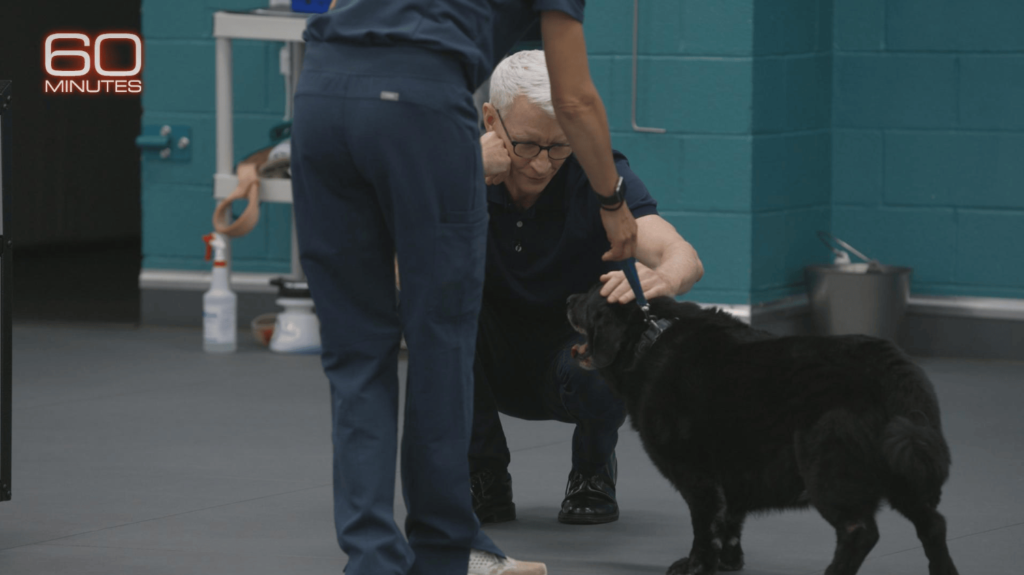
For decades, scientists have searched for answers to some of humanity’s most difficult medical challenges, including Alzheimer’s disease, dementia, cancer, and other age-related illnesses. While significant progress has been made, many questions about why we age and how to slow the process remain unanswered. A fascinating 60 Minutes report explores an unexpected source of insight: the family dog.
In the segment “The Dog Aging Project,” correspondent Anderson Cooper examines a groundbreaking nationwide research initiative that is studying tens of thousands of dogs in an effort to better understand the biology of aging. Scientists believe that man’s best friend may hold important clues that could help both humans and dogs live longer, healthier lives.

- 60 Minutes Reports on “Under Siege”, “Turning the Ship Around” & “The Dog Aging Project” on June 7 2026
- Under Siege: 60 Minutes Investigates Why Federal Judges Fear for Their Safety on June 7, 2026
- Turning the Ship Around: 60 Minutes Reports on America’s Struggle to Rebuild Shipbuilding on June 7, 2026
Why Scientists Are Studying Dogs
Dogs have lived alongside humans for thousands of years, sharing not only our homes but also many aspects of our environment and lifestyle. Because they eat similar foods, breathe the same air, and are exposed to many of the same environmental factors, researchers believe dogs offer a unique opportunity to study aging in real-world conditions.
Unlike laboratory animals, dogs experience life much like humans do. They develop naturally occurring diseases, age in diverse environments, and receive medical care similar to that provided to people. These similarities make them especially valuable for scientists seeking to understand how aging affects the body over time.
Another advantage is that dogs age much faster than humans. Researchers can observe changes that might take decades to occur in people within a much shorter period. This allows scientists to gather meaningful data more quickly and potentially identify treatments that could benefit both species.
What Is the Dog Aging Project?
The Dog Aging Project is one of the largest scientific studies of canine health ever undertaken. The initiative brings together researchers, veterinarians, and dog owners from across the United States in an unprecedented effort to collect long-term health information on more than 50,000 dogs.
Participating owners contribute data about their pets’ health, lifestyle, diet, activity levels, and medical history. Researchers then analyze this information to identify factors that may influence longevity and overall well-being.
The project’s scale allows scientists to examine a wide variety of breeds, sizes, and living conditions. By studying such a large and diverse population, researchers hope to uncover patterns that would be difficult to identify in smaller studies.
The report highlights how thousands of dog owners have become citizen scientists, helping researchers gather information that may transform understanding of aging and disease.
The Link Between Canine and Human Aging
One reason the project has attracted so much attention is the remarkable biological overlap between dogs and humans. Many of the diseases that affect aging people also occur naturally in dogs.
Conditions such as arthritis, heart disease, cancer, cognitive decline, and dementia-like disorders are frequently seen in older dogs. Researchers have discovered that aging canines often experience changes in brain function and memory that resemble those observed in humans.
These similarities make dogs particularly useful for studying neurological conditions such as Alzheimer’s disease. Scientists hope that understanding how aging affects canine brains may reveal new pathways for preventing or treating cognitive decline in people.
The report explores how researchers are examining genetics, metabolism, immune system function, and environmental influences to better understand why some dogs age more successfully than others.
Could Dogs Help Extend Healthy Lifespans?
One of the project’s most ambitious goals is not simply helping individuals live longer but helping them remain healthier as they age. Scientists increasingly focus on what they call “healthspan,” the period of life spent in good health and free from serious disease.
Researchers involved in the Dog Aging Project are investigating factors that contribute to healthy aging, including exercise, nutrition, genetics, and lifestyle. By identifying the biological mechanisms behind aging, they hope to develop interventions that could delay the onset of disease and improve quality of life.
Some studies connected to the project have also explored medications that may influence aging processes. While such research remains ongoing, scientists are optimistic that discoveries made through canine studies could eventually inform treatments for both dogs and humans.
The possibility of extending healthy years rather than simply increasing lifespan has generated excitement throughout the scientific community.
The Special Bond Between Humans and Dogs
Beyond the science, the project highlights the extraordinary relationship between humans and their canine companions. For many participants, enrolling their pets is about more than contributing to research. It is an opportunity to help future generations of both dogs and people.
Dogs occupy a unique place in human society. They serve as companions, working animals, service animals, and beloved family members. Their emotional connection with humans has made them ideal partners in a study focused on improving health and longevity.
The 60 Minutes report captures stories from dog owners who are eager to contribute to research that could benefit future pets while also advancing medical knowledge. Their participation reflects a growing recognition that animal and human health are often deeply interconnected.
A New Frontier in Aging Research
As populations around the world continue to age, understanding the biological processes behind aging has become one of the most important challenges in modern medicine. Scientists hope that breakthroughs in this field could lead to better treatments for Alzheimer’s disease, dementia, cancer, and numerous other conditions that disproportionately affect older adults.
Through the Dog Aging Project, researchers are pursuing answers in a place few might have expected: the homes and backyards of ordinary dog owners. By studying tens of thousands of canine companions, they hope to uncover insights that could transform how scientists think about aging itself.
In “The Dog Aging Project,” Anderson Cooper introduces viewers to a scientific effort that combines cutting-edge research with the enduring bond between people and their dogs. The result is a compelling look at how the quest for longer, healthier lives may depend in part on lessons learned from our four-legged friends.
More 60 Minutes June 7 2026
- 60 Minutes Reports on “Under Siege”, “Turning the Ship Around” & “The Dog Aging Project” on June 7 2026
- Under Siege: 60 Minutes Investigates Why Federal Judges Fear for Their Safety on June 7, 2026
- Turning the Ship Around: 60 Minutes Reports on America’s Struggle to Rebuild Shipbuilding on June 7, 2026
- The Dog Aging Project: 60 Minutes Reports on How Dogs Could Unlock the Secrets of Aging on June 7, 2026
More Feature Articles
- “A Killing in Midtown”: Dateline NBC Examines the Brian Thompson Murder and the Luigi Mangione Case June 5 2026
- 20/20 Pre-Empted for NBA Finals on June 5 2026
- “Secrets on the Emerald Coast”: Dateline NBC Reports on Marie Carlson Homicide June 6 2026
- “The Plot to Eliminate Alyssa Burkett”: 48 Hours Reports June 6 2026
- 60 Minutes Reports on “Under Siege”, “Turning the Ship Around” & “The Dog Aging Project” on June 7 2026