The Mardi Gras Indians: 60 Minutes Explores the History, Art and Resilience of a New Orleans Tradition on August 16 2026
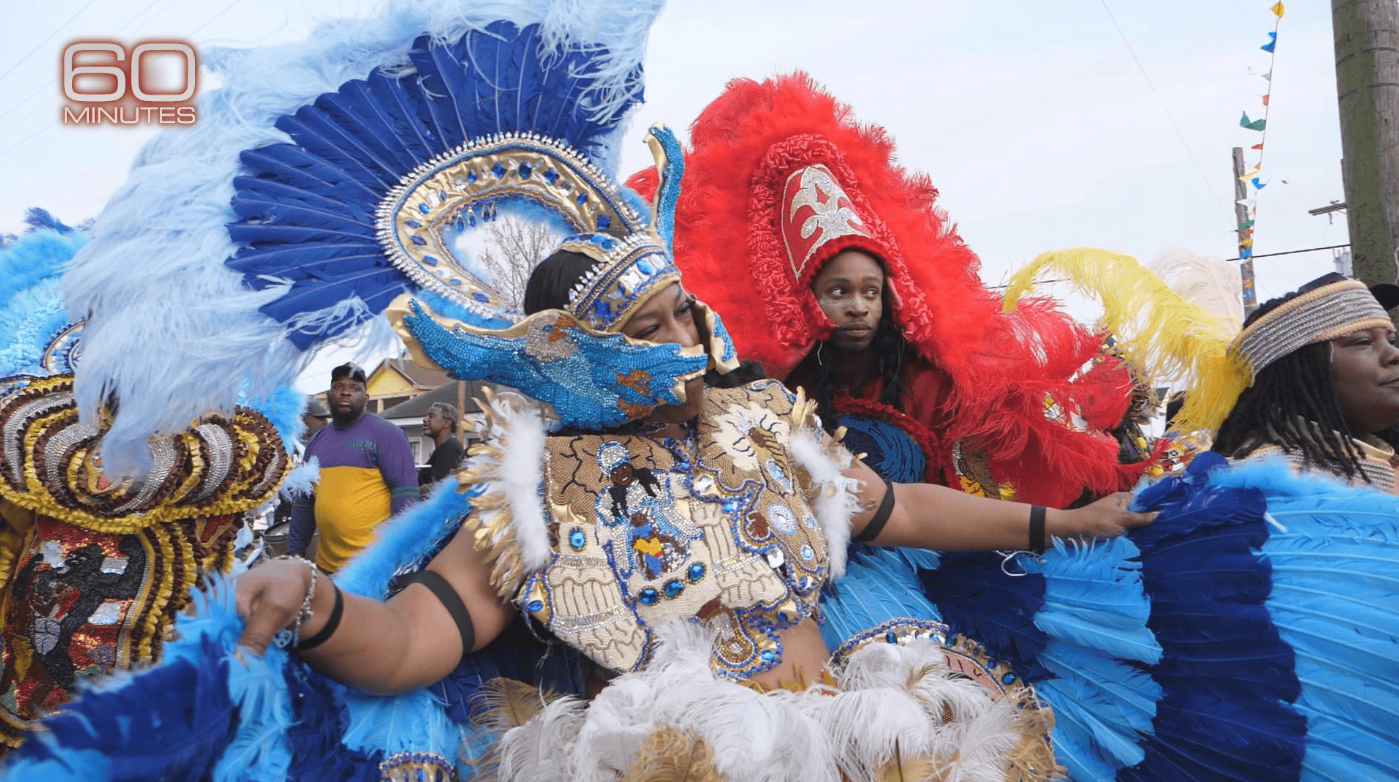
The August 16, 2026, edition of 60 Minutes revisits one of New Orleans’ most distinctive cultural traditions in “The Mardi Gras Indians.” Correspondent Bill Whitaker travels beyond the city’s famous parade routes to meet members of the Mardi Gras Indians, also increasingly known as Black Masking Indians, whose elaborate suits, music and neighborhood processions represent generations of Black history.
The report, produced by Nichole Marks, originally aired on April 5, 2026. Rather than concentrating on the enormous floats and organized krewes familiar to visitors, Whitaker explores a Mardi Gras tradition that developed largely within New Orleans’ Black neighborhoods and remained relatively unknown outside those communities for much of its history.
- 60 Minutes Reports on “A Psychedelic Journey”, “The Mardi Gras Indians” & “The Indomitable Margaret Atwood” on August 16 2026
- A Psychedelic Journey: 60 Minutes Follows Veterans Searching for Relief From PTSD on August 16 2026
- The Indomitable Margaret Atwood: 60 Minutes Profiles the Author Who Refuses to Be Silenced on August 16 2026
Who Are the Mardi Gras Indians?
The Mardi Gras Indians are groups of predominantly Black New Orleanians who organize themselves into tribes and appear in spectacular handmade suits inspired in part by Native American imagery. Participants describe the act of wearing these suits and taking part in the tradition as “masking.”
The tradition is more than a Mardi Gras performance. It combines visual art, music, dance, competition, neighborhood identity and oral history. Tribes have existed in different Black neighborhoods of New Orleans for generations, and their knowledge has traditionally been passed from older participants to younger members.
The exact origins remain difficult to establish. Much of the history was transmitted orally rather than through written records, and scholars have proposed several overlapping explanations for how the tradition developed. What is clear is that Black Masking culture was established in New Orleans by the late 19th century and has connections to the city’s African American experience, Native American imagery and much older African cultural traditions.
That uncertainty is itself part of what makes the culture so fascinating. It is not a tradition that can easily be traced to one founder, one event or one moment in history. Instead, it grew through generations of community participation.
A Tradition Rooted in Black and Native American History
One widely told explanation for the Mardi Gras Indians’ Native American imagery involves relationships between Indigenous communities and Black people during slavery.
Accounts passed through generations describe Native Americans offering assistance or refuge to people escaping slavery. The Mardi Gras Indian tradition is therefore often interpreted as a way for Black New Orleanians to honor Native peoples who helped their ancestors. The Backstreet Cultural Museum describes the tradition as being rooted in resistance and in historical connections between escaping enslaved Africans and Native Americans.
New Orleans’ official tourism organization similarly traces Black Masking culture to connections between formerly enslaved Africans and Native Americans. The resulting tradition incorporated elements associated with both communities while developing into something distinctly connected to Black New Orleans.
Historians nevertheless caution against treating this explanation as the complete story. Because documentation is limited, researchers continue debating precisely how the tradition emerged and how African, Caribbean, Native American and American Carnival influences combined over time.
Black New Orleanians Created Their Own Carnival Traditions
The Mardi Gras Indians also need to be understood within the history of racial segregation in New Orleans.
Although Mardi Gras became one of the city’s defining celebrations, Black residents were historically excluded from many mainstream Carnival organizations. Instead of simply accepting that exclusion, Black communities developed their own celebrations, organizations and traditions within their neighborhoods.
The development of the Mardi Gras Indians therefore represented something larger than entertainment. Masking provided a way to create community status, recognition and spectacle in a society that frequently denied Black residents those opportunities elsewhere.
The Smithsonian Center for Folklife and Cultural Heritage places the emergence of Mardi Gras Indian culture alongside the development of jazz during a period of intense racial discrimination and violence around the turn of the 20th century. Both traditions offered forms of creative expression, community pride, recognition and resistance.
Seen in that context, the dazzling suits featured by 60 Minutes are not simply Carnival costumes. They are part of a much larger history of Black New Orleanians creating cultural spaces on their own terms.
The Tradition Can Be Documented Back to the 1800s
Although its deeper origins remain debated, historical evidence establishes that Mardi Gras Indian groups were operating by the late 19th century.
One frequently cited early tribe is the Creole Wild West, associated with Becate Batiste in New Orleans’ Seventh Ward during the 1880s. Researchers believe organized Black masking may have existed before that period, but the lack of extensive written documentation makes earlier history difficult to reconstruct with certainty.
Some scholars have looked much further back for cultural influences. Research highlighted by the Smithsonian has examined possible connections to traditions originating in the Kingdom of Kongo and carried across the Atlantic through the African diaspora. That interpretation connects elements of dance, leadership, ceremonial dress and public performance to African traditions that existed long before the emergence of recognizable Mardi Gras Indian tribes.
Rather than having a single origin story, Black Masking culture can therefore be understood as a tradition shaped by multiple historical forces.
That includes the African diaspora, slavery, interactions between Black and Native peoples, segregation, neighborhood life and New Orleans’ unique Carnival culture.
An Entire Year Can Go Into a Single Suit
The extraordinary suits are the most immediately visible part of the tradition featured by 60 Minutes.
Each year, participants create new suits decorated with intricate beadwork, feathers, stones, plumes and detailed pictorial designs. The Backstreet Cultural Museum notes that producing one can consume an entire year’s worth of labor, creativity, money and time.
The scale of the work helps explain why the moment when a suit is finally revealed carries such importance. A participant may have spent months quietly sewing and designing before appearing in public on Mardi Gras morning.
CBS reported in its original presentation of the segment that participants can spend months and thousands of dollars preparing the hand-sewn suits. The finished creations can be enormous, transforming the wearer into a moving piece of artwork.
But simply describing the suits as elaborate costumes misses much of their significance. Sewing is itself a cultural practice.
Techniques, stories and traditions are transmitted between generations. Young participants can learn by watching older members work, while experienced maskers preserve skills that may have been practiced within families and neighborhoods for decades.
The Designs Tell Stories
The beadwork can also serve as a form of storytelling.
Detailed patches may depict historical figures, Native American imagery, African themes or scenes carrying personal significance for the person creating the suit. Months of sewing can go into producing pictures from thousands of individual beads.
That means each suit can simultaneously function as clothing, sculpture, historical expression and personal statement.
This tradition of creating new work also prevents Black Masking culture from becoming frozen in the past. Participants inherit established customs, but each generation has opportunities to introduce its own artistic ideas.
The result is a culture that remains recognizably connected to its history while continually producing new art.
Big Chiefs Lead the Tribes
Mardi Gras Indian tribes traditionally have a hierarchy of roles, with the Big Chief serving as the central leader.
Other positions can include Queens, Flag Boys, Spy Boys and Wild Men. The Backstreet Cultural Museum’s collection contains suits associated with many of these roles, illustrating the organizational structure that exists behind the spectacular public appearances.
The Spy Boy traditionally travels ahead of the tribe, looking for other groups. That information can then be communicated back through the ranks. Historically, encounters between tribes could be confrontational, but contemporary meetings are generally centered on artistic competition, performance and determining who has produced the most impressive suit.
The hierarchy gives the procession a structure that may not be obvious to an outsider encountering a tribe for the first time.
For members, however, titles can represent years of participation and community respect. Becoming a chief is not simply a matter of wearing the largest suit. Leadership involves maintaining traditions, teaching younger generations and representing the tribe and neighborhood.
Encounters Between Tribes Once Had a More Dangerous Reputation
The competitive aspect of Mardi Gras Indian culture has changed considerably over the generations.
Historically, encounters between rival tribes could become violent. Mardi Gras provided opportunities for groups from different neighborhoods to meet, and longstanding disputes could sometimes be settled physically.
Over time, influential chiefs helped move the culture away from physical confrontation and toward artistic competition.
The modern contest is largely about appearance, craftsmanship, singing and performance. Instead of proving superiority through violence, tribes can compete over who is the “prettiest,” with the quality and originality of their suits carrying enormous prestige.
This evolution is an important example of how a living cultural tradition can change while preserving its fundamental identity.
Competition remains. Pride remains. Rival tribes still encounter one another in the streets. But artistic excellence increasingly provides the arena in which that rivalry is expressed.
The Streets Become the Stage
Unlike the large organized Mardi Gras parades that follow established routes, Black Masking Indian appearances historically have been far less predictable.
Tribes move through neighborhoods rather than simply following the major tourist parade corridors. Their routes traditionally have not been widely advertised in advance, contributing to the secrecy surrounding the culture.
That is one reason visitors could attend Mardi Gras in New Orleans for years without fully encountering the tradition.
For the communities where the Indians mask, however, their arrival can transform an ordinary neighborhood street into a performance space.
The procession does not require grandstands or enormous floats. The performers, musicians, families and people following alongside them create the event.
That neighborhood setting also reinforces an important point in Whitaker’s report: this culture was created by communities rather than for tourists.
Mardi Gras Morning Is Only Part of the Tradition
Fat Tuesday is the best-known time to encounter Black Masking Indians, but it is not the only important date.
Tribes also appear around St. Joseph’s Day and at Super Sunday gatherings during the spring. Super Sunday offers tribes another opportunity to display their suits and meet other groups after Mardi Gras.
Black Masking Indians have also become a familiar presence at the New Orleans Jazz & Heritage Festival. Their participation connects the tradition with the wider musical culture of the city.
This public visibility represents a significant change.
For much of their history, the Mardi Gras Indians remained primarily a neighborhood phenomenon. Today, their artistry is internationally recognized, even as culture bearers continue emphasizing that the tradition belongs first to the communities that created it.
Music Is Essential to Black Masking Culture
The visual spectacle may attract immediate attention, but music is equally important.
Mardi Gras Indian traditions include distinctive chants built around call-and-response singing and percussion. Historically, participants used instruments such as tambourines, drums and cowbells while moving through the streets.
Some of those chants eventually became deeply embedded in New Orleans popular music.
Smithsonian Folkways notes that recordings made in 1957 documented chants that had already been sung by Mardi Gras Indians for generations. Those recordings captured a tradition that was beginning to exert a wider influence on the city’s music.
That influence later expanded into funk and commercial recordings. Groups including the Wild Magnolias brought Mardi Gras Indian music into recording studios, while musicians associated with the broader New Orleans music scene incorporated its rhythms, phrases and traditions.
The relationship between Black Masking culture and New Orleans music demonstrates how a neighborhood tradition can influence a city’s wider cultural identity.
Mardi Gras Indians Helped Shape Famous New Orleans Songs
Even people who have never knowingly watched a Mardi Gras Indian procession may have encountered traces of the tradition through music.
New Orleans standards including “Iko Iko” and “Hey Pocky Way” are connected to Mardi Gras Indian musical traditions. Phrases involving chiefs and flag boys reflect the vocabulary and hierarchy of the tribes.
The Wild Magnolias helped take the sound in another direction by combining traditional chants with contemporary funk. Smithsonian Folkways describes the development of Mardi Gras Indian funk and notes the tradition’s growing connection with mainstream New Orleans culture beginning around the 1970s.
Prominent New Orleans musicians have also participated directly in masking culture.
This crossover demonstrates that Mardi Gras Indian culture is not isolated from the broader story of New Orleans music. It is one of the streams feeding into that story.
The New Orleans Jazz & Heritage Festival Helped Bring Wider Recognition
A particularly important moment came with the emergence of the New Orleans Jazz & Heritage Festival.
Smithsonian Folkways describes a symbolic event in 1970 when Mardi Gras Indians led by chiefs Bo Dollis and Monk Boudreaux participated in a procession connected with the first New Orleans Jazz & Heritage Festival.
The festival helped expose audiences from outside the traditional neighborhoods to Black Masking music and culture.
That increased visibility had advantages. It brought greater recognition to artists and traditions that had long been overlooked by mainstream institutions.
At the same time, increased attention creates questions about ownership and representation. A community tradition can become a tourist attraction or entertainment product even though its meaning extends far beyond what visitors see during a short performance.
That tension between wider recognition and community ownership remains an important part of understanding the culture today.
The Backstreet Cultural Museum Preserves the Tradition
One institution has played an especially important role in documenting Black Masking culture: the Backstreet Cultural Museum in New Orleans’ historic Tremé neighborhood.
The museum grew from the work of Sylvester Francis, who began photographing African American parading traditions and giving photographs to the people he documented. Community members eventually began donating suits and other objects to his collection.
Francis started displaying photographs and Mardi Gras Indian memorabilia in his garage in 1988. The collection continued expanding and eventually became the Backstreet Cultural Museum, which was incorporated as a nonprofit in 1999.
Today, its holdings cover Mardi Gras Indians as well as jazz funerals, social aid and pleasure clubs, Baby Dolls and Skull and Bone gangs. Its film collection documents decades of African American Carnival performances and hundreds of jazz funerals.
The museum is particularly significant because it preserves the culture from within the community rather than treating it simply as an outside curiosity.
Passing the Art to the Next Generation
Preservation does not only happen inside museums.
Black Masking culture survives because people continue participating in it. Children learn the terminology, songs, sewing techniques and responsibilities associated with their tribes from older generations.
The Backstreet Cultural Museum has supported that process through programs designed to teach young people the history and art of Mardi Gras Indians. Its sewing program gives participants opportunities to learn how to create the beaded patches that form part of the elaborate suits.
That intergenerational transmission is crucial.
A suit can be preserved in a museum after Mardi Gras ends, but a living tradition requires people who know how to make the next one. It requires singers who know the chants, chiefs who understand the responsibilities of leadership and younger members willing to spend hundreds of hours learning skills from their elders.
In that sense, every newly sewn suit represents both preservation and renewal.
Why Some Prefer the Name Black Masking Indians
The terminology surrounding the tradition has also evolved.
“Mardi Gras Indians” remains the historic and widely recognized name, including the term used in the 60 Minutes segment. However, “Black Masking Indians” has increasingly been used as an alternative.
The newer terminology places greater emphasis on the African American community that created and maintains the tradition while retaining the historical connection to Native-inspired masking.
Questions about terminology also connect to broader discussions about cultural appropriation. From outside the tradition, the use of Native American imagery can raise questions about representation.
But the historical context is unusually complex. Participants have traditionally described masking as an act of respect connected to stories of solidarity between Native Americans and Black people. Scholars also point to African and Caribbean influences that complicate any attempt to characterize the culture as simply imitating Native American dress. Smithsonian Magazine notes both the debate surrounding the terminology and the distinctly African American nature of the tradition.
A Culture Built Around Resistance and Pride
Perhaps the most important context for the 60 Minutes report is that the Mardi Gras Indians developed within communities that historically had limited access to the city’s dominant social institutions.
The ability to become a Big Chief, create an extraordinary suit and command respect in the streets provided a form of status that Black New Orleanians were often denied elsewhere.
The Smithsonian has described traditions such as Mardi Gras Indians and jazz as forms through which Black communities expressed freedom, unity, pride and individual recognition during periods when those things were restricted in mainstream society.
That history explains why the culture carries emotional significance extending far beyond Mardi Gras.
A hand-beaded suit can represent hundreds of hours of work, but it can also represent family, neighborhood, ancestry and personal identity.
The parade is therefore both celebration and declaration.
More Than a Mardi Gras Spectacle
“The Mardi Gras Indians” gives 60 Minutes viewers access to a New Orleans tradition that can initially seem almost impossibly colorful and elaborate.
But the deeper story is not really about feathers and beads.
It is about communities that responded to exclusion by creating their own institutions and celebrations. It is about the relationship between art and resistance, the ways oral traditions survive across generations and how culture can evolve without losing its connection to the people who created it.
It is also a story about enormous personal commitment. The participants Whitaker meets are preserving the tradition not by keeping it unchanged behind museum glass, but by spending month after month sewing, singing, teaching and preparing to take to the streets again.
Each Mardi Gras brings new suits, new designs and another generation of participants, but the history travels with them.
“The Mardi Gras Indians,” reported by Bill Whitaker and produced by Nichole Marks, airs as part of the 60 Minutes encore presentation on Sunday, August 16, 2026, from 7:00 to 8:00 PM ET/PT on CBS and Paramount+.
More 60 Minutes on August 16 2026
- 60 Minutes Reports on “A Psychedelic Journey”, “The Mardi Gras Indians” & “The Indomitable Margaret Atwood” on August 16 2026
- A Psychedelic Journey: 60 Minutes Follows Veterans Searching for Relief From PTSD on August 16 2026
- The Mardi Gras Indians: 60 Minutes Explores the History, Art and Resilience of a New Orleans Tradition on August 16 2026
- The Indomitable Margaret Atwood: 60 Minutes Profiles the Author Who Refuses to Be Silenced on August 16 2026
Feature Articles
- “Noises in the Night”: Dateline NBC Revisits the Homicide of Cassy Farrington August 14 2026
- “I’m Going to Get You”: 20/20 Reports on Debbie Dorian Homicide August 14 2026
- “Murder in the Parking Garage”: 48 Hours Investigates the Kenny Fandrich Homicide on August 15 2026
- 60 Minutes Reports on “A Psychedelic Journey”, “The Mardi Gras Indians” & “The Indomitable Margaret Atwood” on August 16 2026