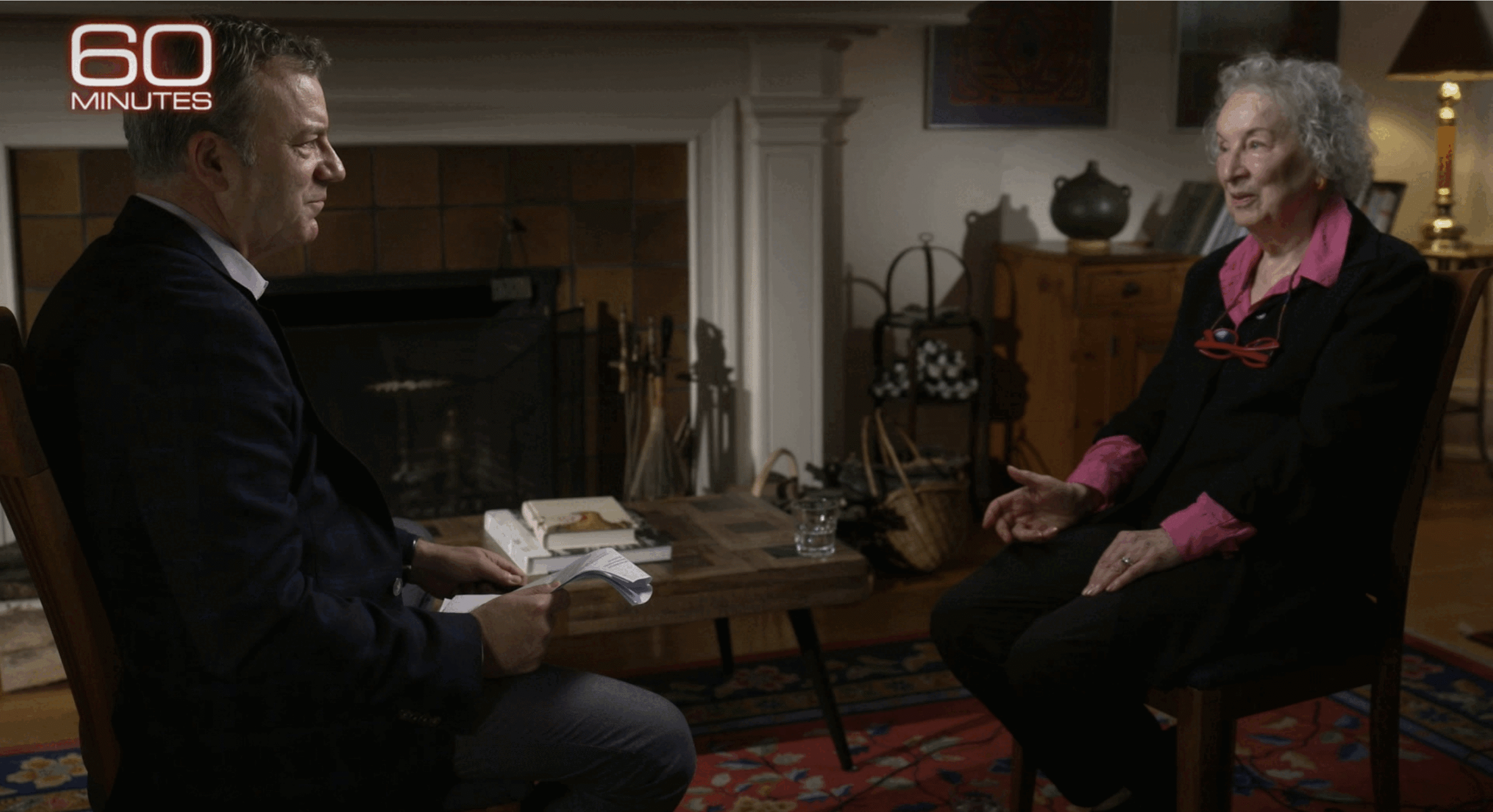
Sacha Baron Cohen: 60 Minutes Explores the Secrets Behind Borat, Brüno and Ali G
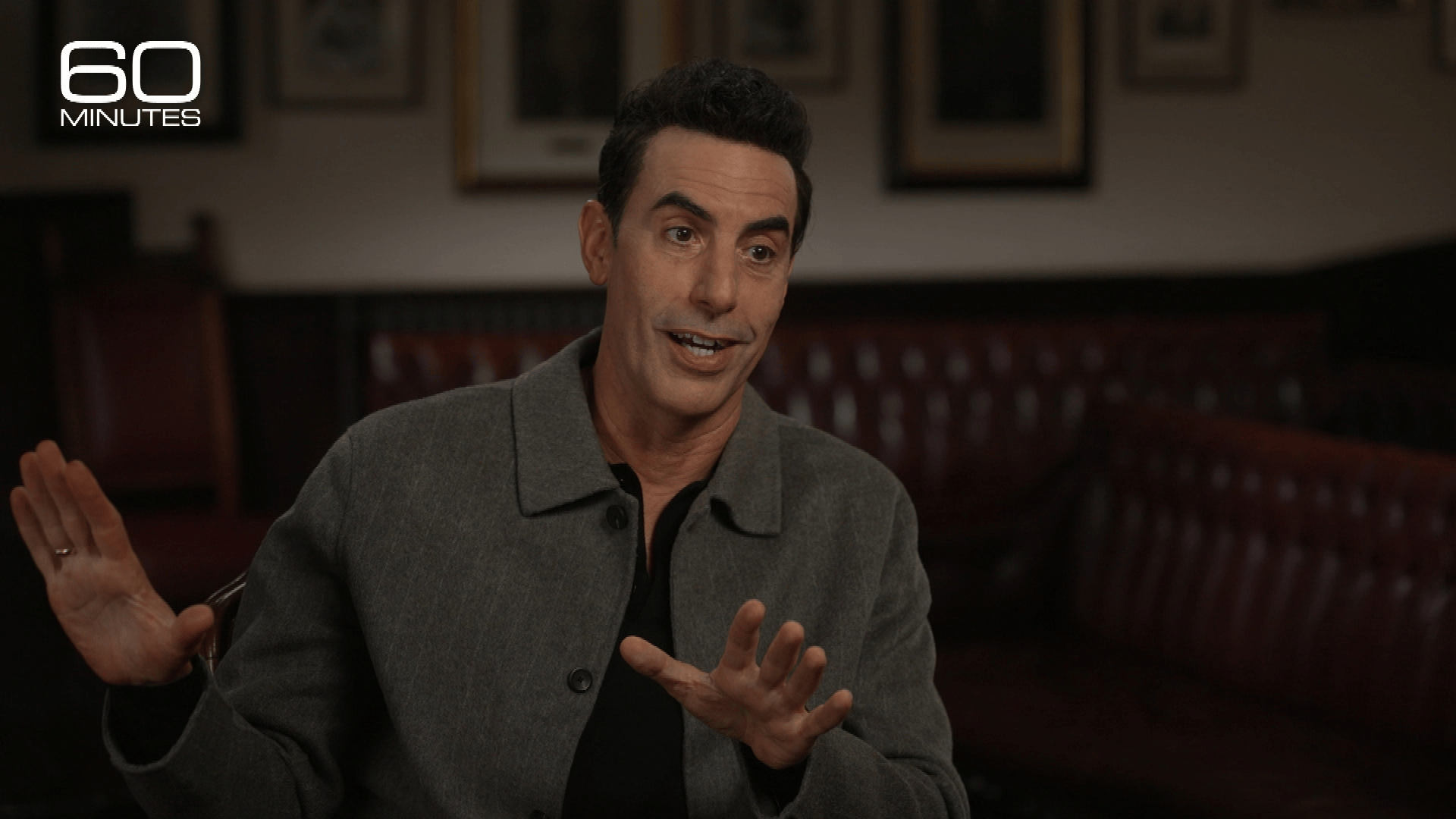
60 Minutes turns its attention to one of the most unconventional figures in modern entertainment on Sunday, October 18, 2026, as actor and comedian Sacha Baron Cohen sits down for an interview about his career, his latest film and the provocative comedy that has made him internationally famous.
In a report presented by Ariel Levy, the CBS newsmagazine travels to London to meet the Golden Globe-winning actor and Academy Award nominee, whose creations include Borat, Ali G and Brüno.
For more than two decades, Baron Cohen has built a career around elaborate disguises, improvised encounters and fictional characters who interact with people unaware that they are participating in a comedy production.
His work has produced some of the most recognizable moments in contemporary satire, but it has also generated controversy over deception, privacy and the ethical boundaries of comedy.
The 60 Minutes interview explores the planning behind his performances, the risks involved in maintaining his characters and why Baron Cohen believes his humor can reveal uncomfortable truths about society.
Sacha Baron Cohen Opens Up About His Unusual Comedy Career
Unlike most comedians, Sacha Baron Cohen has rarely relied on conventional stand-up routines or straightforward scripted performances to establish his reputation.
Instead, he became famous by creating fictional personalities and introducing them into real situations, often interviewing politicians, celebrities and ordinary members of the public without revealing his true identity.
His characters typically appear uninformed, offensive or socially inappropriate, encouraging the people they encounter to respond in ways they might not during a conventional interview.
The resulting footage can be outrageous, uncomfortable and occasionally revealing.
For Baron Cohen, the objective has frequently been more ambitious than simply producing laughter. His performances are designed to explore prejudice, expose contradictions and challenge assumptions about politics, culture and social behavior.
That approach has made him a distinctive figure in entertainment, combining elements of acting, investigative-style interviewing, improvisation and political satire.
In London, Levy examines how Baron Cohen developed this unusual form of comedy and why he has continued to return to it despite the controversies surrounding his work.
The interview also considers the difference between the deliberately provocative personalities audiences see on screen and the performer who creates them.
How Ali G Made Sacha Baron Cohen Famous
Before Borat became an international phenomenon, Baron Cohen attracted widespread attention through Ali G, a fictional British interviewer who adopted the mannerisms of a self-styled streetwise gangster.
The character emerged on British television in the late 1990s and became the centerpiece of Da Ali G Show, which later reached American audiences through HBO.
Ali G’s interviews followed a deceptively simple formula.
Dressed in distinctive streetwear and speaking in exaggerated slang, the character would question politicians, academics and other prominent figures about serious subjects while pretending to misunderstand basic concepts.
The comedy frequently depended on the interviewee’s attempts to remain polite and professional while responding to increasingly absurd questions.
Among the public figures interviewed by Ali G were former United Nations Secretary-General Boutros Boutros-Ghali and former U.S. presidential candidate Pat Buchanan.
The character’s popularity eventually led to the 2002 feature film Ali G Indahouse.
Although the film used a more conventional fictional narrative, the television interviews demonstrated the approach that would become central to Baron Cohen’s later success.
By encouraging people to engage seriously with an obviously ridiculous character, he created opportunities for spontaneous reactions that could not easily be reproduced in a scripted comedy.
Ali G also established the ethical questions that would follow his career, particularly whether interview subjects fully understood the nature of the productions in which they appeared.
Borat Became a Global Phenomenon
Baron Cohen achieved his greatest international breakthrough with Borat Sagdiyev, a fictional television journalist from Kazakhstan whose apparent ignorance of Western customs became the foundation for one of the most successful comedy films of the 2000s.
The character initially appeared on television before becoming the focus of the 2006 film Borat: Cultural Learnings of America for Make Benefit Glorious Nation of Kazakhstan.
Directed by Larry Charles, the film followed Borat as he traveled across the United States, interacting with people who frequently believed they were participating in a genuine documentary.
The encounters ranged from awkward social situations to conversations involving politics, religion, race and American cultural attitudes.
The film became a major commercial success, earning more than $260 million worldwide and establishing Baron Cohen as an internationally recognized performer.
It also earned him a Golden Globe Award for Best Actor in a Motion Picture – Musical or Comedy and an Academy Award nomination for Best Adapted Screenplay, shared with his fellow writers.
Much of the film’s impact came from its unusual combination of scripted situations and unscripted reactions.
Baron Cohen’s character frequently expressed offensive or absurd views, creating situations in which the responses of unsuspecting participants became part of the satire.
The film also attracted criticism, including objections to its portrayal of Kazakhstan and concerns from people who said they had been misled about their participation.
For supporters, the film demonstrated how comedy could expose prejudice and social hypocrisy. Critics questioned whether its methods sometimes came at the expense of people who did not understand the joke.
Those competing interpretations remain central to discussions of Baron Cohen’s work.
Brüno Pushed the Boundaries of Undercover Comedy
Following the success of Borat, Baron Cohen brought another of his television creations to the big screen.
Released in 2009, Brüno followed a flamboyant Austrian fashion journalist whose exaggerated personality and provocative behavior were used to explore celebrity culture, sexuality and social attitudes.
Like Borat, Brüno interacted with people in situations where the distinction between performance and reality was deliberately obscured.
The character’s encounters frequently involved fashion industry figures, public personalities and ordinary Americans confronted with uncomfortable questions or unexpected behavior.
The film generated controversy over its sexual content, confrontational humor and the way it portrayed both its fictional protagonist and the people he encountered.
Nevertheless, it further demonstrated Baron Cohen’s willingness to construct elaborate situations around characters whose personalities were designed to challenge social conventions.
His performances required more than simply memorizing lines.
They depended on remaining in character while responding to unpredictable situations, sometimes involving people who became angry, suspicious or openly hostile.
That element of uncertainty has remained one of the defining characteristics of his comedy.
The Elaborate Preparation Behind Baron Cohen’s Disguises
One of the subjects explored in the 60 Minutes interview is the craftsmanship involved in Baron Cohen’s undercover performances.
Although the finished scenes can appear spontaneous, the productions often require extensive planning, character development and coordination.
Each fictional personality has a distinctive appearance, background, vocabulary and set of beliefs that Baron Cohen must maintain convincingly.
Costumes, prosthetics, accents and carefully constructed identities can help prevent participants from recognizing the performer.
The challenge becomes particularly demanding when he is interacting with someone who has no script and whose reactions cannot be predicted.
Baron Cohen must improvise while remaining consistent with the character’s personality and the intended purpose of the encounter.
Productions must also consider the logistics of filming real-world interactions, including camera placement, crew coordination, participant agreements and potential security concerns.
As Baron Cohen became more recognizable, maintaining the element of surprise grew increasingly difficult.
His fame created an unusual professional problem: the more successful his undercover characters became, the harder it was to convince people that they were genuine.
The 60 Minutes conversation offers an opportunity to explore how he approaches those challenges and why he continues to value a style of comedy that involves considerable uncertainty.
Who Is America? Took His Satire Into American Politics
In 2018, Baron Cohen returned to television with Who Is America?, a Showtime series in which he adopted several new disguises to interview politicians, public figures and ordinary Americans.
The series examined subjects including gun policy, political polarization, national identity and the influence of extreme rhetoric.
One of his characters, Israeli anti-terrorism expert Erran Morad, was used in encounters involving American gun culture and political figures.
Other personas included a British ex-convict, an Italian photographer and a politically progressive academic.
The program generated widespread attention because of the public figures who appeared and the extraordinary statements or actions captured during some of the encounters.
Several participants subsequently criticized the production, arguing that they had been deceived or unfairly portrayed.
The series reinforced Baron Cohen’s reputation for using disguise and improvisation to explore political attitudes, while reigniting debate about the responsibilities of satirists working with unsuspecting subjects.
It also demonstrated how his comedy had evolved beyond cultural misunderstandings into increasingly direct examinations of contemporary political controversies.
Borat Returned During the 2020 Presidential Election
Fourteen years after the original Borat film, Baron Cohen revived the character for Borat Subsequent Moviefilm, released on Amazon Prime Video in October 2020.
The sequel arrived during a particularly turbulent period in American politics, with the presidential election approaching and the COVID-19 pandemic dominating public life.
The film again used Borat’s fictional identity to examine American society, this time incorporating subjects including conspiracy theories, political divisions, gender expectations and the pandemic.
Actor Maria Bakalova played Borat’s daughter, Tutar, delivering a performance that earned her an Academy Award nomination for Best Supporting Actress.
The film also included a widely discussed encounter involving former New York City Mayor Rudy Giuliani.
As with the original, the sequel combined outrageous fictional situations with encounters involving people who were not necessarily aware of the production’s satirical purpose.
Baron Cohen won another Golden Globe for his performance, while the film received an Academy Award nomination for Best Adapted Screenplay.
The sequel demonstrated that Borat could still generate considerable attention in a media environment very different from the one in which the character first became famous.
However, it also raised questions about whether such undercover comedy could remain effective as audiences became increasingly familiar with Baron Cohen’s methods.
Sacha Baron Cohen’s Career Beyond Borat and Ali G
Although Baron Cohen is most closely associated with his undercover characters, he has also established himself as a performer in more conventional film and television productions.
He appeared as Jean Girard in the 2006 comedy Talladega Nights: The Ballad of Ricky Bobby, alongside Will Ferrell.
In 2007, he played Signor Adolfo Pirelli in Tim Burton’s adaptation of Sweeney Todd: The Demon Barber of Fleet Street.
He subsequently appeared in films including Hugo, Les Misérables and The Brothers Grimsby, the latter of which he also helped write.
His dramatic abilities received particular attention in The Trial of the Chicago 7, Aaron Sorkin’s 2020 historical courtroom drama.
Baron Cohen portrayed political activist Abbie Hoffman, one of the defendants prosecuted following protests surrounding the 1968 Democratic National Convention.
The performance earned him an Academy Award nomination for Best Supporting Actor, demonstrating his ability to move beyond broad comedy into historically grounded dramatic material.
His work across different genres has revealed a versatility that can be overshadowed by the notoriety of his undercover characters.
The 60 Minutes interview provides an opportunity to consider how these different parts of his career relate to one another and what attracts him to particular roles.
Why Sacha Baron Cohen Believes Satire Can Expose Uncomfortable Truths
The most serious element of Baron Cohen’s work is his belief that comedy can reveal attitudes people might otherwise conceal.
His characters often behave in ways that are deliberately inappropriate, creating situations where others must decide whether to challenge, tolerate or agree with their statements.
That approach can expose prejudice, but it can also produce ambiguity.
A participant might appear to agree with a fictional character because they share the views being expressed, because they are confused or because they are attempting to avoid confrontation.
Critics have argued that heavily edited comedy sequences cannot always provide a complete picture of what participants believe.
Supporters counter that the unexpected nature of the encounters allows Baron Cohen to explore subjects that conventional interviews might struggle to address.
The comedian has also spoken publicly about the dangers of misinformation, extremism and the amplification of hateful content through social media.
In a widely reported 2019 speech to the Anti-Defamation League, he criticized major technology platforms for allowing harmful material to spread and called for greater accountability.
Those concerns demonstrate that his interest in political and social issues extends beyond the characters he portrays.
In his conversation with Ariel Levy, Baron Cohen discusses the serious intentions behind his satire and how he balances entertainment with a desire to challenge audiences.
What Sacha Baron Cohen Reveals About His New Film
The 60 Minutes interview also looks ahead to Baron Cohen’s latest film project.
CBS has confirmed that the actor will discuss his new film during the conversation with Ariel Levy, although the network’s advance segment description does not identify the production or disclose specific details about its storyline.
The discussion provides an opportunity to examine how Baron Cohen is approaching the next stage of his career after decades of creating characters that have become familiar around the world.
His previous projects have ranged from politically charged mockumentaries to conventional Hollywood comedies and acclaimed dramatic performances.
That variety makes his future direction particularly interesting.
The interview is expected to explore both the new production and the creative decisions that continue to shape his work.
For longtime viewers, it also offers a chance to hear from the performer himself rather than one of the fictional personalities through which he has so often communicated.
When to Watch Sacha Baron Cohen on 60 Minutes
Sacha Baron Cohen’s interview airs Sunday, October 18, 2026, as part of a new edition of 60 Minutes on CBS.
Correspondent Ariel Levy travels to London for the conversation, which examines the actor’s latest film, his career creating Borat, Ali G and Brüno, and the techniques behind his unconventional undercover comedy.
Michael Karzis, Aaron Weisz and Ian Flickinger are the producers.
The episode is scheduled to air 7:30-8:30 PM ET and 7:00-8:00 PM PT, following NFL football on CBS, and will also be available on Paramount+.
The broadcast also includes Lesley Stahl’s investigation into the Trump administration’s demands on state election officials ahead of the midterms and Jon Wertheim’s report on the global helium supply disruption caused by the war with Iran.
For audiences who have followed Baron Cohen’s career, the interview promises a rare opportunity to look beyond the disguises and outrageous characters to understand the creative process, personal convictions and satirical ambitions of the man behind them.
More 60 Minutes October 18 2026
- 60 Minutes Reports on “The Vote”, “Up in the Air” & “Sacha Baron Cohen” October 18 2026
- The Vote: 60 Minutes Investigates Trump’s Election Demands as Republican Official Pushes Back
- Up in the Air: 60 Minutes Investigates How the Iran War Triggered a Global Helium Crisis
- Sacha Baron Cohen: 60 Minutes Explores the Secrets Behind Borat, Brüno and Ali G
More Feature Articles
- “The Suitcase Murders”: 20/20 Reports on Steven Zelich Case & Jenny Gamez and Laura Simonson Homicides October 16 2026
- “The Betrayal of Kirby Carpenter”: Dateline NBC Reports October 16 2026
- “The Corn Rake Witness”: 48 Hours Reports on Amy Mullis Homicide October 17 2026
- “The Detective & the Chewing Gum Sting”: 48 Hours Reports on How Mitchell Gaff Was Caught for the Homicides of Judy Weaver and Susan Vesey October 17 2026
- 60 Minutes Reports on “The Vote”, “Up in the Air” & “Sacha Baron Cohen” October 18 2026