
Birds of War: 60 Minutes Reports on Colombia’s Hidden Wildlife
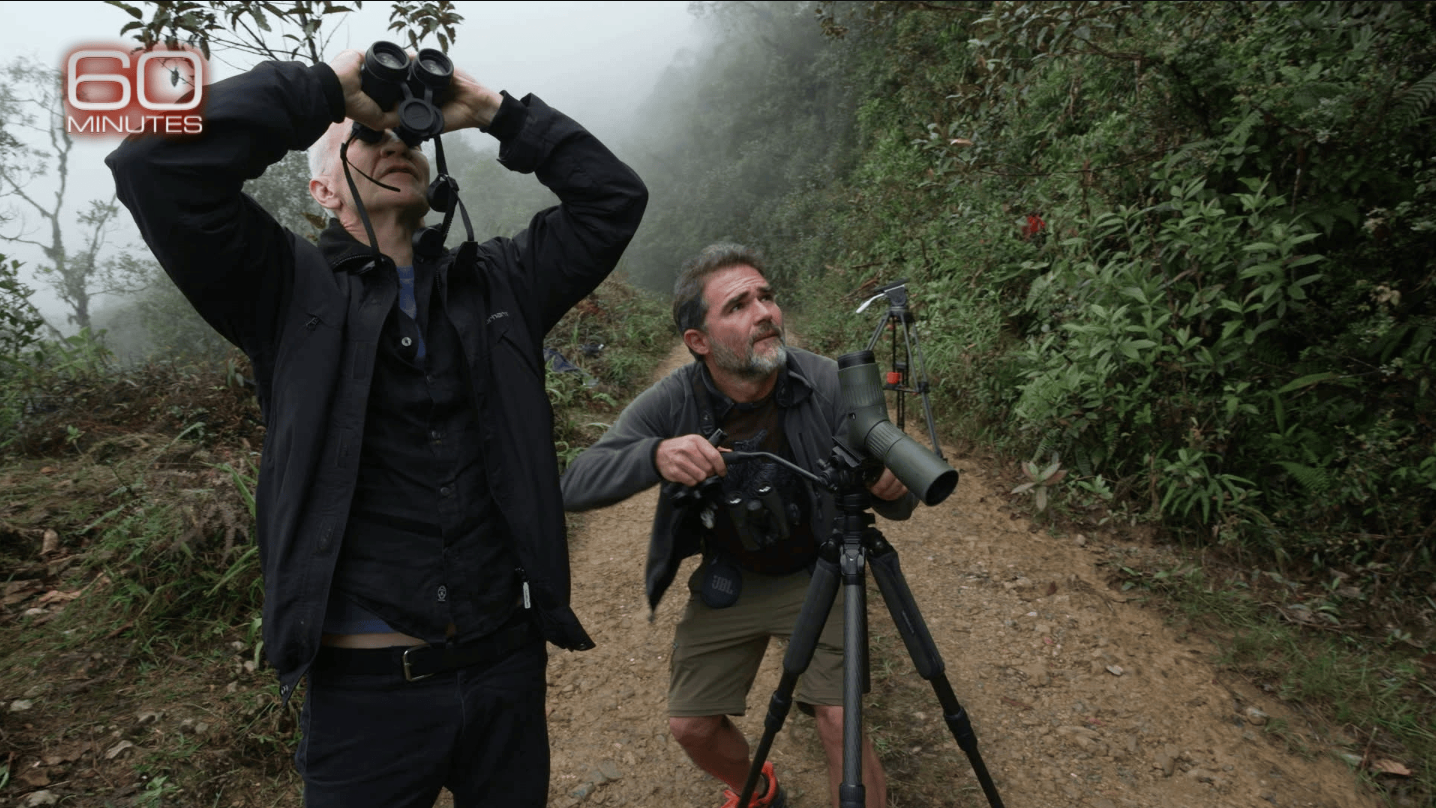
The second segment of 60 Minutes shifts to the remote mountains of western Colombia, where Anderson Cooper explores a striking connection between decades of armed conflict and one of the richest ecosystems on Earth. Colombia is widely regarded as one of the most biodiverse countries in the world, home to tens of thousands of species and an extraordinary concentration of birdlife, including nearly 20 percent of all bird species globally.
What makes this story unusual is how that biodiversity was preserved. For more than half a century, large parts of Colombia were inaccessible due to conflict involving guerrilla groups, paramilitaries, and government forces. These regions, often dense forests and mountainous terrain, became too dangerous for development, agriculture, or large-scale industry. As a result, vast areas of land remained largely untouched, allowing ecosystems to thrive in isolation.
- 60 Minutes Reports on “Disaster Tourists”, “Birds of War” & “Perfume Capital of the World” on May 3 2026
- Disaster Tourists: 60 Minutes Investigates Extremist Groups in Disaster Zones
- Perfume Capital of the World: 60 Minutes Looks at Grasse’s Return to Prominence
How War Preserved a Natural Sanctuary
The idea that conflict could inadvertently protect the environment may seem counterintuitive, yet it has been widely documented in Colombia. During the years of violence, rural populations were often displaced, and economic activity shifted away from contested regions. Forests expanded into abandoned farmland, and habitats remained intact, creating a refuge for wildlife.
This isolation helped preserve not just forests but entire ecosystems. Colombia today ranks among the most biodiverse nations on the planet, with more than 60,000 recorded species and some of the highest levels of endemism anywhere in the world. For birdlife in particular, the country stands at the top globally, with hundreds of species found nowhere else.
However, the relationship between conflict and conservation is complex. While some areas were protected by inaccessibility, other regions experienced environmental damage from illegal activities such as mining and deforestation tied to armed groups. The result is a patchwork landscape where preservation and destruction occurred side by side.
Opening the Door After Peace
The 2016 peace agreement between the Colombian government and the FARC marked a turning point. For the first time in decades, scientists, conservationists, and even tourists were able to enter previously off-limits مناطق. Expeditions quickly revealed new species and ecosystems that had remained hidden for years, highlighting just how much had been preserved during the conflict.
This newfound access has created both opportunity and risk. On one hand, it has allowed for conservation initiatives, scientific discovery, and sustainable tourism. On the other, it has exposed these fragile environments to new threats, including illegal logging, mining, and land development. Researchers have warned that without careful management, the same regions once protected by conflict could face rapid environmental degradation.
The segment reflects this tension, showing landscapes that are both breathtaking and vulnerable. The birds Cooper searches for represent more than just biodiversity. They symbolize a natural legacy shaped by history, one that now faces an uncertain future.
Birds as a Path to Healing
Beyond the environmental story, “Birds of War” also explores how nature is becoming part of Colombia’s broader recovery. In communities once defined by violence, birdwatching and ecotourism are emerging as new sources of income and identity. Regions that were once battlefields are now attracting visitors interested in wildlife, creating economic alternatives that can help stabilize local populations.
This shift is already visible in parts of the country, where conservation projects and tourism initiatives are helping communities rebuild. Birdwatching in particular has gained attention because of Colombia’s unmatched avian diversity. It offers a way to connect people to the land while promoting preservation rather than exploitation.
The segment suggests that these efforts may play a role in reconciliation. By focusing on shared natural resources, communities can move toward cooperation and long-term sustainability. In this sense, the birds themselves become part of a larger story about renewal.
A Fragile Balance Between Past and Future
“Birds of War” ultimately presents Colombia as a country at a crossroads. Its extraordinary biodiversity is both a gift and a responsibility, shaped in part by decades of conflict that kept much of it hidden from the outside world. Now that those barriers are gone, the challenge lies in protecting what remains while allowing communities to move forward.
The report highlights a broader global question as well. As regions emerge from conflict, how can they balance development with conservation? Colombia’s experience shows that nature can survive even under difficult circumstances, but preserving it in times of peace may require even greater effort.
Through its focus on rare birds and remote landscapes, the segment offers a deeper look at how history, environment, and human resilience are intertwined.
More 60 Minutes May 3 2026
- 60 Minutes Reports on “Disaster Tourists”, “Birds of War” & “Perfume Capital of the World” on May 3 2026
- Disaster Tourists: 60 Minutes Investigates Extremist Groups in Disaster Zones
- Birds of War: 60 Minutes Reports on Colombia’s Hidden Wildlife
- Perfume Capital of the World: 60 Minutes Looks at Grasse’s Return to Prominence
More Feature Articles
- “The Secret in the Water”: 20/20 Examines the Regina Hicks Cold Case May 1 2026
- “A Window of Time”: Dateline Reports on Tara Baker Homicide May 1 2026
- “The Love Bombing of Gloria Choi”: 48 Hours Reports May 2 2026
- 60 Minutes Reports on “Disaster Tourists”, “Birds of War” & “Perfume Capital of the World” on May 3 2026