Ghost Train: 60 Minutes Investigates Why America Can’t Build High-Speed Rail on August 23 2026
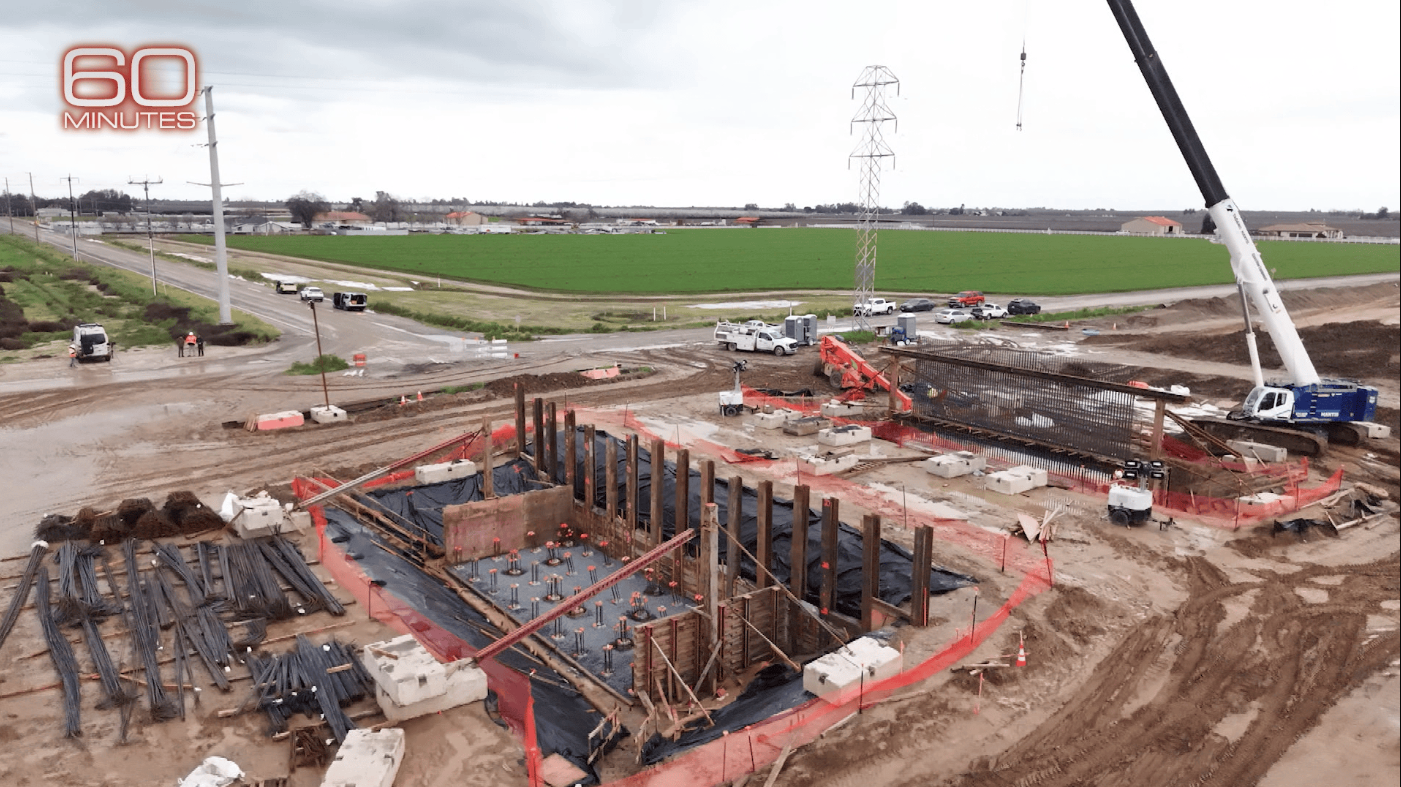
60 Minutes takes a closer look at America’s decades-long struggle to build true high-speed rail in “Ghost Train,” airing again Sunday, August 23, 2026, as correspondent Jon Wertheim examines California’s troubled bullet-train project and the private-sector effort to connect Southern California with Las Vegas.
The report originally aired in April and returns as an updated postseason presentation at a particularly difficult moment for California High-Speed Rail. A state watchdog warned in July that the project could exhaust its currently available funding as early as December 2027 without new financing.
The problems explored in “Ghost Train” reach beyond California. High-speed trains capable of around 200 mph have become established transportation infrastructure in countries including Japan, France, China, Spain and Morocco. The United States, despite its history of building enormous railroads and highways, still does not have an equivalent intercity high-speed system.
For Wertheim, that makes the story about more than trains. It raises a larger question about whether modern America can still complete ambitious infrastructure projects on the scale it once did.
- 60 Minutes Reports on “Ghost Train”, “One Mother’s Story” & Wild Concerto” on August 23 2026
- One Mother’s Story: 60 Minutes Reports on Rachel Goldberg-Polin and Her Son Hersh on August 23 2026
- Wild Concerto: 60 Minutes Reports on Stewart Copeland’s Extraordinary Orchestra of Nature on August 23 2026
California’s Bullet Train Began With a Much Bigger Promise
California voters approved Proposition 1A in 2008, authorizing bonds for a high-speed rail system intended to link the state’s major population centers. At the heart of the proposal was a fast connection between Los Angeles and San Francisco, creating a rail alternative to one of the country’s busiest intercity travel corridors.
The vision was ambitious. When voters approved the project, the Los Angeles-to-San Francisco system carried an estimated price of about $33 billion, with service originally targeted for 2020. The trains would eventually travel at speeds exceeding 200 mph, allowing passengers to make the trip between the two metropolitan regions in less than three hours.
Nearly two decades later, California has spent billions and constructed substantial infrastructure, but no high-speed passenger train is operating. Instead of opening a completed Los Angeles-San Francisco railway, the state is concentrating on getting an initial operating segment running through the Central Valley.
The contrast between the original vision and today’s project is central to “Ghost Train.” California has not abandoned the goal of connecting its largest cities, but the path to reaching them has become longer, more expensive and increasingly dependent on finding new sources of money.
Why California Started Building in the Central Valley
One of the most common criticisms of California High-Speed Rail concerns where construction began. Instead of starting in Los Angeles or San Francisco, crews began building through the agricultural Central Valley.
There were practical reasons for the decision. Building in the Central Valley provided comparatively long stretches where a high-speed railway could be constructed and tested, while federal funding agreements also influenced how and where initial money had to be spent. Eventually, that section could form the high-speed backbone connecting Northern and Southern California.
But beginning there created a political vulnerability. A partially completed railway through communities such as Fresno and the surrounding Central Valley does not by itself provide the Los Angeles-San Francisco service voters were promised.
The current strategy is focused on establishing an initial passenger service between Merced and Bakersfield. CBS reported when “Ghost Train” first aired that the Authority was preparing for its first track installation toward a Merced-Bakersfield connection, with service then targeted for 2033.
Even that timetable has become less certain. The California High-Speed Rail Office of Inspector General’s July 2026 review said a risk analysis now places the schedule window as late as September 2034, rather than the previously discussed 2032-2033 period.
The Cost Has Become One of the Project’s Defining Problems
California’s experience demonstrates how dramatically the economics of a megaproject can change between the political promise and actual construction.
The roughly $33 billion estimate associated with the original 2008 plan bears little resemblance to the sums now associated with completing a high-speed connection between Los Angeles and San Francisco. Years of inflation, engineering changes, property acquisition, environmental work, construction delays and changing project assumptions have contributed to escalating estimates.
Some of those risks were visible surprisingly early. The U.S. Government Accountability Office warned more than a decade ago that California faced significant uncertainties involving future funding, right-of-way acquisition, environmental reviews and ridership projections. The GAO also raised questions about the methods used to estimate some project costs.
Those concerns did not mean that building high-speed rail was impossible. They did show that the state was attempting one of America’s most complicated infrastructure projects without having all of the money required to finish it secured in advance.
That funding model has remained one of the project’s central weaknesses.
California Now Faces Another Major Funding Crisis
The situation has become more serious since “Ghost Train” originally aired.
In its July 2026 assessment of the California High-Speed Rail Authority’s latest business plan, the independent Office of Inspector General warned that the Authority could exhaust its current funding resources as early as December 2027 unless it secures financing. CBS reported that the watchdog identified a roughly $9.5 billion funding gap over five years.
The watchdog also raised concerns about how changes to the Merced-Bakersfield project were presented. Its review said an apparent reduction of approximately $1 billion in the segment’s estimated cost was driven substantially by changes in scope rather than simply by greater efficiency. Among the changes cited were moving the planned Merced station farther south and assuming a temporary Bakersfield station north of the city.
The Inspector General argued that these changes made it harder for policymakers and the public to compare the current proposal with earlier versions. The Authority has disputed aspects of the watchdog’s assessment and said some disagreements concern interpretation rather than missing information.
That dispute illustrates another difficulty surrounding California High-Speed Rail: there is no single number or completion date that fully describes the project. Different estimates can depend on which sections are being discussed, what infrastructure is included and what assumptions are made about future construction.
Federal Politics Have Made the Project Even More Complicated
High-speed rail has also become entangled in the larger political battle between California and Washington.
The Trump administration has been sharply critical of California High-Speed Rail. Transportation Secretary Sean Duffy told 60 Minutes ahead of the original “Ghost Train” broadcast that the administration supported high-speed rail in principle while opposing California’s approach.
The administration subsequently withdrew billions in federal support for the California project, adding another layer of uncertainty to a railway already searching for sufficient financing to complete its initial operating section.
Supporters and opponents consequently tell very different stories about the project. Critics see an example of government failing to control costs and schedules after making promises it could not deliver. Supporters argue that abandoning the railway after billions have already been invested would waste completed infrastructure and prevent California from developing a transportation system that other advanced economies have demonstrated can work.
Both sides are now confronting the same practical issue: California has built a significant amount of infrastructure, but it still needs enough money to turn those structures into an operating railway.
California Has Built More Than the ‘Train to Nowhere’ Label Suggests
The political debate can sometimes obscure the amount of physical work that has actually occurred.
Construction in the Central Valley includes viaducts, bridges, grade separations and other major structures designed for the future high-speed line. The project is therefore not simply a proposal that exists on paper.
At the same time, critics have a straightforward response: infrastructure has value only when it eventually forms part of a functioning transportation system. A collection of completed bridges and guideways cannot deliver the promised benefits until tracks, electrical systems, signaling, stations and trains are in place and passengers can actually travel between useful destinations.
That distinction helps explain the unusual position California finds itself in. The project is simultaneously very real and very incomplete.
The state has moved far beyond the planning stage, making abandonment increasingly consequential. But it remains far from delivering the statewide network voters were originally asked to support.
Why Is High-Speed Rail So Much Easier to Build Elsewhere?
“Ghost Train” contrasts America’s experience with countries where high-speed rail is an ordinary part of transportation.
Japan opened the original Tokaido Shinkansen between Tokyo and Osaka in 1964. France’s TGV followed, while Spain subsequently built one of the world’s largest high-speed networks. China has constructed a vast system in a much shorter period. Morocco, highlighted in the original 60 Minutes report, operates trains capable of roughly 200 mph.
There is no single explanation for the American difference.
Population geography matters. So does America’s longstanding dependence on cars and domestic aviation. Existing cities and transportation corridors can make acquiring land extraordinarily expensive. Environmental reviews, litigation, local opposition and fragmented government authority can slow projects further.
Construction costs are another problem. Large American transportation projects frequently cost considerably more than comparable infrastructure elsewhere, while the political process can make it difficult to guarantee funding over the decades required to plan and construct them.
High-speed rail therefore exposes weaknesses that extend well beyond trains.
America’s Railroads Were Once Among Its Greatest Engineering Achievements
There is an irony behind the story. The United States was once the country that demonstrated to the world what an enormous railway network could accomplish.
The completion of the first transcontinental railroad in 1869 transformed the country. Railways helped create cities, opened markets and connected the continent. Later generations undertook equally enormous projects involving interstate highways, dams, bridges, airports and urban transit.
Modern America does not lack engineering expertise or wealth. The harder question is whether its political, regulatory and financial systems remain capable of coordinating projects that take decades and require sustained commitment across multiple administrations.
That is why California High-Speed Rail has acquired significance far beyond California.
Its success would demonstrate that an American state can still construct a transportation system comparable with those operating overseas. Its failure would reinforce the argument that the country’s institutions have become poorly suited to building infrastructure on that scale.
Brightline West Offers a Very Different Experiment
The second major project examined by “Ghost Train” approaches the problem from another direction.
Brightline West is developing a high-speed railway between Las Vegas and Southern California, largely following the Interstate 15 corridor. Rather than attempting to connect two enormous metropolitan regions through hundreds of miles of complicated terrain and communities, it is targeting a specific travel market where millions of people already drive between Southern California and Las Vegas.
Its alignment also gives Brightline an important advantage. Much of the railway is designed to run within the I-15 transportation corridor, reducing some of the land-acquisition difficulties that have complicated California’s statewide project.
The planned system runs approximately 218 miles, connecting Las Vegas with Rancho Cucamonga in Southern California, where passengers would be able to connect with existing regional transportation. The trains are being designed for speeds approaching 200 mph.
Brightline West broke ground in 2024 and has continued advancing design and construction work. A July 2026 report to the Nevada High-Speed Rail Authority said agreements had been executed covering additional construction scopes including railroad systems, trackwork, grading and stations. It also said manufacturing work on Siemens trainsets was progressing.
Brightline West Is Private, But It Is Not Simply a Privately Funded Railroad
The comparison between Brightline and California is more complicated than government versus private enterprise.
Brightline West is privately led, but public support remains a significant part of the project. Its financing includes a $3 billion federal grant, alongside private activity bonds and private investment.
That makes Brightline West closer to a public-private infrastructure model than a railway financed solely by private capital.
It nevertheless represents an important test. A private operator can choose a commercially attractive corridor, simplify the route and structure the project around capturing passenger revenue rather than attempting to satisfy the broader political objectives attached to a statewide public transportation network.
If Brightline West succeeds, supporters may point to it as evidence that high-speed rail can work in America when projects are tightly focused around routes where trains have a strong competitive advantage over driving and flying.
Brightline West Has Challenges of Its Own
Private management has not eliminated the financial realities of constructing a new railroad.
As of mid-2026, Brightline West was continuing to assemble agreements and financing while construction and design advanced. Its July status report said project development was being supported by private activity bonds and the federal grant, with additional agreements still being negotiated.
The project therefore provides a useful counterpoint to California, but not yet proof of a successful alternative. Until trains begin carrying paying passengers, Brightline West remains another enormous American infrastructure project whose ultimate cost, timetable and commercial performance cannot be known with certainty.
That is an important part of the argument made by “Ghost Train.” Private enterprise may avoid some problems encountered by California’s public project, but it cannot make the fundamental difficulties of building a 200 mph railway disappear.
Both projects still need engineering, permits, financing, electrical infrastructure, rolling stock and thousands of workers before passengers can board.
The Northeast Corridor Shows Another Side of America’s Rail Problem
The United States is not entirely without fast passenger trains.
Amtrak’s Northeast Corridor connects Boston, New York, Philadelphia, Baltimore and Washington, providing one of the few American corridors where rail already competes effectively with air travel.
But it also illustrates why upgrading existing American railways can be difficult. Much of the corridor was designed long before modern high-speed trains existed. Curves, tunnels, bridges and shared infrastructure constrain how quickly trains can travel.
Building a Japanese- or French-style railway therefore often requires more than purchasing faster trains. The infrastructure itself has to be designed for sustained high-speed operation.
California and Brightline West are significant precisely because they are attempts to construct that kind of purpose-built infrastructure rather than simply operating faster trains over conventional American tracks.
The Real Question in ‘Ghost Train’ Is Bigger Than Trains
The title “Ghost Train” refers to something America has discussed for decades but has repeatedly struggled to make real.
High-speed rail proposals have appeared across the country. Yet the United States remains unusual among large, wealthy economies in having no extensive network comparable with those found in parts of Europe and Asia.
California was supposed to change that. Instead, its experience has become a case study in the difficulty of completing American megaprojects.
Brightline West now offers another test, this time using a narrower route and a private-sector-led model.
That is what gives Wertheim’s report significance beyond transportation policy. The question is not simply whether Americans would ride a 200 mph train. It is whether the United States can create the financial, political and institutional conditions necessary to build one.
The answer remains unsettled. California has already constructed billions of dollars of infrastructure but faces another funding deadline. Brightline West is advancing construction but still has significant work and financing ahead. Other countries have moved beyond the debate and made high-speed trains part of everyday transportation.
For America, the train remains unfinished.
“Ghost Train” airs as part of an encore edition of 60 Minutes on Sunday, August 23, 2026, at 7:00 p.m. ET/PT on CBS and Paramount+. The segment is reported by Jon Wertheim and produced by David M. Levine.
More 60 Minutes on August 23 2026
- 60 Minutes Reports on “Ghost Train”, “One Mother’s Story” & Wild Concerto” on August 23 2026
- Ghost Train: 60 Minutes Investigates Why America Can’t Build High-Speed Rail on August 23 2026
- One Mother’s Story: 60 Minutes Reports on Rachel Goldberg-Polin and Her Son Hersh on August 23 2026
- Wild Concerto: 60 Minutes Reports on Stewart Copeland’s Extraordinary Orchestra of Nature on August 23 2026
Feature Articles
- “Baby Holly Found”: 20/20 Reports on Holly Marie Clouse August 21 2026
- “Simply Diabolical”: Dateline NBC Reports on How Michelle Hadley Was Framed in a Cyberstalking Plot August 21 2026
- “The Butterfly”: Dateline NBC Revisits the Homicide of Katelyn Markham August 22 2026
- “The Hit-and-Run Homicide of Davis McClendon”: 48 Hours Reports on August 22 2026
- 60 Minutes Reports on “Ghost Train”, “One Mother’s Story” & Wild Concerto” on August 23 2026