Wild Concerto: 60 Minutes Reports on Stewart Copeland’s Extraordinary Orchestra of Nature on August 23 2026
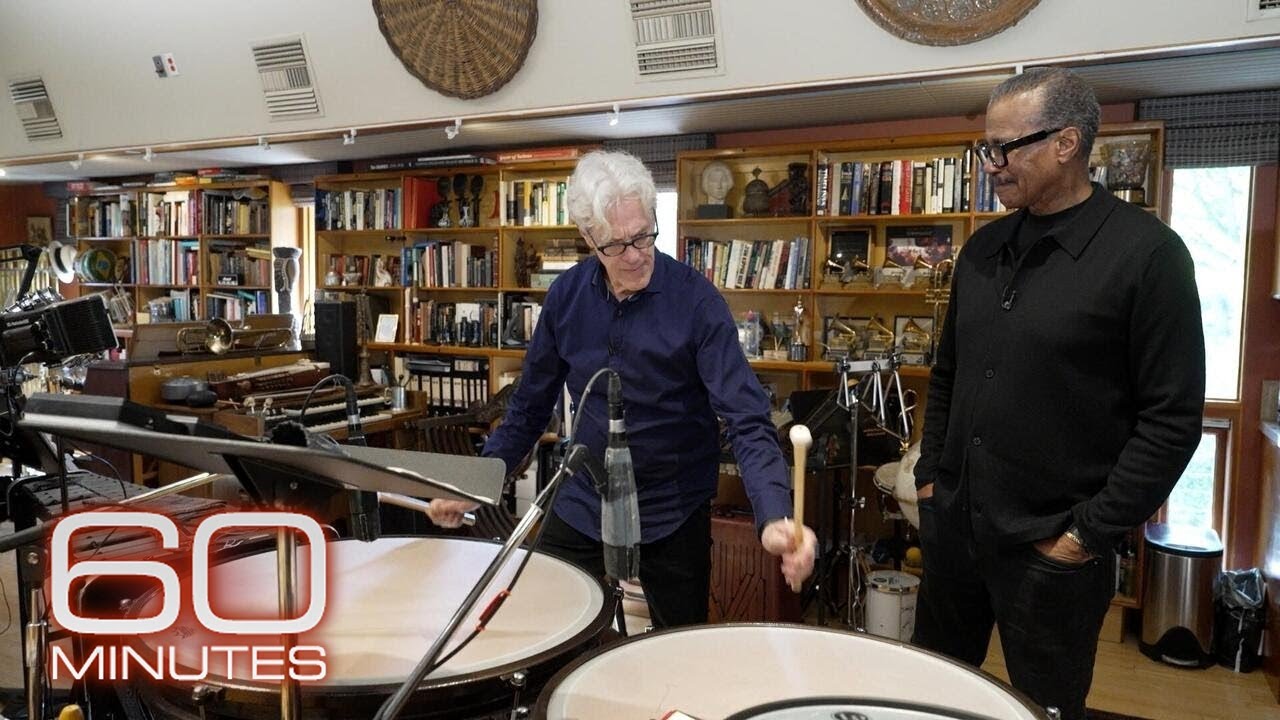
60 Minutes heads inside London’s Abbey Road Studios on Sunday, August 23, 2026, for “Wild Concerto,” a report on an unusual collaboration between legendary Police drummer Stewart Copeland and acclaimed wildlife sound recordist Martyn Stewart that turns the voices of animals and the natural world into music.
Correspondent Bill Whitaker joins Copeland and Stewart as they work on Wild Concerto, a project built around Stewart’s vast archive of recordings collected during decades spent documenting wildlife and natural environments around the world.
The idea is deceptively simple: rather than treating bird calls, frogs, insects and other wildlife recordings as background effects, Copeland uses them as musical performances in their own right. At Abbey Road, those voices become part of an orchestra in which some of the featured musicians are not human.
The 60 Minutes report returns as an updated postseason encore on August 23. Behind the music is a larger story about two men who spent their lives listening in very different ways, and an irreplaceable archive preserving sounds that are disappearing from parts of the planet.
- 60 Minutes Reports on “Ghost Train”, “One Mother’s Story” & Wild Concerto” on August 23 2026
- Ghost Train: 60 Minutes Investigates Why America Can’t Build High-Speed Rail on August 23 2026
- One Mother’s Story: 60 Minutes Reports on Rachel Goldberg-Polin and Her Son Hersh on August 23 2026
Stewart Copeland Found Fame Behind the Drums With The Police
For most listeners, Stewart Copeland needs little introduction. As the drummer and a founder of The Police, he supplied the distinctive rhythmic foundation behind one of the most successful bands to emerge from Britain’s late-1970s music scene.
Copeland formed The Police with Sting and guitarist Henry Padovani in 1977, with Andy Summers soon replacing Padovani as the group’s guitarist. The band’s fusion of rock, punk, reggae and other influences gave it a sound that stood apart from many of its contemporaries.
The Police went on to produce songs including “Roxanne,” “Message in a Bottle,” “Walking on the Moon,” “Don’t Stand So Close to Me,” “Every Little Thing She Does Is Magic” and “Every Breath You Take.”
By the early 1980s, the group had become one of the biggest bands in the world. Its final studio album, Synchronicity, arrived in 1983 and became an enormous commercial success before the musicians went their separate ways.
For Copeland, however, leaving The Police did not mean leaving composition behind.
Copeland’s Career Has Always Extended Beyond Rock Music
The scale of Copeland’s post-Police career helps explain why Wild Concerto is not as unexpected a project as it might initially appear.
He moved extensively into film, television, opera, ballet and orchestral composition, creating scores for projects far removed from the three-piece rock format that made him famous.
His screen work has included the score for Francis Ford Coppola’s 1983 film Rumble Fish, while his composing career has taken him through classical music and works written for ensembles and orchestras.
That background matters to “Wild Concerto.”
Copeland is not simply placing animal noises over a drum track. He approaches Stewart’s recordings as raw musical material, listening for rhythm, pitch, texture and patterns that can interact with human instruments.
The result is an attempt to blur a boundary that humans usually impose: the distinction between music and sound.
Martyn Stewart Spent Decades Recording a Different Kind of Performer
If Copeland’s career was built around creating sound, Martyn Stewart’s was built around finding and preserving it.
The British-born naturalist and sound recordist has spent decades travelling to remote environments with recording equipment, often waiting for the right combination of wildlife, weather and silence.
His subjects do not take direction.
A wildlife recordist cannot ask a bird to repeat a call, tell an elephant to move closer to a microphone or stop an aircraft from passing overhead during an otherwise perfect recording.
That makes Stewart’s work a combination of natural history, fieldcraft, patience and audio engineering.
Over his career, he accumulated what 60 Minutes describes as an unparalleled archive of the world’s wild inhabitants. The collection contains recordings made across an extraordinary range of habitats and captures animals that most listeners will never encounter in the wild.
Some of those recordings have also acquired another importance with time.
They preserve places as they once sounded.
A Wildlife Recording Can Become a Historical Document
A photograph can preserve the appearance of an ecosystem. A recording preserves something less visible but equally distinctive: its acoustic identity.
A healthy natural environment can contain layers of sound. Birds occupy different frequencies, insects create continuous rhythms, frogs call from wetlands, mammals communicate across distances and weather contributes another layer.
Scientists sometimes refer to the combined sound of an environment as a soundscape.
When an ecosystem changes, its soundscape can change with it.
A species may become rare. Forest can disappear. Roads can arrive. Aircraft begin passing overhead. Machinery, traffic and development can overwhelm sounds that were once dominant.
A recording made decades earlier can consequently become more than an attractive piece of audio. It can preserve evidence of an ecosystem that no longer sounds the same.
That gives Stewart’s archive a value extending beyond the project featured on 60 Minutes.
Some of Stewart’s Subjects Are Disappearing
The conservation dimension of Stewart’s work becomes difficult to separate from the recordings themselves.
Wildlife populations have undergone major changes across the world because of habitat loss, climate change, pollution, invasive species, hunting and other human pressures. Some animals Stewart encountered earlier in his career have become harder to find.
That means a field recording can acquire a significance its creator never intended when it was made.
The call of a once-common animal can become rare. A chorus recorded in an intact habitat can document biodiversity that has since diminished.
For Stewart, preserving natural sound therefore means preserving part of the record of the planet itself.
Wild Concerto takes that archival material and gives it another purpose: instead of storing those sounds solely as documentation, Copeland brings them into a musical composition where audiences are encouraged to actively listen to them.
The Two Stewarts Met Through Their Shared Fascination With Sound
On paper, Stewart Copeland and Martyn Stewart appear to come from different worlds.
One spent years performing in arenas before enormous crowds. The other often tried to get as far away from crowds as possible.
One created noise for a living.
The other frequently needed humans to stop making noise so he could do his work.
What connects them is listening.
Copeland hears rhythm and musical possibilities in sounds that many people would classify simply as wildlife. Stewart understands the individual voices within natural environments and has spent much of his career isolating and preserving them.
That shared fascination became the foundation of Wild Concerto.
Rather than asking an orchestra to imitate nature, the project allows nature itself to occupy part of the score.
Wild Concerto Treats Animals as Musicians
The central concept behind Wild Concerto changes how the audience is asked to interpret wildlife recordings.
Animal sounds have appeared in popular music for decades, but they are often used as atmosphere. A bird call can establish a tropical setting. Waves can create tranquility. A wolf howl can make a recording feel remote or ominous.
Copeland and Stewart are attempting something different.
In Wild Concerto, the recordings become structural parts of the music.
An animal’s call can function almost like a musical phrase. Repetition can become rhythm. The pitch of a voice can interact with an instrument. A collection of calls can resemble an ensemble.
The important distinction is that the animals were not recorded for the music.
They made those sounds independently, sometimes decades before Copeland heard them. The compositional challenge is to build music around performances that already exist.
Nature Already Contains Rhythm
For a drummer, there is an obvious attraction to the natural world.
Rhythm is everywhere.
Birds repeat calls in recognizable patterns. Frogs can create dense pulses of sound. Insects produce extraordinarily consistent rhythms. Primates, marine mammals and countless other species communicate through sequences that can sound musical to human ears.
Scientists do not necessarily define those sounds as “music” in the human sense. Animals vocalize for many reasons, including attracting mates, warning rivals, maintaining social relationships and defending territory.
But human listeners inevitably hear patterns.
Copeland’s work exploits that overlap.
His role is not to claim that an animal intended to participate in a composition. It is to recognize that a naturally occurring sound can possess qualities that work inside one.
Abbey Road Gives Nature the Star Treatment
60 Minutes follows Copeland and Stewart to one of the most famous recording facilities in the world: Abbey Road Studios in London.
The location carries enormous cultural weight.
Originally opened as EMI Recording Studios in 1931, Abbey Road became inseparable from the history of recorded music through its association with artists including The Beatles, who recorded much of their catalogue there and named their final recorded album Abbey Road.
The Beatles’ 1969 album cover transformed the pedestrian crossing outside the building into a tourist landmark.
The studios have also been used for orchestral recordings and film scores, making Abbey Road particularly suited to a project that exists somewhere between recorded wildlife, contemporary composition and orchestral music.
For Wild Concerto, however, some of the featured performers never entered the building.
Their performances were captured in forests, wetlands and other environments around the planet before being brought into one of music’s most celebrated studios.
The Studio Changes How the Recordings Are Heard
Taking field recordings into Abbey Road creates an unusual reversal.
Wildlife sound recordists normally attempt to remove evidence of human activity from their recordings. A passing aircraft, car engine or distant machinery can ruin hours of work.
Inside a studio, every sound is controlled.
The environment is designed to capture music with precision. Microphones are positioned carefully. Musicians can repeat performances. Engineers can balance individual instruments.
Stewart’s recordings arrive from the opposite environment.
They contain performances that cannot simply be recreated.
An animal may have called once. A particular combination of species may never have occurred again. A habitat may since have changed.
At Abbey Road, those unpredictable moments from the wild become fixed elements around which musicians can perform.
The studio does not manufacture nature’s contribution. It gives musicians a way to respond to it.
Martyn Stewart’s Recordings Required Extraordinary Patience
Modern technology makes recording sound easy. Capturing exceptional wildlife sound is something else entirely.
Field recordists have to think about microphone placement, wind, moisture, temperature, distance and unwanted human noise. They may carry equipment into difficult terrain and wait for hours without obtaining the recording they hoped to capture.
The best result may arrive unexpectedly.
That uncertainty is central to the value of Stewart’s archive. Unlike a studio musician, an animal cannot be booked for another session.
The recorder has to be present when the moment occurs.
In some cases, that can mean positioning microphones and allowing the equipment to capture an environment without a human standing nearby.
The objective is not merely to hear an animal.
It is to capture the detail and character of its voice within the place where it lives.
Noise Pollution Is Changing the World’s Soundscape
The difficulty of Stewart’s profession has increased for another reason: truly quiet places are becoming harder to find.
Human-generated noise now reaches deep into environments that might appear visually untouched.
Aircraft routes cross wilderness. Ships introduce low-frequency noise into oceans. Roads carry traffic near forests and national parks. Construction, mining and industrial activity can transform the acoustic environment across considerable distances.
Noise pollution matters not only to people trying to make pristine recordings.
Many animals depend on sound to survive.
They use it to find mates, communicate with offspring, detect predators and establish territory. When human noise occupies the same frequencies, those signals can become more difficult to hear.
That makes the disappearing sounds documented by Stewart part of a broader environmental story.
Silence from humans can itself be an increasingly scarce natural resource.
The Project Also Challenges What People Consider Music
“Wild Concerto” raises a philosophical question beneath its conservation message.
What makes something music?
Humans have traditionally separated organized musical composition from environmental noise. But that distinction becomes less obvious when listening closely to complex animal communication.
Birdsong provides the most familiar example. Some birds produce highly structured sequences involving repetition, variation and learned vocal patterns. Whale songs can develop into extended sequences. Other animals produce rhythmic or tonal sounds that humans immediately interpret as musical.
That does not mean they are composing according to human concepts.
It does demonstrate that humans did not invent rhythm, pitch or repetition.
Those properties existed in nature long before the first human instrument.
Copeland’s compositions play with that idea by allowing an orchestra to respond to patterns that evolved outside human musical culture.
The Collaboration Is Also About Getting People to Listen
Conservation campaigns often rely on images.
Photographs of endangered animals, disappearing forests and damaged habitats can communicate environmental loss immediately.
Sound is different.
A listener has to give it time.
That is part of what makes Stewart’s archive useful as a musical source. Putting wildlife recordings into compositions encourages people to spend time listening to sounds they might otherwise encounter only briefly in a documentary.
Copeland can attract an audience through music.
Stewart can introduce that audience to voices from ecosystems around the world.
The partnership therefore creates a bridge between entertainment and natural history without turning Wild Concerto into a conventional environmental lecture.
The animals make the argument themselves simply by being heard.
Stewart Copeland Is an Ideal Musician for the Experiment
Copeland’s involvement also gives the project a particular rhythmic character.
His drumming with The Police was famous for avoiding straightforward rock patterns. Reggae, punk and other influences shaped a style built around unusual accents, hi-hat work and rhythmic space.
That instinct makes him particularly suited to interacting with sounds that do not follow conventional Western musical structures.
A bird does not know where Copeland’s bar begins.
A frog does not adjust its call to match a metronome.
The musician has to find a way into the existing pattern.
That reversal is one of the most interesting aspects of Wild Concerto. Instead of expecting nature to conform to human music, the human composer has to listen first.
Martyn Stewart’s Archive Gives Lost Sounds Another Life
The recordings also raise questions about what happens to a lifetime of fieldwork.
An archive can contain thousands of hours of material that few people ever hear. Some recordings may have appeared in documentaries or broadcasts, while others remain largely unknown outside specialist circles.
Wild Concerto gives selected recordings another existence.
A call captured years earlier in a remote location can suddenly be heard by an audience inside a concert hall or through an album.
For an animal that may no longer exist in the same numbers, the effect can be particularly powerful.
The recording freezes one moment in its life.
Copeland then places that moment into another timeline entirely.
A performance that lasted only seconds in the wild can continue being heard decades later.
Wild Concerto Connects Music With Conservation Without Turning Nature Into Background Noise
There is an inherent risk whenever wildlife is incorporated into entertainment.
Nature can become decoration.
A dramatic animal call can be used simply because it sounds exotic, while the animal and ecosystem behind it disappear from consideration.
The collaboration between Copeland and Stewart attempts to reverse that relationship.
The wildlife recordings are the reason for the project rather than an accessory to it.
Stewart knows the stories behind the sounds. Copeland listens for ways to construct music that gives those recordings space.
The approach asks audiences to pay attention not only to the composition but to who, or what, they are hearing.
In that sense, the title Wild Concerto is literal.
Nature is not the setting for the orchestra.
Nature is part of the orchestra.
‘Wild Concerto’ Ends 60 Minutes on a Very Different Note
After reports examining American infrastructure and the personal consequences of the October 7 hostage crisis, “Wild Concerto” gives the August 23 edition of 60 Minutes a striking change in tone.
Yet the segment still deals with preservation.
Martyn Stewart has spent decades preserving sounds that otherwise disappear as soon as they are made. His recordings document individual animals, entire habitats and moments in environmental history.
Stewart Copeland takes that archive and asks what happens when those sounds are treated with the same creative attention musicians give one another.
Abbey Road provides an appropriate setting for the experiment. A studio associated with some of the most celebrated human recordings of the past century becomes the place where voices captured far from London receive their own session.
The result is both a musical collaboration and an invitation.
Humans spend much of their lives surrounded by sound. “Wild Concerto” asks what they might discover if they stop making noise long enough to listen.
“Wild Concerto” airs as part of an encore presentation of 60 Minutes on Sunday, August 23, 2026, at 7:00 p.m. ET/PT on CBS and Paramount+. Bill Whitaker reports the segment, which is produced by Heather Abbott.
More 60 Minutes on August 23 2026
- 60 Minutes Reports on “Ghost Train”, “One Mother’s Story” & Wild Concerto” on August 23 2026
- Ghost Train: 60 Minutes Investigates Why America Can’t Build High-Speed Rail on August 23 2026
- One Mother’s Story: 60 Minutes Reports on Rachel Goldberg-Polin and Her Son Hersh on August 23 2026
- Wild Concerto: 60 Minutes Reports on Stewart Copeland’s Extraordinary Orchestra of Nature on August 23 2026
Feature Articles
- “Baby Holly Found”: 20/20 Reports on Holly Marie Clouse August 21 2026
- “Simply Diabolical”: Dateline NBC Reports on How Michelle Hadley Was Framed in a Cyberstalking Plot August 21 2026
- “The Butterfly”: Dateline NBC Revisits the Homicide of Katelyn Markham August 22 2026
- “The Hit-and-Run Homicide of Davis McClendon”: 48 Hours Reports on August 22 2026
- 60 Minutes Reports on “Ghost Train”, “One Mother’s Story” & Wild Concerto” on August 23 2026