
One Mother’s Story: 60 Minutes Reports on Rachel Goldberg-Polin and Her Son Hersh on August 23 2026
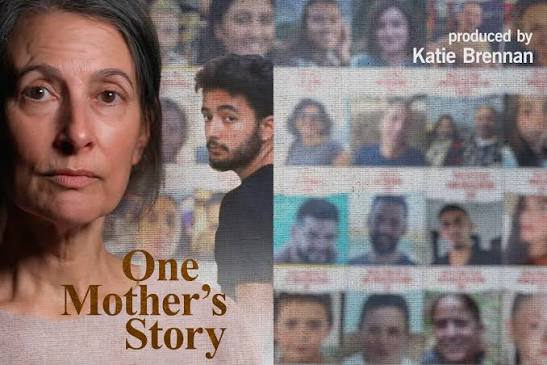
60 Minutes returns to the story of Hersh Goldberg-Polin on Sunday, August 23, 2026, as Anderson Cooper sits down with his mother, Rachel Goldberg-Polin, for an intimate examination of the 23-year-old’s abduction by Hamas, his 328 days in captivity and the grief his family has faced since he was killed in Gaza.
The segment, “One Mother’s Story,” originally aired on April 19 and returns as an updated postseason presentation. Rather than attempting to recount the entire Israel-Gaza war, the report concentrates on one family whose private ordeal became internationally known after the Hamas-led October 7, 2023 attack on Israel.
Cooper also interviews Or Levy, a former hostage who spent time imprisoned alongside Hersh. Levy survived captivity and returned home carrying memories of Hersh that would eventually provide Rachel and her husband, Jon Polin, with details about their son’s final year that they had desperately wanted to know.
- 60 Minutes Reports on “Ghost Train”, “One Mother’s Story” & Wild Concerto” on August 23 2026
- Ghost Train: 60 Minutes Investigates Why America Can’t Build High-Speed Rail on August 23 2026
- Wild Concerto: 60 Minutes Reports on Stewart Copeland’s Extraordinary Orchestra of Nature on August 23 2026
Who Was Hersh Goldberg-Polin?
Hersh Goldberg-Polin was a 23-year-old American-Israeli living in Jerusalem when his life became inseparable from one of the defining events in modern Israeli history.
His parents, Rachel Goldberg-Polin and Jon Polin, had moved their family to Jerusalem years earlier. Hersh was their only son and had two sisters. Rachel describes him in the 60 Minutes interview not principally as a symbol of the hostage crisis but as the son she knew before October 7 changed everything.
Hersh loved music and travel and was attending the Nova music festival near the Gaza border with his close friend Aner Shapira when Hamas and other Palestinian armed groups launched their attack on southern Israel on October 7, 2023.
The festival became one of the deadliest locations during the attack. CBS reported that 378 people were killed at Nova and hundreds more were wounded. Hersh and Shapira were among those who fled the festival grounds as the assault unfolded.
What happened next would eventually become known around the world.
Hersh and His Friends Took Shelter From the Attack
Hersh and others sought refuge inside a roadside bomb shelter near Re’im.
The shelter offered little protection once militants reached it. Grenades were thrown inside while those sheltering there attempted to survive the attack. Aner Shapira reportedly threw grenades back out of the shelter before he was killed.
Hersh was severely injured during the assault. Part of his left arm was blown off, but he survived.
Video subsequently recovered from the scene showed an injured Hersh being forced into the back of a pickup truck. Despite the severity of his wound, he was visibly alive and moving on his own as he was taken away.
For his family, that footage would have an extraordinary significance. It documented something horrific, but it also answered one crucial question: Hersh had survived the initial attack and had been taken into Gaza alive.
Anderson Cooper Had Already Seen the Video of Hersh’s Abduction
“One Mother’s Story” contains an unusual connection between its correspondent and the family he is interviewing.
Anderson Cooper had been reporting from the Nova festival site shortly after the attack. Israeli soldiers showed him disturbing footage recovered from a militant’s cellphone depicting an injured young man being abducted.
At the time, Cooper did not know who the young man was.
Then, during a CNN interview with Rachel and Jon on October 16, Jon described what witnesses had told the family about Hersh, including the catastrophic injury to his left arm. Cooper realized that the wounded hostage in the video he had seen was Hersh Goldberg-Polin.
Cooper contacted the family after the interview.
It was a painful discovery, but Rachel later told Cooper that the footage also gave the family something they desperately needed. It confirmed that their son had not died at the shelter.
He had been kidnapped alive.
That knowledge became the foundation of the family’s campaign to bring him home.
Rachel Goldberg-Polin Became One of the Faces of the Hostage Families
Rachel and Jon spent the following months trying to ensure that Hersh and the other hostages remained at the center of international attention.
Rachel became one of the most recognizable relatives of the hostages. She gave hundreds of interviews, met political and religious leaders and repeatedly called for an agreement that would secure the captives’ release.
She met Pope Francis and senior political leaders, while Hersh’s story received extensive coverage in the United States in part because he was an American citizen.
Rachel also developed a simple daily ritual.
Each day, she placed a piece of tape on her clothing and wrote on it the number of days that had passed since October 7.
The numbers steadily increased.
The tape became both a personal routine and a visible representation of time passing for the hostage families. Each new number meant another day that Hersh and the others had remained in Gaza.
Hersh’s Family Had Few Answers About What Was Happening to Him
For hostage families, one of the defining features of the crisis was uncertainty.
Rachel and Jon knew Hersh had entered Gaza with a life-threatening injury. What they did not know was where he was being held, whether his wound had received treatment or whether he had survived the months that followed.
The uncertainty created a particular form of suffering that Rachel discusses with Cooper in the segment. She knew her son could be injured, hungry, abused or terrified, yet there was little she could do beyond campaigning for his release.
For months, there was no definitive public proof that Hersh remained alive.
That changed in April 2024.
Hamas released a hostage video showing Hersh alive. The footage showed the extent of the injury he had suffered on October 7 but also provided his family with confirmation that he had survived months in captivity.
The video renewed hope that he could still come home.
The Campaign to Bring Hersh Home Reached the Highest Levels of Politics
Hersh’s dual American-Israeli citizenship helped make his case particularly prominent in the United States.
Rachel and Jon continued meeting officials and pressing governments to prioritize an agreement for the hostages. Their advocacy eventually brought them before audiences far beyond Israel.
In August 2024, the couple appeared at the Democratic National Convention in Chicago, where they appealed for the release of the hostages and an end to the suffering surrounding the conflict. The audience responded with chants calling for the hostages to be brought home.
Their advocacy was not framed solely around Hersh.
Rachel repeatedly spoke about the other hostage families and also acknowledged the enormous suffering of Palestinian civilians. That perspective remains part of her discussion with Cooper, in which her own loss is placed within the much wider number of parents who have lost children during the conflict.
Days after the convention appearance, however, the Goldberg-Polin family’s campaign ended in the way they had spent nearly 11 months trying to prevent.
Hersh Was Killed After 328 Days in Captivity
On August 31, 2024, Israeli forces discovered the bodies of six hostages in an underground tunnel in Rafah in southern Gaza.
One of them was Hersh.
The others were Carmel Gat, Eden Yerushalmi, Alexander Lobanov, Almog Sarusi and Ori Danino.
Israeli authorities said the six had been killed shortly before soldiers reached the tunnel. CBS reported that Hersh had been shot six times at close range.
He had spent 328 days as a hostage.
The discovery brought an end to the uncertainty that had dominated his family’s life since October 7. The possibility they had fought to preserve for almost a year, that Hersh might still walk through their door, disappeared.
Thousands of people subsequently lined streets as his body was returned, and large crowds attended his funeral in Jerusalem.
For Rachel, however, Hersh’s death did not simply mark the end of the suffering she had experienced during his captivity. It began another form of it.
Rachel Goldberg-Polin Tells Anderson Cooper What Changed After Hersh Died
This is where “One Mother’s Story” moves beyond the chronology of the hostage crisis.
Rachel tells Cooper that while Hersh was captive, the knowledge that he might be suffering was unbearable. Yet after learning that he had been killed, she came to see those months differently.
During those 328 days, Hersh had still been alive.
There had still been something to work toward and some possibility, however uncertain, that the family would see him again.
His death removed that possibility permanently.
The central question of Cooper’s interview is therefore not how Rachel survived the campaign to free her son. It is how she lives when the campaign is over and the person she was fighting for is gone.
She describes having to reconsider her understanding of grief. Rather than something that eventually disappears, she has begun thinking about grief as a continuation of love for someone who is no longer physically present.
Hersh’s Room Remains Much as He Left It
60 Minutes also enters a space that makes the loss intensely personal: Hersh’s bedroom.
Rachel has largely kept the room as her son left it.
Among the objects there is the collection of numbered pieces of tape that had accompanied the family’s campaign. After each day, the tape Rachel wore was kept, creating a physical record of the passing time.
For years after Hersh’s death, the family’s campaign for the remaining hostages continued. Rachel eventually removed the accumulated pieces of tape from the wall and gathered them together after the body of the final hostage was returned to Israel in January 2026.
When Cooper asks about them, Rachel describes them as symbols of failure.
It is one of the most difficult elements of the interview because Cooper challenges that conclusion. The Goldberg-Polins had done almost everything available to parents trying to save their child: speaking publicly, meeting presidents and diplomats, maintaining international attention and campaigning continuously.
Hersh still did not return alive.
For Rachel, extraordinary effort does not change that outcome.
A Released Hostage Finally Told the Family What Hersh Was Like Underground
For months after Hersh’s death, his parents remained desperate for information about his time in captivity.
They knew fragments of what had happened but not what his daily existence had been like or what he had thought about during those months.
Then Or Levy was released from Gaza in February 2025.
Levy had also been abducted from the Nova festival attack. When he returned, he learned that his wife, Eynav, had been killed on October 7. He was reunited with their young son after surviving captivity.
He also learned that Hersh was dead.
Levy immediately wanted to meet Rachel and Jon because he possessed something few people could give them.
He had been held with Hersh.
Or Levy Spent Three Days With Hersh
Levy tells Anderson Cooper that he spent three days with Hersh in a tunnel.
Considering the circumstances, one of the details Levy remembered was striking. Hersh had lost part of his arm, yet Levy remembered him laughing and smiling.
Levy did not describe a young man who had psychologically surrendered.
Instead, he remembered Hersh repeatedly sharing an idea that became important to the captives around him: a person who has a reason to survive can endure extraordinary suffering.
The thought came from an idea associated with Viktor Frankl’s Man’s Search for Meaning, the psychiatrist and Holocaust survivor’s influential account of survival, meaning and suffering. Frankl drew on a similar saying attributed to philosopher Friedrich Nietzsche.
For the hostages, the philosophical idea became something practical.
It became a reason to keep going.
Hersh’s Mantra Became Or Levy’s Mantra
Levy told 60 Minutes that the idea spread among those being held with him.
Everyone needed a “why.”
For Levy, that reason was his young son.
After returning from captivity, Levy had the phrase tattooed on his arm. When his son asked what the English words meant, Levy gave him a simple answer: they meant his son’s name.
His child had been his reason to survive.
The story takes on another meaning when Rachel asks Levy what Hersh’s own “why” had been.
According to Rachel’s account of their conversation, Levy indicated that Hersh’s reason was his family.
For a mother trying to understand how to continue without her son, the message carried enormous weight.
Rachel interpreted it as a challenge Hersh had effectively sent back through Levy: Hersh had found his reason to endure captivity, and now she had to discover a reason to endure losing him.
Or Levy Also Gave Rachel Something She Had Waited to Hear
There was another revelation from Levy that Rachel found deeply comforting.
During Hersh’s captivity, his parents could never be certain that he knew how hard they were fighting for him.
They were appearing on television, speaking to officials and traveling internationally, but Hersh was underground in Gaza. Whether any of that information reached him was impossible for them to know.
Levy provided an answer.
He recalled Hersh talking about his mother speaking with the U.S. secretary of state. When Rachel questioned how Hersh knew, Levy explained that Hersh had actually heard her on the news while in captivity.
For Rachel, it meant something profound.
Her son had heard her voice.
He knew his parents were fighting for him.
After months of wondering whether Hersh might have believed he had been forgotten, the family finally had evidence that their efforts had reached him.
Hersh’s Story Became Larger Than One Hostage
Hersh Goldberg-Polin became one of the best-known individuals among the roughly 250 people taken hostage during the October 7 attacks.
That visibility was driven in large part by his parents’ determination to keep his name in public consciousness.
But “One Mother’s Story” deliberately moves away from the public image.
Behind the photographs and the hostage posters was a young man who had gone to a music festival with friends. Behind the mother appearing before cameras and world leaders was a parent trying to get her child home.
Levy’s testimony provides something political speeches and official statements could not: a glimpse of who Hersh was when there were no cameras and almost no reason for hope.
That is one of the reasons his description carries such weight in the segment.
Rachel Continues to Speak About Israeli and Palestinian Loss
The report also places Rachel’s grief within a much larger landscape of bereavement created by the war.
The Hamas-led October 7 attack killed about 1,200 people in Israel and resulted in around 250 people being taken hostage. Israel’s subsequent military campaign in Gaza caused widespread destruction and tens of thousands of Palestinian deaths.
Rachel tells Cooper that there is nothing unique about being a mother who has buried a child when so many families have experienced the same loss. CBS introduces the original report by acknowledging mothers on both sides who have lost children since the war began.
That context matters to the way 60 Minutes presents her story.
The segment is specifically about Hersh and Rachel, but it does not suggest their suffering exists in isolation. Instead, one family’s experience becomes a way of examining what prolonged conflict leaves behind after the political arguments and military developments move forward.
For parents whose children are dead, there is no equivalent endpoint.
Grief Is at the Center of ‘One Mother’s Story’
The most important part of the segment ultimately comes after the hostage story.
Rachel has already lived through the desperate period in which her son might return. She has lived through the news that he would not. She has attended his funeral and heard testimony from someone who shared a tunnel with him.
What remains is grief.
In her conversation with Cooper, she explains that her understanding of grief has changed. Rather than regarding it solely as suffering to overcome, she has begun to see it as evidence that her relationship with Hersh continues even though he has died.
CBS summarized her description as viewing grief as a “badge of love.”
It is a different question from the one Rachel was asked during the 328 days of Hersh’s captivity.
Then the question was whether her son would survive.
Now the question is how she will.
‘One Mother’s Story’ Is Ultimately About What Comes After
There is no conventional resolution to Rachel Goldberg-Polin’s story.
The campaign to bring Hersh home ended. His body was returned to his family. Rachel eventually learned that he had known his parents were fighting for him. She learned that, even after losing his arm and being taken underground, he could still laugh. And she learned that words Hersh repeated helped another hostage survive.
None of those discoveries gives her the outcome she wanted.
They instead provide fragments of a missing year in her son’s life and a connection to the person he remained while separated from his family.
That is what makes Or Levy’s role in the 60 Minutes report so significant. He did not bring Hersh home, but he brought part of Hersh’s final story home.
For Rachel, the message about finding a “why” has become part of the challenge she now faces herself.
“One Mother’s Story” is therefore less about the geopolitical questions surrounding October 7 and the war that followed than about what those events look like at the level of a single family. It begins with a son taken from a music festival and ends with a mother trying to determine what life means when that son is no longer there.
“One Mother’s Story” airs as part of an encore presentation of 60 Minutes on Sunday, August 23, 2026, at 7:00 p.m. ET/PT on CBS and Paramount+. Anderson Cooper reports the segment, which is produced by Katie Brennan. The original report aired April 19, 2026.
More 60 Minutes on August 23 2026
- 60 Minutes Reports on “Ghost Train”, “One Mother’s Story” & Wild Concerto” on August 23 2026
- Ghost Train: 60 Minutes Investigates Why America Can’t Build High-Speed Rail on August 23 2026
- One Mother’s Story: 60 Minutes Reports on Rachel Goldberg-Polin and Her Son Hersh on August 23 2026
- Wild Concerto: 60 Minutes Reports on Stewart Copeland’s Extraordinary Orchestra of Nature on August 23 2026
Feature Articles
- “Baby Holly Found”: 20/20 Reports on Holly Marie Clouse August 21 2026
- “Simply Diabolical”: Dateline NBC Reports on How Michelle Hadley Was Framed in a Cyberstalking Plot August 21 2026
- “The Butterfly”: Dateline NBC Revisits the Homicide of Katelyn Markham August 22 2026
- “The Hit-and-Run Homicide of Davis McClendon”: 48 Hours Reports on August 22 2026
- 60 Minutes Reports on “Ghost Train”, “One Mother’s Story” & Wild Concerto” on August 23 2026






